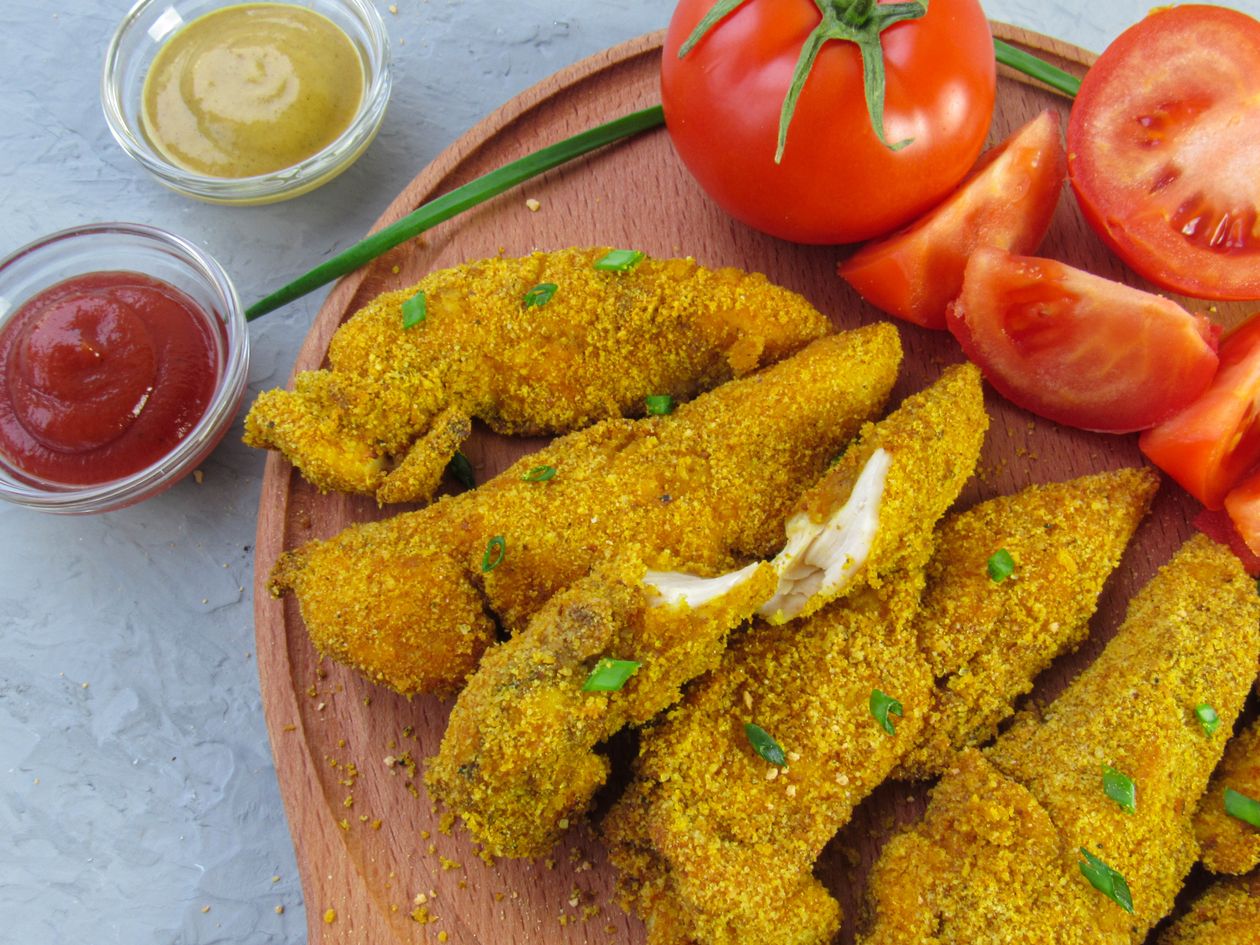
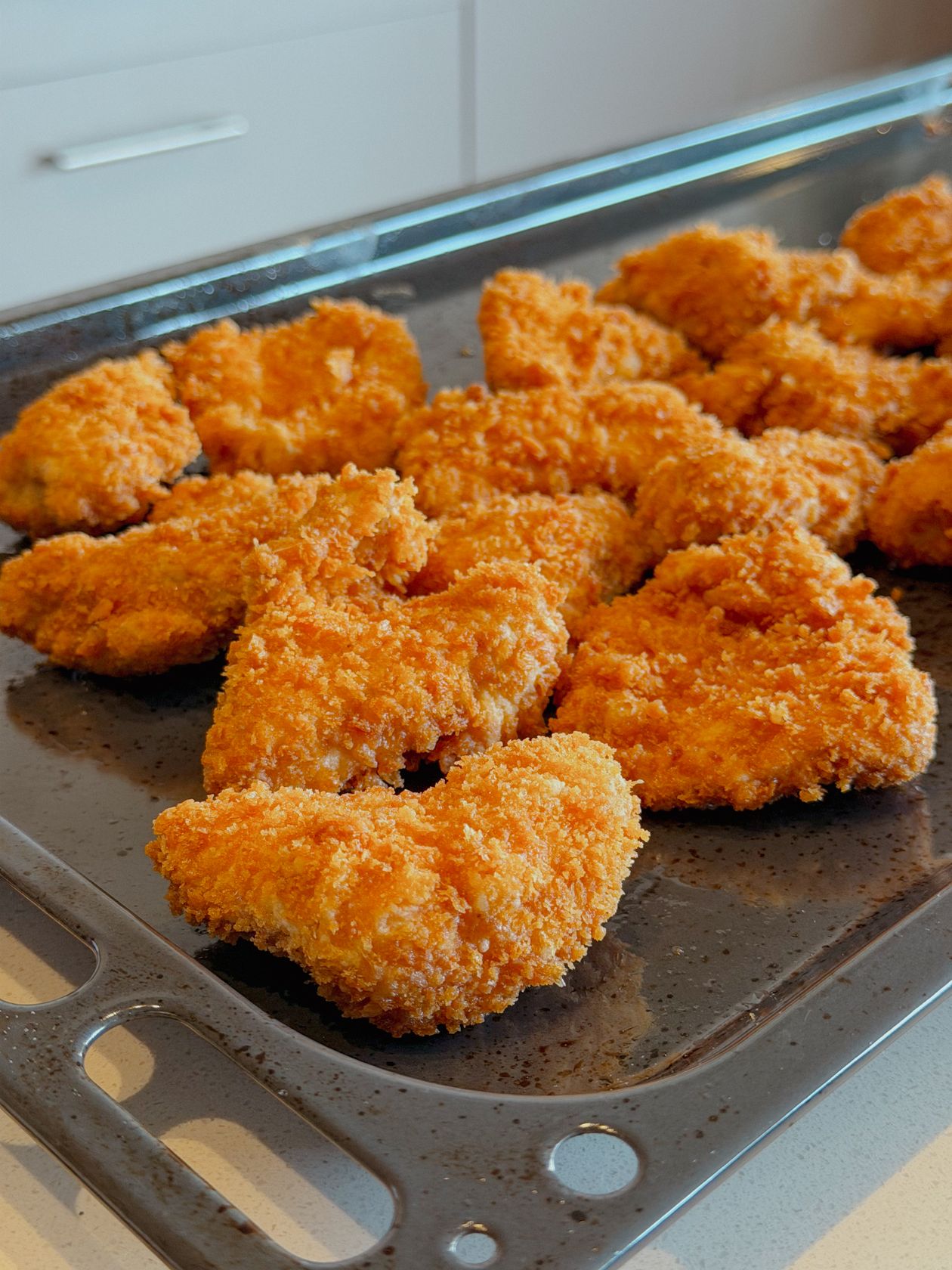
How to Avoid Common Chicken Tender Breading Mistakes
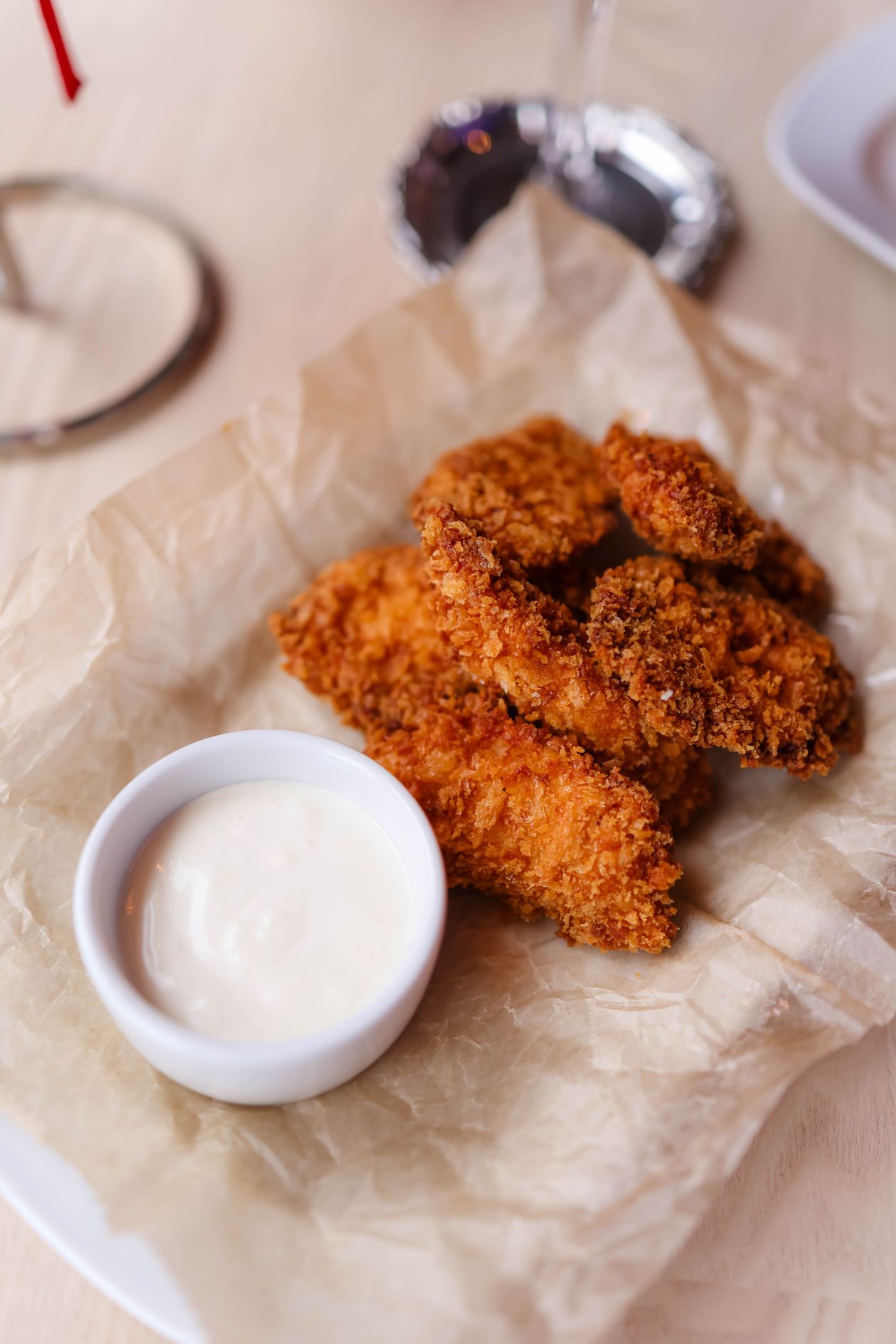
Breading that slides off, turns gummy, or burns before the inside cooks almost always traces back to one of a handful of fixable setup errors. Getting a crisp, evenly browned coating that stays put on chicken tenders comes down to drying the meat, setting up the dredge correctly, and managing heat, not luck.
Steps
- 1Pat the chicken tenders completely dry with paper towels; wet surfaces prevent flour from adhering.
- 2Set up three separate shallow dishes: seasoned flour, beaten egg (or buttermilk), and breadcrumbs or panko.
- 3Season the flour itself, not just the breadcrumbs, so the layer closest to the meat carries flavor too.
- 4Dredge each tender in flour and shake off the excess until only a thin, even layer remains.
- 5Dip into the egg wash, letting excess drip off, then press into the breadcrumbs firmly so the coating compacts instead of sitting loosely on top.
- 6Place breaded tenders on a wire rack (not stacked on a plate) for 10-15 minutes before cooking; this lets the coating set so it doesn't shed in the fryer or pan.
- 7Fry at 350-365°F (175-185°C) or bake at 400°F (200°C), cooking 8-10 minutes for pan-fried or 15-18 minutes for baked, until the internal temperature hits 165°F (74°C).USDA safe minimum for poultry: 165°F (74°C)
Common mistakes
- Skipping the pat-dry step: moisture on the surface of the chicken turns the flour into paste instead of letting it form a dry, grippy layer for the egg wash to stick to.
- One-handing the dredge: using the same hand for both wet and dry stations clumps the breading into thick, uneven globs and breads your fingers instead of the chicken.
- Breading right before cooking: skipping the 10-15 minute rest on a rack means the coating is still loose and sheds in the oil or on the pan.
- Frying oil too hot: above 375°F (190°C), the coating browns in under two minutes while the center of a thick tender is still raw.
- Frying oil too cool: below 325°F (160°C), the breading absorbs oil instead of crisping, leaving tenders greasy and soggy.
- Crowding the pan or fryer: too many tenders at once drops the oil temperature fast, leading to pale, soft coating and uneven cooking.
- Flipping too soon: moving tenders before the crust has set causes breading to tear and stick to the pan or spatula.
- Using wet hands to press breadcrumbs: this reactivates the egg wash and makes the coating sticky and uneven instead of crisp.
- Not seasoning the flour: breadcrumbs alone can't season the meat underneath, so the inside tastes bland even when the crust tastes fine.
Equipment
- Three shallow dishes for dredging
- Wire cooling rack set over a baking sheet
- Instant-read thermometer
- Tongs
- Heavy skillet or deep fryer
FAQ
Why does my chicken tender breading fall off while cooking?
This usually happens when the flour layer wasn't shaken off evenly, the egg wash was too thin to bind, or the breaded tenders went straight into hot oil without resting on a rack first to let the coating set.
Should I double-dip chicken tenders in egg and breadcrumbs?
Yes, for a thicker, crunchier crust, dip back into the egg wash and breadcrumbs a second time after the first coat; this is standard for extra-crispy tenders and holds up better against oil or sauce.
Why is my breading soggy even though the chicken is cooked through?
Oil temperature that's too low, usually below 325°F (160°C), lets the coating soak up oil instead of sealing and crisping, which produces a soft, greasy crust even when the meat itself is fully done.
Can I bread chicken tenders ahead of time?
Breaded tenders can sit uncovered on a wire rack in the refrigerator for up to 24 hours before cooking; the rest time actually helps the coating adhere better, as long as they're not stacked or covered tightly, which traps moisture.
What's the best breadcrumb to breadcrumb-substitute ratio for extra crunch?
Mixing panko with regular breadcrumbs at roughly a 2:1 ratio gives a crust with both structure and fine texture, crunchier than all regular breadcrumbs but less prone to burning than all panko.
What's the best way to properly season chicken tenders?
Season in two places, not one: salt and season the chicken itself before dredging, then season the flour layer too (not just the breadcrumbs), so the coating closest to the meat carries flavor instead of relying on the outer crust alone.
Need exact temperatures or timing? Check our Time & Temperature Guide →