
How to Make Fresh Pasta Dough from Scratch
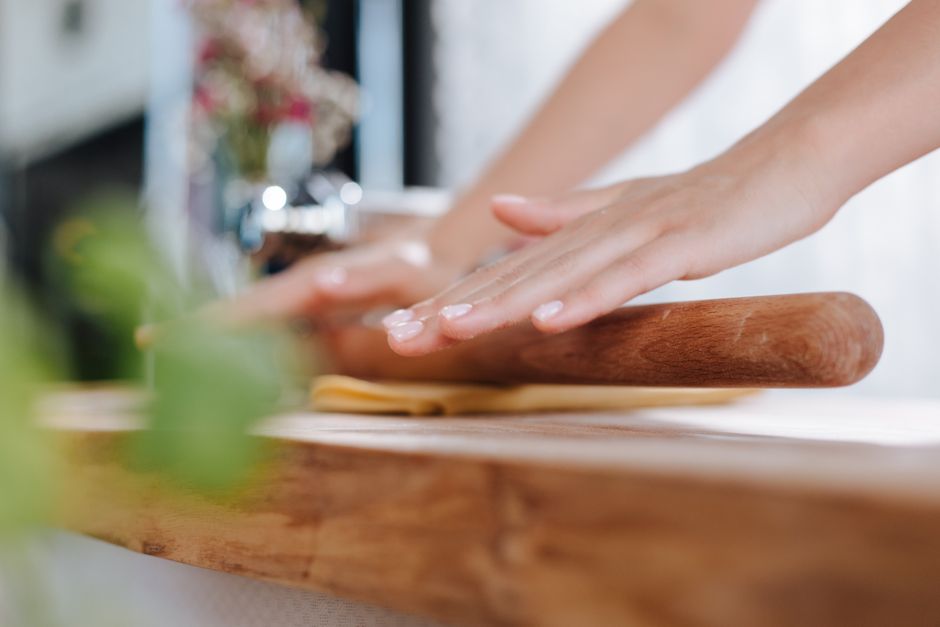
Fresh pasta dough needs only flour, eggs, and time, but the ratio, kneading, and resting steps all matter. Skip the rest and the dough fights you on the roller; get the hydration wrong and it either crumbles or sticks to everything.
Steps
- 1Mound 300g (about 2 1/2 cups) of 00 flour or all-purpose flour on a clean work surface and make a well in the center.
- 2Crack 3 large eggs into the well and add a pinch of salt.
- 3Using a fork, whisk the eggs together, then gradually pull in flour from the inner walls of the well, keeping the outer walls intact to contain the eggs.
- 4Once the mixture is too thick to whisk, switch to your hands and begin folding the remaining flour into the dough with a bench scraper.
- 5Knead the dough for 8-10 minutes, pushing it away with the heel of your hand and folding it back over itself, until it's smooth and elastic and springs back when pressed.
- 6Wrap the dough tightly in plastic wrap and let it rest at room temperature for at least 30 minutes (up to 2 hours).
- 7Cut the rested dough into 4 pieces, keeping the ones not in use wrapped so they don't dry out.
- 8Flatten one piece with your hands and feed it through a pasta roller starting on the widest setting, folding it in thirds and re-rolling 2-3 times to smooth the surface.
- 9Continue rolling through progressively narrower settings until the sheet is thin enough to see your hand through it (usually setting 6 or 7 on most manual rollers).
- 10Cut the sheet into the desired shape and toss the cut pasta with a little semolina flour to keep the strands from sticking while they dry.
Common mistakes
- Skipping the rest: unrested dough is too elastic and springs back or tears when rolled, since the gluten hasn't had time to relax.
- Adding all the flour at once: dumping the full amount into the well at the start makes the eggs run out over the sides instead of staying contained.
- Rolling straight to the thinnest setting: jumping settings tears the sheet; working through each notch gradually keeps the dough intact and even.
- Dough that's too dry or too wet: if it's crumbly after kneading, wet your hands slightly and keep working it in; if it's sticky, dust in flour a tablespoon at a time rather than all at once.
Equipment
- Bench scraper
- Plastic wrap
- Manual or motorized pasta roller
- Fork
- Sharp knife or pasta cutter attachment
FAQ
Why does fresh pasta dough need to rest?
Kneading develops gluten, which makes the dough elastic and hard to roll thin. Resting lets the gluten relax so the dough stretches easily without snapping back or tearing.
Can I make fresh pasta dough without a pasta roller?
Yes, a rolling pin works but it takes longer and requires more arm strength to get the dough thin and even; roll in one direction, rotating the sheet a quarter turn frequently, rather than rolling back and forth.
How long does fresh pasta dough keep before cooking?
Wrapped tightly, it keeps in the refrigerator for up to 2 days or in the freezer for up to a month; let refrigerated dough sit at room temperature for 20-30 minutes before rolling.
Why is my pasta dough too dry and crumbly?
This usually means the flour-to-egg ratio is off or the eggs were on the small side. Add water a teaspoon at a time while kneading until the dough comes together into a smooth ball.
How long does fresh pasta take to cook?
Fresh pasta cooks much faster than dried, usually 2-4 minutes in boiling salted water, and is done as soon as it floats to the surface and turns opaque.
Need exact temperatures or timing? Check our Time & Temperature Guide →