
How to Prepare a Latte
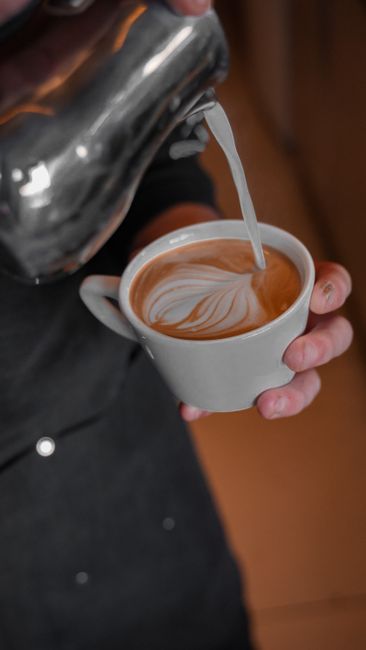
A latte is mostly steamed milk with a shot of espresso underneath and a thin cap of microfoam on top, and most home versions go wrong because the milk is either scalded and bubbly or never textured at all. Getting a smooth, slightly sweet latte comes down to pulling a good shot and steaming milk to the right temperature and texture before it ever hits the cup.
Steps
- 1Pull a double shot of espresso (about 2 oz / 60ml) directly into the cup you'll serve the latte in, or into a separate shot glass if you want to control timing.
- 2Pour 6-8 oz (180-240ml) of cold whole milk into a stainless steel steaming pitcher, filling it no more than halfway.
- 3Purge the steam wand for 1-2 seconds to clear condensation, then submerge the tip just below the milk's surface at an angle.
- 4Turn on the steam and lower the pitcher slightly to keep the tip just under the surface, listening for a soft hissing or tearing paper sound for 3-5 seconds to aerate the milk.
- 5Submerge the wand deeper once you've added enough air, and swirl the pitcher to create a whirlpool that spins the milk and breaks down any large bubbles.
- 6Steam until the pitcher feels too hot to hold comfortably against the back of your hand, around 140-150°F (60-65°C), then turn off the steam and remove the wand.
- 7Tap the pitcher firmly on the counter a few times to pop remaining large bubbles, then swirl to keep the microfoam integrated into the milk.
- 8Pour the milk into the espresso from a height of a few inches to start, then lower the pitcher close to the surface and pour steadily, moving the pitcher side to side to draw a pattern if the foam is thin enough.
Common mistakes
- Steaming milk past 160°F (70°C): it scalds and develops a cooked, slightly sour taste instead of natural sweetness.
- Keeping the steam wand too deep the entire time: this heats the milk without adding air, producing thick, dense milk with no foam.
- Skipping the swirl and tap step: unmixed foam sits as a thick separate layer instead of integrating into silky microfoam.
- Using skim milk and expecting the same texture: it foams easily but doesn't hold a stable, creamy microfoam the way whole milk does.
- Pulling the espresso shot too far in advance: espresso loses its crema and flavor within a couple of minutes, turning flat and bitter under the milk.
Equipment
- Espresso machine with a steam wand
- Stainless steel milk steaming pitcher
- Espresso portafilter and tamper
- Thermometer or instant-read clip thermometer (optional)
- Serving cup or glass
FAQ
What milk works best for a latte?
Whole milk gives the most stable, creamy microfoam because of its fat content. 2% works but produces thinner foam, and non-dairy options like oat milk (barista blends specifically) steam closer to whole milk than almond or regular soy.
Do I need an espresso machine to make a latte?
A stovetop moka pot or strong drip coffee concentrate can substitute for espresso in a pinch, but the flavor will be less concentrated and the crema layer that normally floats on top of espresso won't form.
How much foam should a latte have compared to a cappuccino?
A latte has a thin layer of microfoam, usually under half an inch, while a cappuccino has a much thicker foam cap, often an inch or more, because it uses less steamed milk overall.
Why does my latte taste watery?
This usually means the milk-to-espresso ratio is too high or the shot itself is under-extracted. A standard latte uses one double shot (about 2 oz) with 6-8 oz of milk, not more.
Need exact temperatures or timing? Check our Time & Temperature Guide →