
How to Safely Cool and Store Hot Food Before Refrigerating
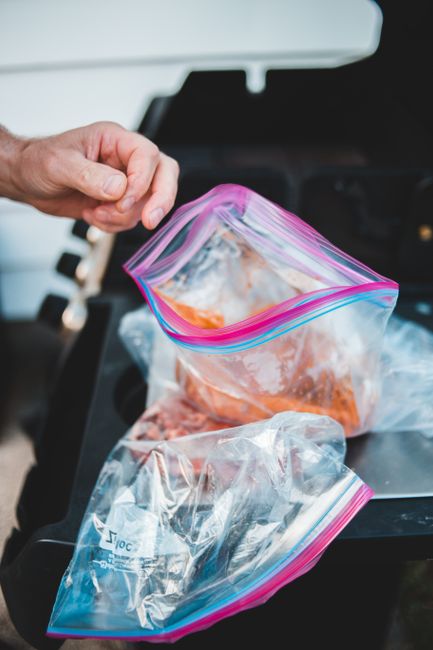
The old habit of leaving a pot on the stove or counter until it's fully cooled comes from a myth that hot food will spoil other things in the fridge or crack a glass container. Neither is true with modern refrigerators, and waiting too long is actually the riskier move. Bacteria like Bacillus cereus and Clostridium perfringens multiply fastest between 40°F and 140°F, so the real goal isn't cooling food before refrigerating, it's getting it out of that temperature range as quickly as possible.
Steps
- 1Check the clock as soon as food stops actively cooking, since the USDA's 2-hour rule starts from that moment, not from when it feels cool to the touch.
- 2Divide large batches of soup, stew, chili, or rice into shallow containers no more than 2-3 inches deep so heat escapes faster from the center.
- 3For very large pots, set the pot in a sink or basin of ice water and stir every few minutes to speed heat transfer; this can drop a pot of soup from 140°F to 70°F in about 30-45 minutes.
- 4Leave lids off or ajar while food is still steaming, then cover once it's no longer releasing visible steam, to avoid trapping condensation that drips back into the food.
- 5Place the containers in the fridge within 2 hours of cooking (within 1 hour if the room is above 90°F, such as an outdoor summer gathering).
- 6Position the containers away from the back wall and vents at first if the fridge is very full, so cold air can still circulate around them, then rearrange once they've cooled.
Common mistakes
- Leaving a full stockpot of soup on the counter for hours to 'cool down first': a deep pot holds heat in the center for a long time, keeping the middle in the bacterial danger zone well past the 2-hour window.
- Refrigerating a large amount of food in one deep, tightly sealed container, which insulates the center and can take 12+ hours to drop below 40°F.
- Waiting until food is room temperature before refrigerating: room temperature is still within the 40-140°F danger zone, so every extra minute out is extra risk, not extra safety.
- Cramming a hot pot into an already full fridge, which raises the surrounding temperature and slows cooling for everything else nearby.
Equipment
- Shallow, wide containers (2-3 inches deep)
- Instant-read thermometer
- Large bowl or basin for an ice bath
- Ladle for portioning hot liquids
FAQ
Do you really need to let food cool before putting it in the fridge?
No. The USDA and FDA both recommend refrigerating food while it's still warm rather than waiting for it to cool on the counter. Modern refrigerators are designed to handle the heat load, and the bigger risk is food sitting too long in the 40-140°F danger zone where bacteria multiply fastest.
How long can hot food safely sit out before refrigerating?
No more than 2 hours at normal room temperature, or 1 hour if the ambient temperature is above 90°F (32°C), such as outdoors in summer or near a hot stove.
Will putting hot food in the fridge raise the temperature enough to spoil other food?
A single container of hot food raises the surrounding air temperature only slightly and briefly in a properly running fridge (37-40°F). The risk to other food is negligible compared to the risk of leaving the hot food out longer to cool first.
What's the fastest way to cool a big pot of soup or stock?
Split it into shallow containers or set the pot in an ice water bath and stir occasionally. This can bring a pot from around 140°F down to 70°F in under an hour, compared to several hours if left covered on the counter.
Is it true that hot glass containers can shatter in the fridge?
Extreme, sudden temperature swings can stress glass, but going from hot-off-the-stove straight to a 37-40°F fridge is not typically enough to crack standard tempered glass storage containers; the bigger risk is thermal shock from something like boiling liquid poured into a container already ice-cold from the freezer.
How can you tell if refrigerated leftovers cooled down properly?
Check with an instant-read thermometer: the coldest part of the food should reach 40°F or below within about 4 hours of being placed in the fridge, following the same 2-hour-then-4-hour cooling window used in commercial kitchens (135°F to 70°F within 2 hours, then 70°F to 41°F within another 4 hours).
Need exact temperatures or timing? Check our Time & Temperature Guide →