
How to Soften Butter
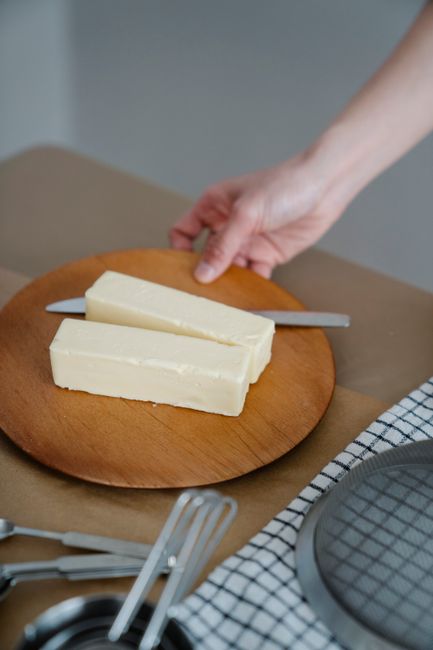
Softened butter needs to hold a dent when pressed but still keep its shape, not melt into a puddle. Butter that's too warm or partially melted won't trap air properly when creamed with sugar, which leaves cookies flat and cakes dense.
Steps
- 1Cut cold butter into 1/2-inch cubes or thin slices to increase surface area.
- 2Spread the pieces out on a plate in a single layer instead of stacking them.
- 3Leave at room temperature (around 70°F/21°C) for 20-30 minutes, checking every 10 minutes.
- 4Test by pressing a fingertip into a piece: it should leave an indent without the butter sliding off the knife or looking greasy.
- 5If baking within the next few minutes, proceed as soon as it passes the fingertip test rather than letting it sit longer.
Common mistakes
- Microwaving in long bursts: even 20 seconds on high can melt the edges while the center stays cold, giving uneven creaming.
- Leaving a whole stick out for hours: the outside turns oily and separates before the inside softens, which flattens baked goods.
- Judging by touch on the wrapper instead of the actual butter: paper insulates it, so it can feel soft on the outside while still cold underneath.
Equipment
- Cutting board
- Knife
- Plate or flat surface
FAQ
Can I microwave butter to soften it fast?
Yes, but use 10-second bursts at 30% power and flip the piece between each one, checking constantly. Full power melts the edges before the center softens.
What temperature counts as properly softened butter?
Around 65-68°F (18-20°C). At this range a fingertip leaves an indent but the butter still holds its shape and isn't shiny or oily.
Is there a fast method that doesn't use a microwave?
Roll the stick between two sheets of parchment with a rolling pin to flatten it to about 1/4 inch thick; the thin layer softens in 5-10 minutes at room temperature.
Can I use warm water to soften butter?
Fill a tall glass with hot water, dump it out, then invert the warm glass over the stick of butter for 5-10 minutes. The trapped heat softens it without melting.
Does softened butter need to be at exact room temperature for baking?
Recipes calling for creaming butter and sugar need it around 65-68°F specifically; butter that's too warm won't hold air pockets, which makes cookies spread thin and cakes come out dense.
Need exact temperatures or timing? Check our Time & Temperature Guide →