
How to Steam Milk for a Latte
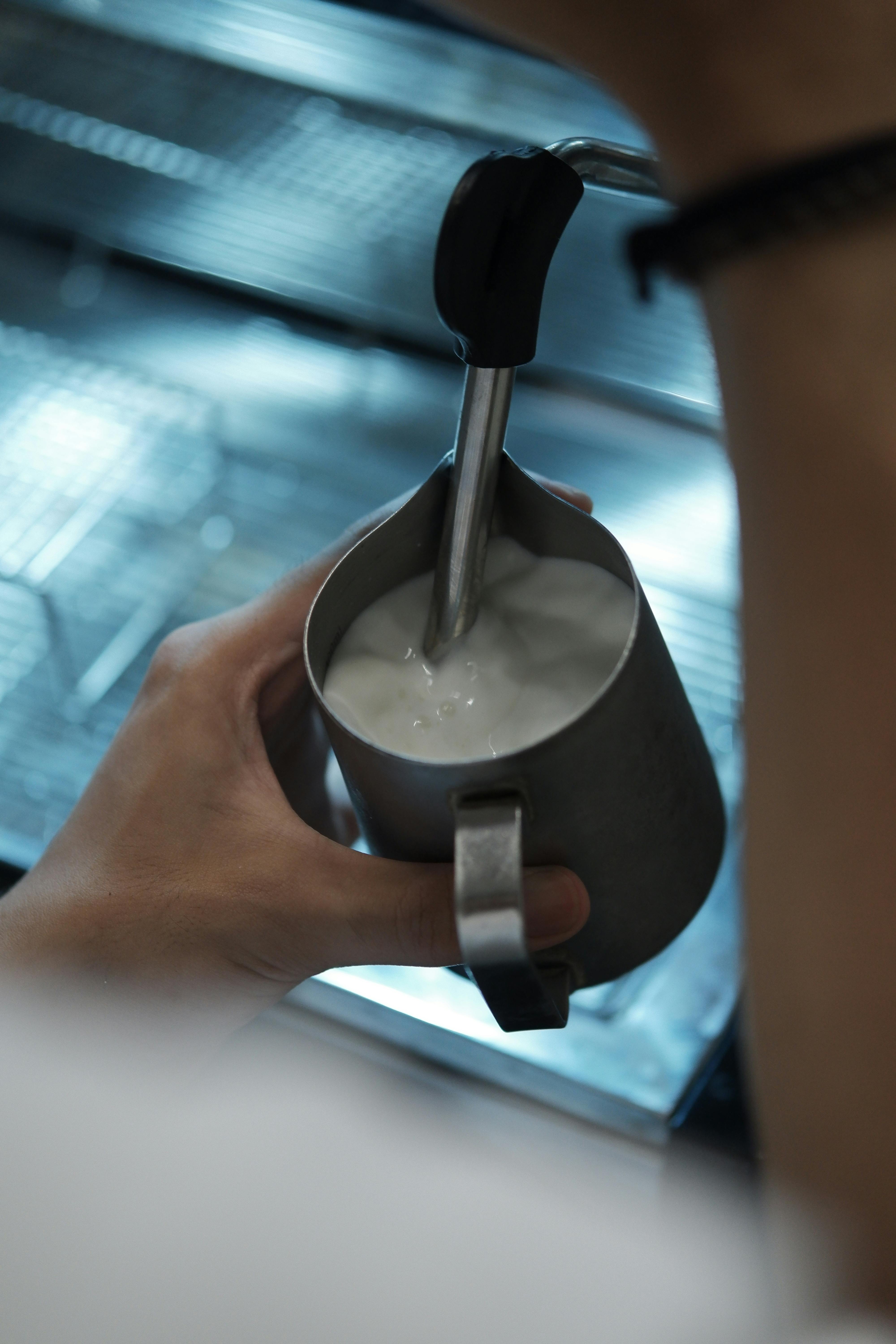
Steaming milk for a latte isn't the same as frothing it for a cappuccino. A latte wants a thin, tight layer of microfoam that blends into the espresso rather than a thick cap of foam sitting on top, and getting there depends on wand position, temperature, and how long you let the milk spin.
Steps
- 1Fill a stainless steel steaming pitcher with cold milk to just below the bottom of the spout, since the volume will roughly double.
- 2Purge the steam wand for one second to clear out any condensed water.
- 3Submerge the wand tip just below the milk's surface, off-center, so the milk spins in a whirlpool.
- 4Turn the steam on fully and lower the pitcher slightly so the tip stays just under the surface for 3-5 seconds, listening for a soft hissing or paper-tearing sound as air incorporates.
- 5Once the milk has grown by about a third to a half in volume, submerge the wand tip 1-2 inches deeper to stop adding air and start the spin that smooths the foam into the milk.
- 6Keep the pitcher spinning steadily until the milk reaches 140-150°F (60-65°C), checking by touch: the pitcher should be hot enough that it's uncomfortable to hold for more than a second or two.
- 7Turn off the steam before pulling the wand out to avoid splattering, then wipe the wand immediately with a damp cloth.
- 8Tap the pitcher firmly on the counter to pop any surface bubbles, then swirl it in a circular motion to fully integrate the foam into the milk until it looks like wet paint.
- 9Pour immediately, starting from a height of a few inches to sink the milk under the espresso, then lowering the pitcher closer to the cup to draw the foam through the crema for latte art or a simple white dot.
Common mistakes
- Aerating too long: a latte only needs a thin layer of microfoam, so more than 4-5 seconds of hissing turns it into cappuccino-style foam that won't pour smoothly.
- Overheating past 160°F (71°C): the milk starts to taste scalded and loses the natural sweetness that comes from the milk's sugars at lower temperatures.
- Holding the wand too deep from the start: this heats the milk without incorporating air, leaving it flat with no microfoam at all.
- Skipping the swirl before pouring: unmixed foam sits as a separate cap instead of blending into silky, pourable milk.
- Using a pitcher that's too full: milk expands significantly during steaming and will overflow or make it impossible to get a clean whirlpool.
Equipment
- Espresso machine with a steam wand
- Stainless steel steaming pitcher (12-20 oz)
- Instant-read or clip-on milk thermometer (optional but helpful while learning)
- Microfiber cloth for wiping the wand
FAQ
What's the difference between frothing and steaming milk?
Frothing usually refers to whipping in a lot of air to build a thick foam cap, the style used for cappuccinos. Steaming for a latte incorporates only a small amount of air early on, then focuses on heating and spinning the milk so the foam stays thin and blends into the liquid instead of sitting on top.
What temperature should milk be for a latte?
Aim for 140-150°F (60-65°C). This is warm enough to bring out the milk's natural sweetness without scalding it, which starts to happen once it climbs past about 160°F (71°C).
What does properly steamed milk look and feel like?
It should look glossy and thick, almost like wet paint, with no visible large bubbles, and it should pour in a smooth, continuous stream rather than plopping out in foam clumps.
Does the type of milk matter for steaming?
Whole milk produces the most stable, sweet-tasting microfoam because of its fat and protein content. Skim milk foams up faster and holds more volume but the texture is airier and less silky. Oat milk barista blends steam similarly to whole milk, while almond and regular soy milk are more prone to splitting if overheated.
Why does my steamed milk taste sweet?
Heating milk to the 140-150°F range breaks down lactose slightly and softens the perception of bitterness, which makes properly steamed milk taste noticeably sweeter than cold milk even though no sugar is added.
Can I steam milk without a steam wand?
A handheld frother or French press can incorporate air and heat milk on the stovetop, but neither replicates the tight, glossy microfoam a steam wand produces because they can't control the whirlpool motion that stretches and smooths the foam.
Need exact temperatures or timing? Check our Time & Temperature Guide →