
Allspice
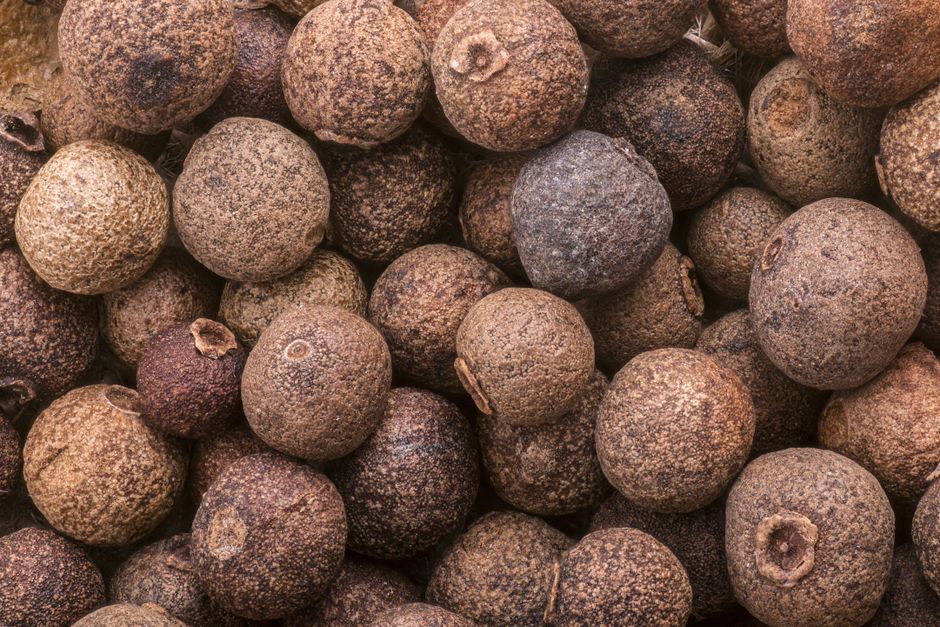
Allspice is the dried, unripe berry of Pimenta dioica, an evergreen tree native to Jamaica and the wider Caribbean. Despite the name, it's a single spice, not a blend; early European traders called it allspice because its aroma reads like a combination of cinnamon, clove, and nutmeg all at once. It's sold both as whole dried berries, which look like large brown peppercorns, and pre-ground as a fine reddish-brown powder.
Varieties
True allspice comes only from Pimenta dioica and shouldn't be confused with generic "all-purpose seasoning" blends sold at grocery stores, which are usually a mix of salt, garlic powder, pepper, and other seasonings with no allspice berries involved at all.
Buying tips
Buy whole berries when possible; they're more forgiving of long storage and let you grind exactly the amount a recipe needs. Look for uniformly sized, dark reddish-brown berries with no dust or faded color, which signal age and lost oil content.
Substitutes
Ground cinnamon, cloves, and nutmeg mixed — 1/2 tsp cinnamon + 1/4 tsp cloves + 1/4 tsp nutmeg per 1 tsp allspice
The closest flavor match since it recreates the three notes allspice is known for. Mix before adding so the ratio stays even.
Ground cinnamon and ground cloves — 3 parts cinnamon to 1 part cloves, used at 1:1 total volume
Leaves out the nutmeg note but works fine in baked goods and spiced drinks where nutmeg isn't critical.
Pumpkin pie spice — 1:1
Already contains cinnamon, ginger, nutmeg, and often allspice itself, so the flavor is close but slightly sweeter and more complex.
Ground cloves alone — 1:4
Cloves are much more intense and one-note, so use only about a quarter of the amount of allspice called for.
Storage
Whole allspice berries hold their essential oils far longer than ground. Keep whole berries in an airtight jar in a cool, dark cabinet away from the stove, where they'll stay potent for up to 4 years. Ground allspice fades faster, usually within 1 to 2 years, so buy it in smaller amounts or grind whole berries as needed with a spice grinder or mortar and pestle.
How to use
Central to Jamaican jerk marinades and seasoning rubs, and common in pickling spice blends, mulled cider, and holiday baking like pumpkin pie, gingerbread, and spice cakes. It also shows up in Middle Eastern and Scandinavian meat dishes, including some meatball and stew recipes, where a small amount rounds out the seasoning without tasting distinctly sweet.
What it pairs with
Works well alongside cinnamon, cloves, and nutmeg in baking, alongside cumin, thyme, and chile in Caribbean jerk seasoning, and alongside bay leaves and mustard seed in pickling brines.
Nutrition
Used in the small quantities typical of a spice, allspice contributes negligible calories but does carry manganese and eugenol, an antioxidant compound also found in cloves.
FAQ
Is allspice a blend of different spices?
No, it's a single spice from one plant. The name refers to its flavor, which tastes like a natural combination of cinnamon, clove, and nutmeg, not to any mixing of separate spices.
Can allspice and cinnamon be used interchangeably?
Not directly, since allspice carries clove and nutmeg notes that cinnamon lacks. In a pinch, cinnamon alone will work in baked goods but the result tastes flatter and less complex.
What's the difference between allspice and pumpkin pie spice?
Pumpkin pie spice is a blend of cinnamon, ginger, nutmeg, and cloves, and sometimes includes allspice as one of its ingredients. Allspice on its own is a single dried berry with no ginger component.
Does whole allspice ever go bad?
It won't spoil in the sense of becoming unsafe, but the essential oils that carry its flavor fade over time. Berries kept whole in an airtight container away from heat and light stay useful for several years; once ground, that window shrinks considerably.
Have allspice on hand? Find recipes with our Recipe Generator →