
Amuse-Bouche
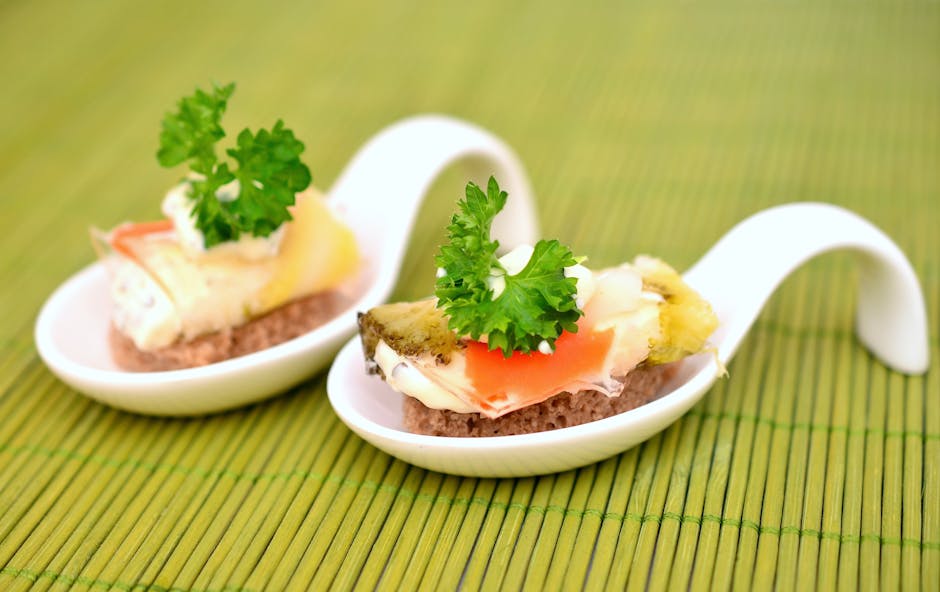
An amuse-bouche (literally "mouth amuser") is a single, complimentary bite served before a meal begins, chosen entirely by the chef and never listed on the menu. It's meant to signal the kitchen's style and set the tone for the meal, not to fill anyone up. A true amuse-bouche is one or two bites, served on a small plate, spoon, or shot glass, and eaten with one utensil or no utensil at all.
Varieties
The older French term "amuse-gueule" means the same thing but is considered coarse (gueule refers to an animal's mouth) and has largely been replaced by "amuse-bouche" on modern menus. Canapés and hors d'oeuvres overlap in concept but differ in format: both can be multiple pieces meant for grazing, while an amuse-bouche is always a single, chef-directed bite per guest.
Buying tips
For serving vessels, Asian grocery stores carry inexpensive porcelain soup spoons that work well for liquid or saucy bites, and 2-ounce shot glasses handle chilled soups or layered bites. For ingredients, build the bite around one seasonal item at peak quality (a single scallop, one ripe tomato, a spoonful of good stock) rather than combining many components, since the format rewards restraint.
Substitutes
Canapé — n/a
A canapé sits on a base of bread, toast, or a cracker and is meant to be handed around at a cocktail hour rather than plated as a course; use this if you want a passable finger food instead of a seated course.
Hors d'oeuvre — n/a
Broader category that can be several bites and is often served in a batch rather than one per person; substitute this when you want appetizers guests can return to, not a single ceremonial bite.
Palate cleanser (sorbet or granita spoon) — n/a
Works as a mid-meal reset between courses rather than an opener, since its job is to clear the tongue, not introduce the meal.
Soup shooter — n/a
A chilled soup served in a shot glass is one of the easiest home versions of an amuse-bouche, requiring no plating skill beyond pouring.
Storage
An amuse-bouche itself is assembled à la minute and not stored, but individual components (purees, gels, compotes, tuiles, cured items) can be made 1 to 3 days ahead and kept covered in the refrigerator, then plated fresh just before serving. Anything with a crisp element, like a tuile or fried garnish, should be added last so it doesn't soften.
How to use
Restaurants use it to open a tasting menu and showcase a technique or seasonal ingredient in miniature. At home, serve one per guest at the table right after everyone sits down and before any ordered course arrives, on a small spoon, shot glass, or 3 to 4 inch plate. Keep it to a single bite of 1 to 2 tablespoons total volume so it doesn't compete with the meal to follow.
What it pairs with
A dry sparkling wine, fino sherry, or a light aperitif works best since the amuse-bouche is meant to wake up the palate before food and heavier drinks arrive with later courses.
Nutrition
Because portions are intentionally tiny, most amuse-bouche bites run 30 to 80 calories regardless of richness; the format is built around concentrated flavor in a small volume, not around nutritional content.
FAQ
Is an amuse-bouche the same as an appetizer?
No. An appetizer is ordered from the menu and can be a full portion; an amuse-bouche is free, not on the menu, chosen by the chef, and limited to one or two bites.
Do you tip extra for an amuse-bouche?
No, it's complimentary and included in the overall dining experience, so it has no separate cost and doesn't factor into tip calculations.
Can you ask for a different amuse-bouche if you have an allergy?
Yes, most kitchens will swap or omit it for dietary restrictions if you mention the allergy when ordering, since it's prepared to order rather than pre-plated in bulk.
How many courses should come before the amuse-bouche in a tasting menu?
None. It's always the very first thing served, arriving before bread, before the first ordered course, and often before drinks are finished being poured.
Have amuse-bouche on hand? Find recipes with our Recipe Generator →