
Andouille Sausage
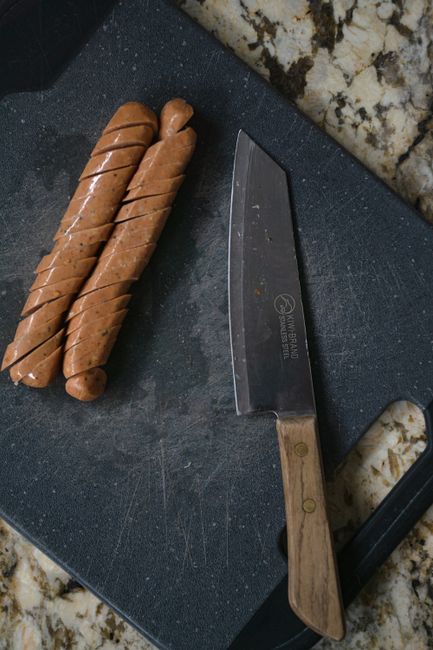
Andouille (an-DOO-ee) is a coarse-ground, heavily smoked pork sausage that forms the backbone of Louisiana Creole and Cajun cooking. It's made from pork shoulder or butt, heavily seasoned with garlic, cayenne, and black pepper, then smoked for hours over pecan wood or sugarcane, which gives it a firm, dense texture and a deep smoky flavor rather than the fresh, juicy snap of a breakfast sausage. Unlike fresh sausage, it's already fully cooked, so it's typically sliced and added to dishes to render its fat and season the pot rather than cooked from raw.
Varieties
French andouille (andouille de Vire) is a completely different product made from tripe and intestines, cured and smoked but not spicy; it's not interchangeable with the Louisiana pork sausage most American recipes call for. Within Louisiana, andouille also varies in heat level by producer, some are noticeably hotter with cayenne than others, so taste a small piece before seasoning a whole pot.
Buying tips
Look for a label that says "smoked" and lists pork, garlic, and cayenne or red pepper near the top of the ingredients; genuine Louisiana-style andouille has a noticeably coarse grind and dark, almost brick-red casing from the smoke. Avoid sausages labeled "Cajun style" with a fine, uniform texture, they're usually a milder imitation. Specialty butchers and Louisiana-based producers (like Jacob's or Bailey's) ship product that's closer to the real thing than most supermarket versions.
Substitutes
Kielbasa (smoked Polish sausage) — 1:1
Similarly smoky and fully cooked, but milder and less peppery. Add extra cayenne or black pepper to compensate.
Chorizo (Spanish, cured/smoked, not fresh Mexican) — 1:1
Brings smoke and a similar firm texture, though the paprika flavor shifts the dish toward Spanish rather than Cajun.
Smoked ham or tasso, plus a pinch of cayenne — 3/4 cup diced ham per 1 cup andouille called for
Won't render the same fat, so add a tablespoon of oil or butter to the pot to make up for it.
Linguica (Portuguese smoked sausage) — 1:1
Close in texture and smokiness; slightly more garlicky and less spicy than true andouille.
Storage
Unopened vacuum-sealed andouille keeps in the refrigerator until the printed date, typically several weeks. Once opened, use within 5-7 days. It freezes well for up to 3 months; slice or leave whole before freezing so you can thaw only what you need.
How to use
Andouille is the seasoning meat and protein in gumbo, jambalaya, and red beans and rice. Slice into coins and brown in a dry pot first to render fat and build a fond before adding vegetables; that rendered fat is often used in place of some or all of the oil for the roux. It also works sliced into bean soups, tossed with roasted potatoes, or grilled whole and served on a bun.
What it pairs with
Pairs naturally with the Cajun "holy trinity" of onion, celery, and bell pepper, plus okra, tomatoes, and rice. Works well with seafood like shrimp in jambalaya, and with beans, particularly red beans, black-eyed peas, and white beans in a smoky pot.
Nutrition
Andouille is high in fat, sodium, and calories relative to fresh sausage, since it's dense and smoked rather than diluted with fillers. A 2-ounce serving typically runs around 180-220 calories with 15-18g of fat, so it's used more as a flavoring meat than a main protein in most Cajun recipes.
FAQ
Is andouille sausage the same as andouille from France?
No. Louisiana andouille is a smoked pork sausage made from shoulder meat, while French andouille de Vire is made from tripe and intestines and isn't spicy. Cajun recipes always mean the Louisiana pork version.
Do I need to cook andouille sausage before eating it?
It's fully cooked and smoked during processing, so it's safe to eat as is. Most recipes still brown or simmer it to render fat and build flavor into the dish, not because it's raw.
How spicy is andouille sausage?
It's moderately spicy from cayenne and black pepper, generally milder than a hot Italian sausage but with more black pepper bite. Heat varies noticeably by brand, so check labels if sensitivity is a concern.
Can I use andouille in dishes that aren't Cajun?
Yes. Its smoky, dense texture works well in bean soups, pasta with greens, breakfast hash, or even pizza toppings anywhere you'd use a firm smoked sausage.
Have andouille sausage on hand? Find recipes with our Recipe Generator →