
Black Truffle
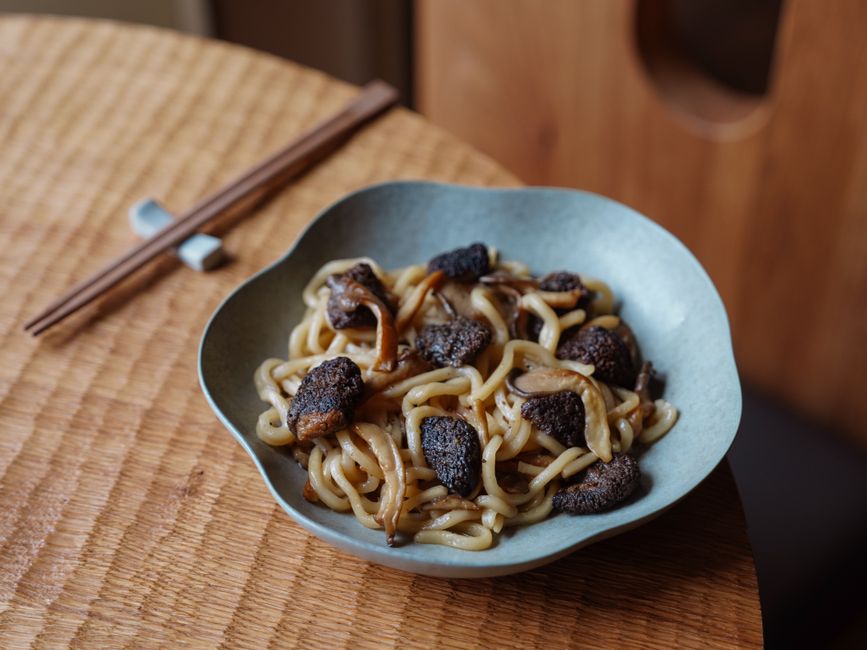
Black truffle is the fruiting body of an underground fungus, most commonly Tuber melanosporum (the Perigord truffle), that grows in symbiosis with the roots of oak and hazelnut trees. It's harvested by trained dogs (or historically pigs) that can smell it through the soil. Unlike most ingredients, its value is almost entirely in aroma rather than taste, an earthy, musky, slightly garlicky smell that fades fast once the truffle is cut or exposed to air, which is why it's shaved raw over finished food rather than cooked into a dish.
Varieties
Black winter truffle (Tuber melanosporum) is the most prized and aromatic. Black summer truffle (Tuber aestivum), sometimes called scorzone, is cheaper and much milder, closer to a mushroom than a true truffle in flavor. White truffle (Tuber magnatum) is a separate species with a sharper, garlicky aroma and is typically shaved raw only, never cooked at all.
Buying tips
Fresh black truffle should feel firm, not soft or spongy, and smell strongly earthy through the packaging. Weight loss is rapid, so buy from a source with fast turnover and check the harvest or packing date. In-season Perigord truffle (winter, roughly December through March) has a far stronger aroma than off-season or under-ripe truffle sold at a discount.
Substitutes
Black truffle oil — a few drops per serving
Most bottled truffle oil is synthetic (made with 2,4-dithiapentane) rather than infused with real truffle, but it delivers a similar aroma cheaply. Add off heat at the very end.
Black truffle salt — a pinch, to taste
Salt flakes blended with real or synthetic truffle. Good for finishing eggs, popcorn, or fries; can't replace shaved truffle as a visual centerpiece.
Cremini or porcini mushrooms plus a drop of truffle oil — same weight as truffle called for
Gives earthy depth and texture close to truffle when finely diced and sauteed, with the oil filling in the aroma the mushrooms lack.
Preserved (canned or jarred) black truffle — 1:1 by weight
Weaker aroma than fresh since it's already been cooked and packed in liquid, but far more affordable and available year-round.
Truffle paste or truffle butter — 1 tsp paste per 1 tsp shaved fresh truffle
Concentrated and shelf-stable; stir into risotto, pasta, or sauces near the end of cooking rather than shaving on top.
Storage
Wrap unwashed fresh truffle in a paper towel, place in an airtight container, and refrigerate. Change the paper towel daily since it absorbs moisture and odor. Use within 5 to 7 days; the aroma weakens noticeably after that. Truffles can also be buried in dry rice or eggs in the fridge for a day or two to pick up flavor, but this speeds moisture loss in the truffle itself.
How to use
Shave paper-thin over finished dishes with a truffle slicer or vegetable peeler right before serving, since heat destroys the aroma within minutes. Common pairings include fresh pasta with butter, risotto, scrambled eggs, or a simple baked potato. It can also be infused into softened butter or warm (not hot) cream and left to sit for a few hours before straining.
What it pairs with
Pairs best with rich, mild backgrounds that let the aroma stand out: butter, cream, eggs, soft cheeses, and plain pasta. Avoid pairing with strong spices, vinegar, or anything smoked, which will overpower it.
Nutrition
Truffles are low in calories and fat, used in tiny quantities, and contribute negligible nutrition. Any health value is beside the point; they're used entirely for aroma.
FAQ
Why does truffle lose its smell so quickly?
The aroma comes from volatile organic compounds that evaporate once the truffle is cut or exposed to air; fresh truffle can lose half its aroma strength within a week even under good refrigeration.
Is truffle oil actually made from truffles?
Most commercial truffle oil is olive or grapeseed oil flavored with a lab-made compound that mimics truffle aroma rather than real truffle infusion; check the label for '2,4-dithiapentane' if you want to know which kind you're buying.
Can you freeze black truffle?
Yes, though it changes texture and loses some aroma. Freeze whole and unwashed in an airtight container, then grate it frozen directly into finished dishes rather than thawing it first.
Why is black truffle so expensive?
It can't be reliably farmed on demand, since it depends on a specific fungal partnership with tree roots that takes years to establish, and each region's harvest is limited by weather and the availability of trained search dogs.
Have black truffle on hand? Find recipes with our Recipe Generator →