
Bleu Cheese
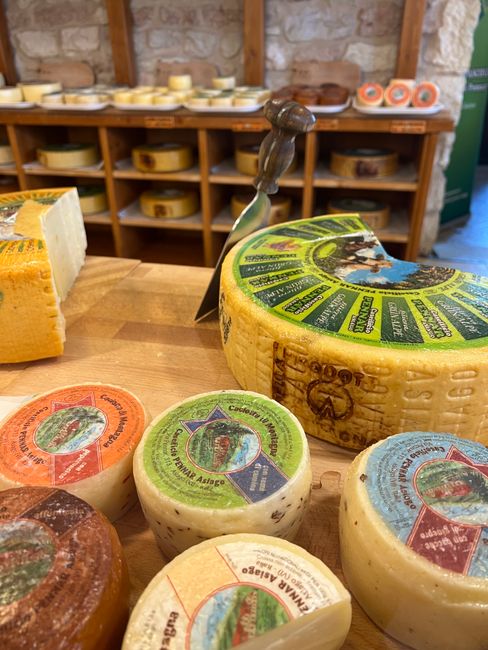
Bleu cheese (blue cheese) is a category of cheese cultured with Penicillium mold strains that form the characteristic blue-green veins running through the paste. The mold is introduced during production and develops as the cheese ages, giving it a sharp, salty, tangy flavor and a crumbly to semi-soft texture depending on the specific style. Common commercial varieties include Roquefort, Gorgonzola, Stilton, and Danish blue, each made from different milk and aged differently, but all sold in the U.S. under the general "bleu cheese" label are typically a domestic cow's milk version modeled loosely on these.
Varieties
Roquefort (France, sheep's milk, protected designation) is sharper and more piquant than Gorgonzola (Italy, cow's milk, softer and sweeter). Stilton (England) is firmer and crumblier with a nuttier edge, while Danish blue is the mildest and creamiest of the widely available styles. Most cheese labeled simply "bleu cheese" in U.S. grocery stores is a domestic cow's milk cheese modeled after these but generally milder than any of them.
Buying tips
Buy a wedge rather than pre-crumbled when possible; pre-crumbled bleu cheese dries out faster and often has anti-caking starch added. The veining should look blue-green and evenly distributed, not gray or brown, and the paste should smell sharp and tangy rather than ammonia-like, which signals overripeness.
Substitutes
Gorgonzola — 1:1
A creamier, slightly sweeter Italian blue that works as a near-direct swap in salads, dressings, and sauces.
Roquefort — 1:1
Made from sheep's milk and generally sharper and saltier than domestic bleu; use the same amount but taste before adding extra salt.
Feta cheese — 1:1
No mold veins and a brighter, more acidic tang rather than pungent funk, but it crumbles the same way and works in salads and dips.
Vegan blue cheese alternative (cashew or coconut oil based) — to taste
Texture and tang vary widely by brand; start with less than the recipe calls for and adjust, since some are milder and some use added blue mold flavoring that's more intense.
Storage
Wrap tightly in wax or parchment paper rather than plastic, which traps moisture and can cause the cheese to sour faster. Store in the warmest part of the refrigerator (a door shelf or dedicated cheese drawer) for 3 to 4 weeks after opening. If surface mold appears beyond the normal blue veining, cut away at least an inch around it.
How to use
Crumble over salads, burgers, and steaks; melt into cream-based pan sauces for steak or chicken; whisk into dressings for wedge salad; fold into softened butter for a compound butter; blend with mayonnaise or sour cream for dips and wing sauce. Because it's salty and pungent, it's usually used in smaller quantities than most cheeses rather than as a primary melting cheese.
What it pairs with
Pairs well with sweet, acidic, and fatty counterpoints: pears, figs, honey, walnuts, balsamic reduction, and bacon. Also complements bitter greens like arugula and endive, and holds up well against rich red meats like steak and lamb.
Nutrition
Bleu cheese is calorie-dense and high in sodium relative to its serving size, roughly 100 calories and 300-400mg of sodium per ounce, so it's typically used as an accent rather than a main protein source. It's also a decent source of calcium and provides some vitamin K2 from the fermentation process.
FAQ
Is the mold in bleu cheese safe to eat?
Yes. The Penicillium roqueforti and Penicillium glaucum strains used are food-safe cultures deliberately introduced during production, unrelated to spoilage mold that grows on old bread or fruit.
Why does bleu cheese smell so strong?
The mold breaks down fats and proteins during aging, releasing compounds like methyl ketones that create the sharp, sometimes ammonia-tinged aroma. A stronger smell generally means a longer-aged, more pungent wheel.
Can you freeze bleu cheese?
You can, but freezing breaks down the texture, making it crumblier and drier once thawed. It's fine for cooking into sauces afterward but not ideal for serving on a cheese board.
Is bleu cheese safe during pregnancy?
Soft, mold-ripened bleu cheeses made with unpasteurized milk carry a listeria risk and are typically advised against during pregnancy. Bleu cheese made with pasteurized milk, which is most bleu cheese sold in U.S. grocery stores, is generally considered safe when thoroughly checked for pasteurization on the label.
Have bleu cheese on hand? Find recipes with our Recipe Generator →