
Braised Beef
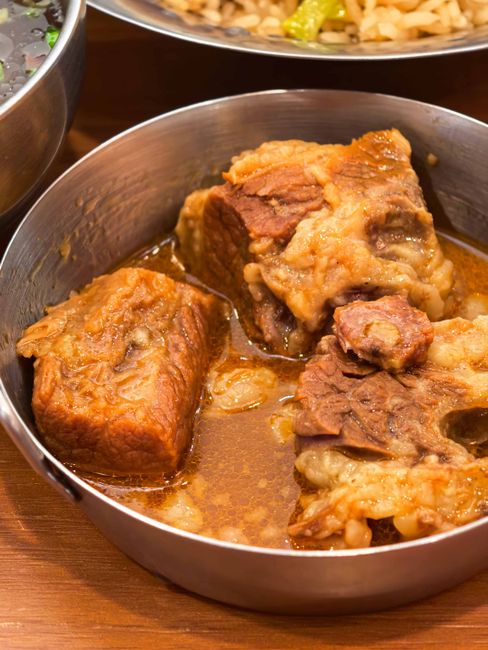
Braised beef is a tough, well-worked cut (usually chuck roast, short ribs, brisket, or oxtail) cooked low and slow in a small amount of liquid until the collagen breaks down into gelatin and the meat becomes fork-tender. It's the base for pot roast, beef ragu, French dips, birria, and shredded beef tacos. The result is richer and more tender than a quick-seared steak because the long cook time dissolves connective tissue that would otherwise make the meat chewy.
Varieties
Chuck roast gives the most classic pulled texture and richest flavor for the price. Short ribs are fattier and more indulgent. Brisket holds its shape better for slicing. Oxtail produces the most gelatinous, body-rich braising liquid but yields less usable meat per pound.
Buying tips
Choose well-marbled, tougher cuts like chuck roast, short ribs, or brisket rather than lean cuts like sirloin, which dry out and turn stringy under long, moist heat. Bone-in short ribs and oxtail add extra body to the braising liquid from the marrow and connective tissue.
Substitutes
Slow-cooker pulled chuck roast — 1:1
Same cut, different equipment; texture and shreddability are nearly identical, though stovetop or oven braising builds a deeper crust and reduction first.
Braised short ribs, boned and shredded — 1:1
Richer and fattier than chuck, with a more pronounced beefy flavor; works well in tacos and ragu but can feel heavy in sandwiches.
Braised brisket — 1:1
Leaner and slices more cleanly than it shreds; better for sandwiches where you want distinct slices rather than pulled strands.
Shredded braised chicken thighs — 1:1
A lighter, faster substitute (thighs braise in about half the time) that works in tacos and enchiladas but lacks beef's deep, gelatinous richness.
Jackfruit braised in beef-style broth — 1:1 by volume
A vegetarian option; young green jackfruit shreds similarly but is naturally bland, so it needs a well-seasoned braising liquid to carry flavor.
Storage
Cool braised beef in its braising liquid before refrigerating; the liquid keeps it moist and prevents the surface from drying out. It keeps for 3 to 4 days refrigerated in a sealed container, or up to 3 months frozen, submerged in some of its own liquid to prevent freezer burn.
How to use
Shred for tacos, enchiladas, or sandwiches; dice or leave whole in ragu and pot pies; slice thin for French dips. Always reheat gently in some of the reserved braising liquid over low heat or in a low oven, since dry reheating toughens meat that was cooked tender through moisture.
What it pairs with
Pairs well with root vegetables like carrots and parsnips, with acidic finishing touches like vinegar or citrus to cut the richness, and with starches that can soak up the braising liquid, such as mashed potatoes, polenta, or rice.
Nutrition
Braised beef is high in protein and, because collagen converts to gelatin during cooking, it's also a good source of easily absorbed amino acids that support joint and skin health. Chuck and short ribs are fattier cuts, so skimming the braising liquid before serving reduces the overall fat content.
FAQ
What's the difference between braising and stewing beef?
Braising uses larger cuts partially submerged in liquid and cooked slowly in one piece, then often shredded or sliced afterward; stewing starts with the meat already cut into small chunks fully submerged in liquid.
Why is my braised beef still tough after hours of cooking?
It likely hasn't hit a high enough internal temperature for long enough. Collagen doesn't fully break down until the meat reaches around 195 to 205°F and stays there; pulling it earlier leaves it tough even after a long cook.
Can I braise beef in advance and reheat it later?
Yes, and it often tastes better the next day once the flavors settle into the meat. Refrigerate it in its braising liquid and reheat covered over low heat rather than microwaving straight, which dries out the edges.
Do I need to sear the beef before braising?
Searing isn't strictly necessary for tenderness, but it builds a browned crust that adds significant flavor to both the meat and the braising liquid through fond left in the pan.
Have braised beef on hand? Find recipes with our Recipe Generator →