
Broccoli
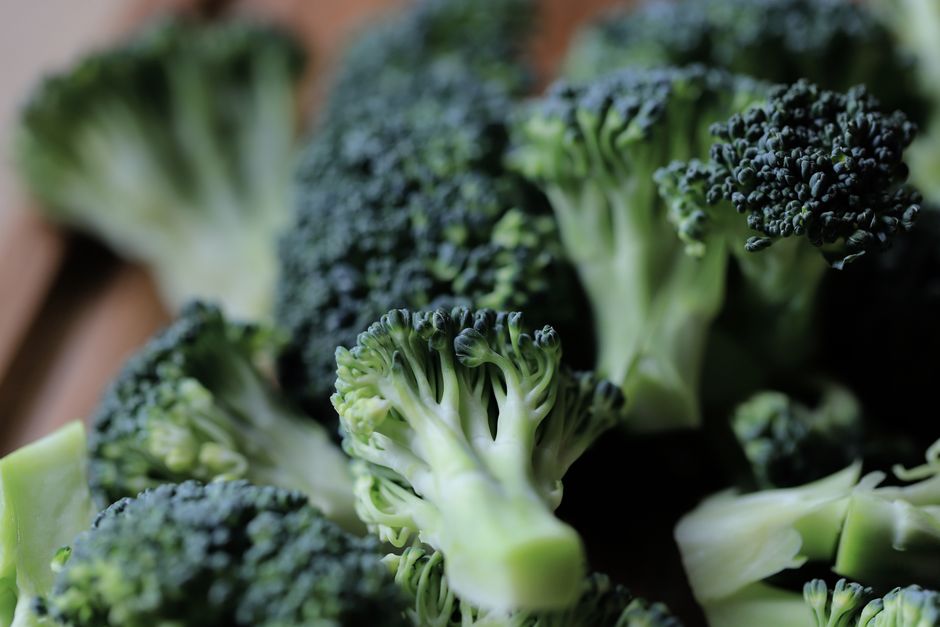
Broccoli (Brassica oleracea var. italica) is a cruciferous vegetable grown for its dense, tree-like heads of unopened flower buds and the thick edible stalk beneath them. It has a mildly bitter, grassy flavor that turns sweeter and nuttier when roasted, and sharper and more sulfurous when overcooked or boiled too long.
Varieties
Calabrese is the standard large-headed broccoli sold in most grocery stores. Broccolini (a cross between broccoli and Chinese kale) and broccoli rabe (actually a relative of the turnip, not true broccoli) are related but distinct vegetables with different flavor profiles and cooking times, despite the shared name.
Buying tips
Choose heads with tightly closed, compact florets in deep green (or purplish-green) color, with no yellowing buds or flowering. The stalk should feel firm and heavy for its size, not rubbery or split at the base, and cut ends should look moist rather than dried out.
Substitutes
Broccolini — 1:1
Thinner stems and smaller florets with a sweeter, less bitter flavor; cooks faster than regular broccoli.
Cauliflower — 1:1
Milder and slightly sweeter with no bitterness; good in stir-fries, roasts, and gratins, though it lacks broccoli's color.
Broccoli rabe (rapini) — 3:4 by weight
Much more bitter and leafy, with thin stalks and small florets. Use less than the amount of broccoli called for and cook briefly.
Chinese broccoli (gai lan) — 1:1
Sturdier leaves and stalks with a more pronounced mustardy bite; common in stir-fries and works well blanched.
Green beans — 1:1
Not a true flavor match, but a reasonable stand-in for texture in stir-fries and side dishes when broccoli isn't available.
Storage
Store unwashed broccoli in a loose or perforated plastic bag in the refrigerator crisper drawer, where it keeps for about 5 to 7 days. Trim the stem end and stand it in an inch of water like cut flowers, covered loosely with a bag, to extend freshness a couple more days. Wash just before using since moisture speeds yellowing.
How to use
Roast at 425°F (220°C) for 15 to 20 minutes for browned, caramelized edges. Steam for 4 to 5 minutes or blanch in boiling salted water for 2 to 3 minutes to keep it bright green and crisp-tender. Add raw to salads or crudite platters, or stir-fry over high heat for 3 to 4 minutes. Peel the tough outer layer of the stalk and slice it thin rather than discarding it; it cooks and tastes much like the florets.
What it pairs with
Pairs well with garlic, lemon, chili flakes, parmesan, soy sauce and sesame oil, toasted nuts, and sharp cheeses like cheddar or blue cheese. Works in stir-fries with beef or chicken, roasted alongside sausages, or blended into soups with cream or potato.
Nutrition
Broccoli is high in vitamin C, vitamin K, and folate, and provides a meaningful amount of fiber for its calorie count. It also contains sulforaphane, a compound formed when the vegetable is cut or chewed, which is reduced by prolonged boiling but better preserved by steaming or light cooking.
FAQ
Why does broccoli sometimes taste sulfurous or bitter?
Overcooking, especially boiling, breaks down glucosinolate compounds into sulfur-smelling byproducts. Steaming or roasting for a shorter time and stopping as soon as the stems are tender preserves a milder flavor.
Can you eat broccoli stalks?
Yes. Peel away the fibrous outer skin with a vegetable peeler, then slice or dice the pale interior, which is tender and slightly sweeter than the florets, and cooks in about the same time.
Should you wash broccoli before storing it?
No, wash it just before cooking. Excess moisture on stored broccoli speeds up mold growth and causes the florets to turn yellow and slimy faster.
Is frozen broccoli as good as fresh?
For soups, stir-fries, and casseroles, frozen broccoli works well and is blanched at peak freshness. For roasting or dishes where texture and browning matter, fresh broccoli holds up better since frozen florets release extra water.
Have broccoli on hand? Find recipes with our Recipe Generator →