
Brown Lentils
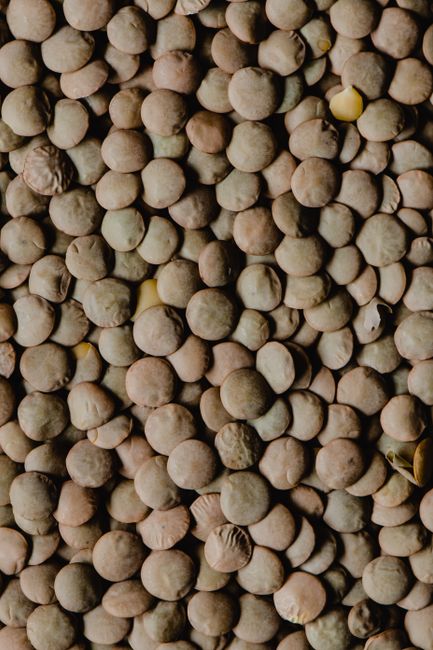
Brown lentils are the most common lentil sold in grocery stores, small disc-shaped legumes with a mild, earthy flavor and a tan to dark-brown color. They cook faster than most dried beans, need no soaking, and hold together reasonably well when simmered gently, though they soften more than green or French lentils and can turn toward mushy if overcooked. They're the default lentil for soups, stews, lentil salads, and as a meat substitute in dishes like lentil bolognese.
Varieties
Brown lentils are a broad, general-purpose category; some bags labeled 'brown lentils' are actually a slightly larger, milder varietal than the small, firmer green lentils sold separately, but the two are close enough to substitute directly in most recipes.
Buying tips
Choose lentils that look uniform in color and size with no shriveling, dust, or debris in the bag. Buy from a store with good turnover since very old lentils, even unopened, take noticeably longer to cook and never fully soften.
Substitutes
Green lentils — 1:1
Holds its shape a bit better than brown lentils and has a slightly firmer bite; works in any dish calling for brown lentils.
French (Puy) lentils — 1:1
Smaller, darker green-black, and noticeably nuttier; keeps a firm, distinct shape even after a long simmer, good for salads.
Black beluga lentils — 1:1
Small, round, and glossy black when cooked; firmer texture than brown lentils and a slightly earthier taste.
Red or yellow lentils — 1:1 by dry volume
Cooks faster and breaks down into a soft, thick puree rather than holding a distinct shape, best for dals and soups rather than salads.
Green split peas — 1:1 by dry volume
Similar cook time and a comparable earthy flavor, though split peas break down faster and give a starchier, thicker result in soups.
Storage
Store dry brown lentils in an airtight container in a cool, dark pantry, where they'll keep well for a year or more, though older lentils take longer to soften and cook unevenly. Cooked lentils keep in the refrigerator for about 5 days in a sealed container, or in the freezer for up to 6 months.
How to use
No soaking needed. Simmer in water or broth (about 3 cups liquid per 1 cup dry lentils) for 20 to 25 minutes until tender but not falling apart, and salt near the end of cooking rather than the start to keep the skins from toughening. Use in soups, stews, grain bowls, lentil salads, veggie burgers, and as a partial or full substitute for ground meat in tacos, bolognese, or shepherd's pie.
What it pairs with
Pairs well with cumin, garlic, bay leaf, tomatoes, carrots, and smoked meats like bacon or ham hock. Finishing with a splash of vinegar or lemon juice and fresh herbs brightens their earthy flavor.
Nutrition
A cup of cooked brown lentils has about 18 grams of protein and 15 grams of fiber, along with a solid amount of folate, iron, and potassium, making them one of the more affordable plant-based protein sources.
FAQ
Do brown lentils need to be soaked before cooking?
No. Unlike dried beans, brown lentils cook fully in 20 to 25 minutes without any pre-soaking, though a quick rinse to remove dust and check for stray debris is worthwhile.
Why did my brown lentils turn to mush?
Brown lentils are softer than green or French lentils and will break down if simmered too long or at too rapid a boil. For lentils that hold their shape, check for doneness starting around 18 minutes and use a gentle simmer rather than a hard boil.
Can I use canned lentils instead of dried?
Yes. One 15-ounce can of drained lentils is roughly equivalent to 1.5 cups cooked lentils, or about half a cup of dry lentils before cooking. Canned lentils are already fully softened, so add them near the end of a recipe to avoid overcooking.
Are brown lentils and red lentils interchangeable?
Not for every dish. Red lentils cook faster and dissolve into a smooth, thick texture, ideal for dal or pureed soups, while brown lentils keep more of their shape and work better in salads, grain bowls, or dishes where distinct lentils are wanted.
Have brown lentils on hand? Find recipes with our Recipe Generator →