
Burgers
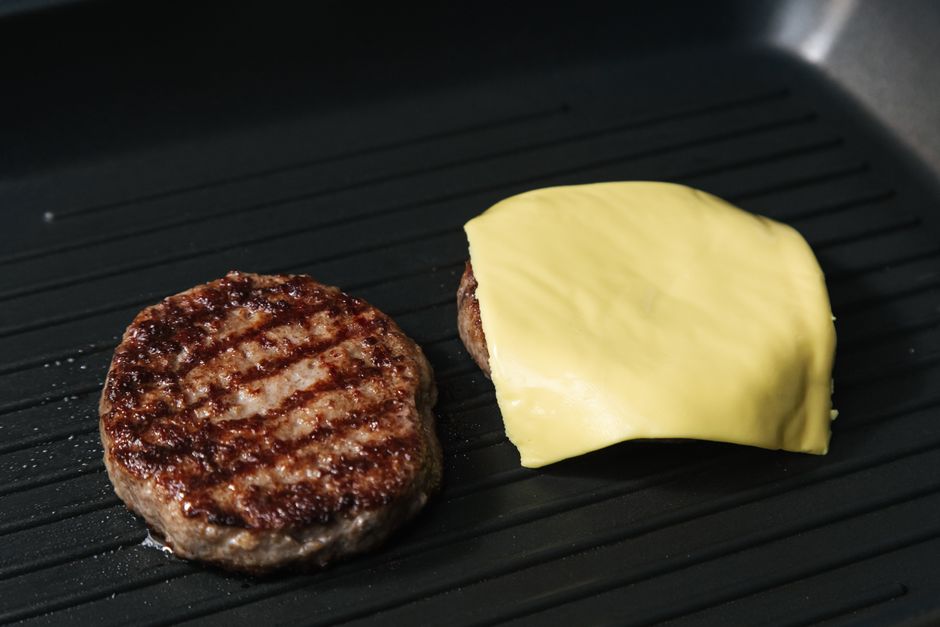
A burger is a ground meat patty, most often beef, cooked by grilling, griddling, or pan-searing and served in a split bun with toppings. The patty itself is simple, ground meat, salt, and heat, but the fat content, grind size, and cooking method determine whether it turns out juicy or dry. Classic American burgers use ground beef around 80/20 (lean to fat), though turkey, chicken, pork, lamb, and plant-based versions are all common.
Varieties
Smash burgers use thin, loosely packed patties pressed hard onto a very hot griddle to maximize crust; they cook in under 2 minutes per side and stay thin rather than thick and juicy in the middle. Steakhouse or "thick" burgers use tightly packed patties an inch or more thick and are cooked more like a steak, often finished with a rest before serving.
Buying tips
For beef, 80/20 ground chuck gives the best balance of flavor and juiciness for grilling; leaner blends like 90/10 work better for pan-searing where less fat renders off. Buy ground meat the same day you plan to cook it, or freeze it immediately, since ground meat spoils faster than whole cuts due to its increased surface area.
Substitutes
Ground turkey (85/15) — 1:1
Milder flavor and lower fat than beef; mix in a tablespoon of olive oil per pound to prevent dryness since turkey has less marbling.
Ground chicken thigh meat — 1:1
Thigh meat has enough fat to stay juicy, unlike ground chicken breast, which turns rubbery and dry when grilled.
Ground lamb — 1:1
Richer, slightly gamey flavor; pairs well with feta, mint, or cumin instead of classic burger toppings.
Black bean and mushroom patty — 1:1 by volume
Needs a binder like egg or breadcrumbs since it lacks the fat and protein structure that holds a meat patty together on the grill.
Store-bought plant-based patty (pea or soy protein) — 1:1
Cooks faster than beef, usually 3-4 minutes per side, and can scorch on the outside before the center heats through if the grill runs too hot.
Storage
Raw patties keep in the refrigerator for 1-2 days, tightly wrapped. For longer storage, freeze patties flat on a parchment-lined tray until solid, then stack with parchment between them in a freezer bag; they hold well for up to 3 months. Cooked burgers keep in the fridge for 3-4 days and reheat best in a covered skillet over low heat to avoid drying out.
How to use
Form into patties slightly wider than the bun since they shrink during cooking, and press a shallow dimple in the center to keep them from puffing into a dome. Cook over medium-high heat, flipping only once, to 160°F internal for beef, pork, and lamb, or 165°F for poultry. Season the outside just before cooking rather than mixing salt into the meat, which can make the texture dense and springy.
What it pairs with
Classic pairings include sharp cheddar or American cheese, iceberg or butter lettuce, thick tomato slices, dill pickles, and a toasted bun brushed with butter. Ground lamb burgers pair well with feta and cucumber-yogurt sauce; turkey burgers benefit from a slice of avocado or a fried egg to add back richness.
Nutrition
A 4-ounce 80/20 beef patty has around 290 calories, 20 grams of fat, and 20 grams of protein. Choosing 90/10 beef or a poultry substitute cuts fat significantly but also reduces juiciness, so many cooks compensate with a cheese slice or a sauce.
FAQ
Why do my burgers fall apart on the grill?
Usually the patty was handled too much when forming it, which breaks down the fat structure, or it was flipped before a crust had time to set. Form patties gently and let the first side cook undisturbed for at least 3 minutes before flipping.
Should I add egg or breadcrumbs to a beef burger?
Not for standard beef patties. Fillers are meant for leaner meats or plant-based patties that need a binder; ground beef with 15-20% fat holds together fine on its own.
Why does my burger puff up in the middle while cooking?
The edges of the patty cook and set before the center does, causing the middle to dome upward as it contracts. Pressing a shallow indent in the center of the raw patty counteracts this and keeps it flat.
Is it safe to eat a medium-rare burger like a steak?
Ground beef needs to reach 160°F internal because grinding mixes surface bacteria throughout the meat, unlike a whole steak where searing the outside is enough. Use a meat thermometer rather than judging by color.
Have burgers on hand? Find recipes with our Recipe Generator →