
Calabaza
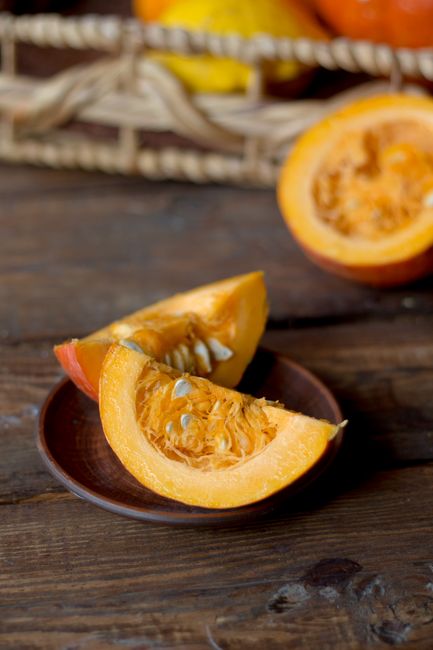
Calabaza is a large, round-to-oblong winter squash common in Caribbean, Mexican, and Central American cooking, often sold as West Indian pumpkin or Cuban squash. The rind ranges from mottled green and tan to deep orange, and the flesh is dense, sweet, and orange like butternut squash but starchier and less watery. It's usually sold cut into wedges at markets because a whole calabaza can weigh 10 pounds or more.
Varieties
Calabaza is sometimes called West Indian pumpkin, auyama, or zapallo depending on the region, but these all refer to the same or very closely related Cucurbita moschata squash, not the round orange jack-o'-lantern pumpkin common in the US, which is a different, more watery variety.
Buying tips
Choose wedges with firm, deeply colored orange flesh and no soft spots or mold near the rind. If buying whole, it should feel heavy for its size with a hard, dull (not glossy) rind.
Substitutes
Butternut squash — 1:1
The closest everyday substitute; slightly sweeter and less starchy but works in soups, stews, and purees without changing texture much.
Kabocha squash — 1:1
Denser and nuttier than calabaza, good in braises and sofrito-based stews where a firmer bite is welcome.
Buttercup squash — 1:1
Very similar sweetness and dry texture; peel is thick, so trim generously before dicing.
Sugar pumpkin (pie pumpkin) — 1:1
Milder and slightly more watery; simmer a few extra minutes to let excess liquid cook off in soups.
Canned pumpkin puree — 3/4 cup puree per 1 cup cubed calabaza
Only works for soups, purees, and baked dishes where calabaza is mashed; not a substitute where diced texture matters.
Storage
Whole calabaza keeps at cool room temperature for several weeks. Once cut, wrap the exposed flesh tightly in plastic and refrigerate for up to 5 days, or peel, cube, and freeze for up to 8 months.
How to use
Peel, seed, and cube for sancocho, Cuban-style caldo, and other Caribbean stews, or roast cubes with garlic and cumin as a side. Mash cooked calabaza into soups, empanada fillings, or a puree similar to mashed pumpkin.
What it pairs with
Pairs well with sofrito, cumin, garlic, lime, cilantro, and coconut milk, and works alongside pork, beef shank, or black beans in slow-cooked dishes.
Nutrition
Calabaza is a good source of vitamin A (from beta-carotene), vitamin C, and potassium, and is lower in calories than starchier tubers like potato while still filling out a stew.
FAQ
Is calabaza the same as pumpkin?
Not exactly. Calabaza is a variety of Cucurbita moschata, the same species as butternut squash, while carving pumpkins are usually Cucurbita pepo. Calabaza has denser, less fibrous flesh than a typical American pumpkin.
Do you need to peel calabaza before cooking?
Yes, the rind is tough and generally not eaten. A vegetable peeler can struggle with it, so a sturdy knife works better to shave off the skin in sections.
Why is calabaza often sold in wedges instead of whole?
A whole calabaza can weigh well over 10 pounds and has a thick rind that's hard to cut through cleanly, so markets pre-cut it into manageable wedges wrapped in plastic.
Can calabaza seeds be roasted like pumpkin seeds?
Yes, rinse off the pulp, pat dry, toss with oil and salt, and roast at 325°F for about 20 minutes, stirring once, until golden and crisp.
Have calabaza on hand? Find recipes with our Recipe Generator →