
Camembert
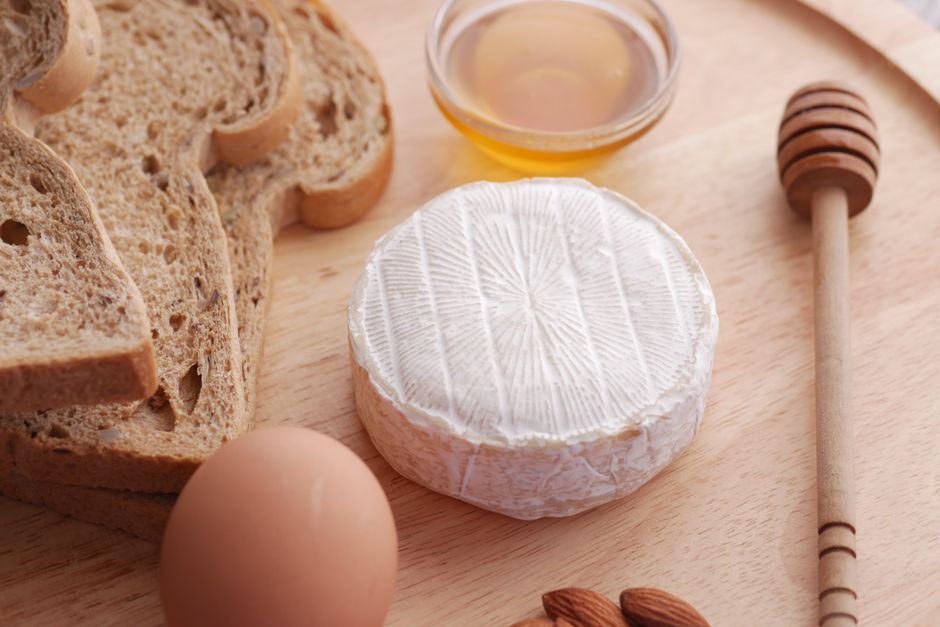
Camembert is a soft, bloomy-rind cow's milk cheese from Normandy, France, made in small flat wheels and aged just a few weeks. Under its edible white rind, the paste ranges from chalky and firm near the center when young to fully runny and pungent as it ripens, with a mushroomy, buttery, faintly barnyard flavor.
Varieties
True Camembert de Normandie (AOC) is made from raw, unpasteurized milk and has a stronger, more complex flavor than the pasteurized versions widely sold outside France, which are milder and more uniform.
Buying tips
Press the rind gently: it should give slightly and spring back, not feel hard and chalky or already collapsed and runny throughout. Check the sell-by date and choose one with a few weeks left if planning to age it further at home, or one closer to its peak if eating immediately.
Substitutes
Brie — 1:1
Milder and slightly less pungent, with a thinner rind; the closest substitute for both cooking and serving.
Coulommiers — 1:1
A lesser-known French bloomy-rind cheese, thicker and creamier than Camembert with a similar but softer flavor.
Robiola — 1:1
Italian soft-ripened cheese, tangier and less earthy, works well baked or spread on bread.
Triple-cream cheese (like Saint-André) — 3:4
Much richer and buttery with little of Camembert's funk; use slightly less since it's denser and more filling.
Vegan cashew-based bloomy rind cheese — 1:1
Closest dairy-free option for baked Camembert recipes, though it won't fully liquefy in the oven the same way.
Storage
Keep Camembert in its original wooden box or wrapped loosely in wax or cheese paper, not plastic wrap, inside the refrigerator's warmer door shelf. It continues to ripen in the fridge, so use within a week or two of purchase for the flavor and texture you want. Once cut, wrap the cut face tightly and eat within a few days, as the exposed paste dries out and the flavor sharpens fast.
How to use
Bake whole in its box at 350°F for 15-20 minutes until the center is fully liquid, then serve with crusty bread for dipping. Serve cold or at room temperature on a cheese board with fruit and crackers, or melt into sandwiches. Let refrigerated Camembert sit out for 30-45 minutes before serving so the paste softens.
What it pairs with
Pairs well with tart apples, pears, walnuts, honey, and crusty baguette. For drinks, Normandy cider is the traditional match, though a dry Champagne or light Pinot Noir also works.
Nutrition
A 1-ounce serving has roughly 85 calories, 7 grams of fat, and 5 grams of protein, along with calcium and vitamin B12 typical of soft ripened cheeses.
FAQ
Can you eat the rind of Camembert?
Yes, the white bloomy rind is edible mold (Penicillium candidum) and is meant to be eaten along with the interior.
Why is my Camembert chalky in the middle instead of runny?
It's underripe. Camembert ripens from the outside in, so a firm, chalky center means it needs more time; leave it at room temperature for a few hours or let it age longer in the fridge.
Is Camembert the same as Brie?
They're closely related bloomy-rind cheeses, but Camembert is made in smaller, thicker wheels with a higher butterfat concentration relative to size, giving it a more intense, earthier flavor than Brie.
Can Camembert be frozen?
It can be frozen for up to two months, but freezing changes the texture, making it grainier and less creamy once thawed, so it's better suited for baked or melted applications than a cheese board after freezing.
Have camembert on hand? Find recipes with our Recipe Generator →