
Capocollo
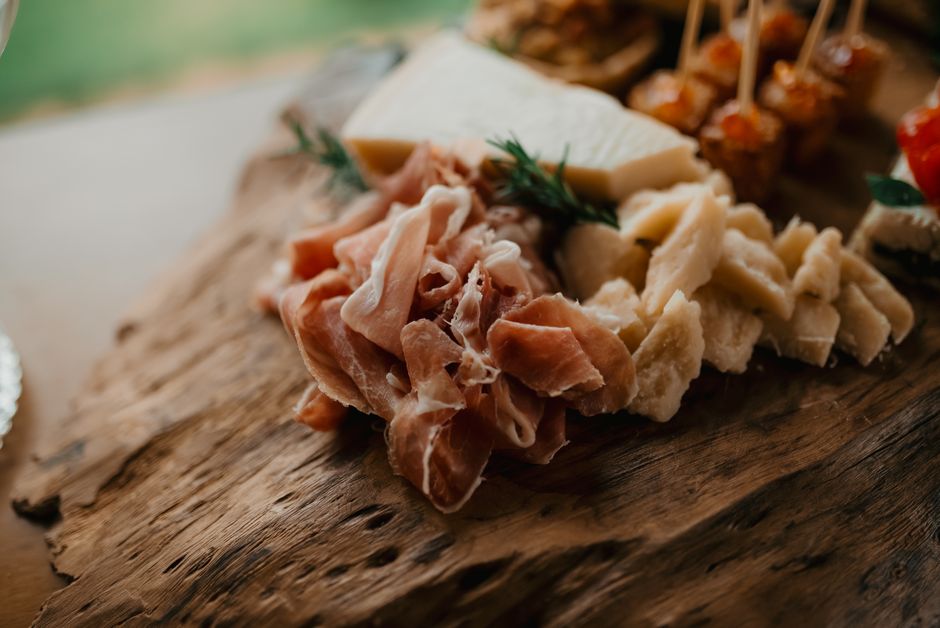
Capocollo (also called coppa or gabagool) is an Italian dry-cured pork product made from the muscle running from the neck to the fourth or fifth rib of the shoulder, a cut that's naturally marbled with fat. The whole muscle is seasoned with salt and a mix of spices, typically including black pepper, garlic, and sometimes hot or sweet paprika, then stuffed into a casing and air-dried for several months. The result is a deep red, ribbon-marbled meat with a dense, slightly chewy texture and a flavor that's peppery, savory, and faintly sweet from the slow cure.
Varieties
Capocollo and coppa are the same product under regional Italian naming (coppa is more common in northern Italy, capocollo in the south, where it's also called gabagool in some Italian-American dialects). It differs from prosciutto, which comes from the leg, and from soppressata, which is ground and stuffed rather than a single whole muscle.
Buying tips
Buy from a deli counter or butcher who slices to order when possible; pre-sliced packaged capocollo dries out faster. Look for a good ratio of lean-to-fat marbling (streaks of white fat running through deep red meat) rather than large solid fat pockets. Hot (spicy) and sweet (mild) versions are both common, so check labeling if heat level matters.
Substitutes
Prosciutto — 1:1
Milder, sweeter, and more delicate than capocollo, with less pepper and spice. Works in sandwiches and antipasto but lacks the peppery bite.
Soppressata — 1:1
A cured salami rather than a whole-muscle cut, so the texture is coarser and fattier, but the spice level and richness are close.
Speck — 1:1
Smoked and slightly firmer, speck brings a similar fat marbling but adds a smokiness capocollo doesn't have.
Pancetta (thinly sliced, uncooked) — 1:1
Much fattier and milder in spice; best as an emergency stand-in for antipasto rather than sandwiches.
Hot ham (spiced deli ham) — 1:1
Cooked rather than cured, so the texture is softer and the flavor less complex, but it approximates the peppery kick in a pinch.
Storage
Keep vacuum-sealed capocollo unopened in the refrigerator until the use-by date. Once opened or freshly sliced from a deli counter, wrap tightly in butcher paper or press plastic wrap directly against the cut surface and refrigerate; use within 5 to 7 days. A whole, uncut capocollo can hang in a cool pantry for weeks, but once cut into, refrigeration is required.
How to use
Sliced paper-thin for antipasto platters, layered into Italian subs and muffulettas, folded over fresh mozzarella and melon, or diced small and rendered into pasta sauces and frittatas where its fat adds richness. It's rarely cooked as a main protein since its value is in the cure, not the raw meat.
What it pairs with
Pairs well with crusty Italian bread, provolone or fresh mozzarella, roasted red peppers, and briny olives. On a cheese board it stands up to sharp aged cheeses and a dry Lambrusco or Chianti.
Nutrition
Like most cured pork, capocollo is high in sodium and saturated fat, with roughly 45-55 calories per ounce depending on the fat marbling. It's a good source of protein and B vitamins in small amounts, but portion control matters given the sodium content.
FAQ
Is capocollo the same as coppa?
Yes, they're the same cured pork product, just named differently by region: coppa in northern Italy, capocollo in the south and in Italian-American communities, where it's often pronounced gabagool.
Is capocollo already cooked, or does it need to be cooked?
It's cured, not cooked. Like prosciutto, it's safe to eat as-is straight from the package; the months-long dry-curing process is what makes it shelf-stable and safe.
Why is capocollo sometimes spicy and sometimes not?
Producers season the raw muscle with either sweet paprika or hot chili flakes before curing, giving rise to 'hot' and 'sweet' (mild) versions. Check the label since flavor varies more than with prosciutto.
Can capocollo be frozen?
It can, though freezing softens the texture once thawed and dulls some flavor. Wrap tightly in plastic and then foil, and use within 2 months for best quality.
Have capocollo on hand? Find recipes with our Recipe Generator →