
Chateaubriand
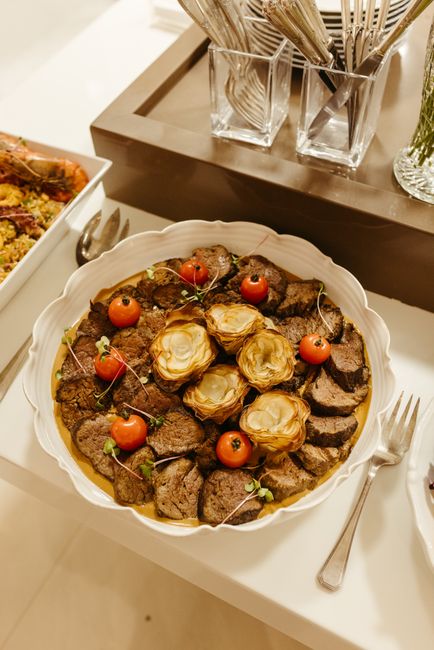
Chateaubriand refers to a thick roast cut from the center of the beef tenderloin, the widest and most evenly shaped section of the muscle. It's not a different animal part from filet mignon, it's the same tenderloin, just taken from its thickest point and cooked as a roast for two or more people rather than sliced into individual steaks. The name also refers to the classic preparation: roasted or seared whole, sliced at the table, and served with a reduction sauce built from the pan drippings, shallots, and wine.
Varieties
There's no varietal distinction in the cut itself, but the name is used two ways: as the cut (center-cut tenderloin roast) and as the dish (that roast served sliced tableside with a specific sauce, sometimes called "chateaubriand sauce"). Some steakhouses use the name loosely for any large tenderloin cut for two, which has diluted its original, stricter meaning.
Buying tips
Ask specifically for a center-cut tenderloin roast weighing at least 1.5 pounds, thick enough to feed two to four people; thinner tail-end pieces cook unevenly and dry out before the center is done. A whole trimmed tenderloin (sometimes called PSMO) can be cut into a chateaubriand roast plus filet mignon steaks from the remaining ends, which is usually cheaper than buying the roast pre-cut.
Substitutes
Center-cut beef tenderloin roast (unlabeled) — 1:1
Often the exact same cut sold without the fancier name; ask the butcher for a thick center section of tenderloin.
Top sirloin roast — 1:1
Much cheaper and still tender enough to roast whole, but firmer and less buttery than tenderloin.
Individual filet mignon steaks — 2-3 steaks per person
Sacrifices the tableside carving presentation but gives the same tenderness and flavor in single-serving portions.
Storage
Keep fresh, unroasted chateaubriand in its original vacuum packaging in the coldest part of the refrigerator and cook within 3-5 days, or freeze tightly wrapped for up to 6 months. Once cooked, refrigerate leftovers in an airtight container for up to 4 days; slice cold and gently rewarm slices rather than reheating the whole roast, which will push it past medium.
How to use
Roasted whole at high heat after a hard sear, typically to an internal temperature of 125-130°F for medium-rare, then rested 10-15 minutes before carving into thick slices. Traditionally served with a bordelaise or a béarnaise-style sauce, roasted bone marrow, and simple sides like potatoes or asparagus. Because the cut has so little internal fat, it's rarely braised or slow-cooked.
What it pairs with
Pairs well with red wine reductions, béarnaise, and bordelaise sauce, plus classic steakhouse sides like duchess potatoes, sauteed mushrooms, or asparagus with hollandaise. A bold Bordeaux or Cabernet Sauvignon complements the richness without competing with the mild beef flavor.
Nutrition
A 4-ounce serving of cooked chateaubriand has roughly 220-250 calories, about 25 grams of protein, and 12-14 grams of fat, most of it unsaturated compared to fattier cuts like ribeye. It's also a good source of iron, zinc, and B12.
FAQ
Is chateaubriand the same as filet mignon?
They come from the same muscle, the tenderloin, but filet mignon is cut into individual steaks while chateaubriand is a larger center-cut section roasted whole and carved at the table.
How long does it take to cook a chateaubriand roast?
A 1.5 to 2-pound center-cut roast typically takes 25-35 minutes in a 425°F oven after searing, plus a 10-15 minute rest, to reach 125-130°F for medium-rare.
Why is chateaubriand so expensive?
The tenderloin is the least-used muscle on the cow, making it naturally tender, and the center-cut portion used for chateaubriand is a small fraction of an already limited cut.
Can chateaubriand be cooked well done?
It can, but the cut has almost no marbling, so past medium it turns dry and loses the buttery texture that's the entire point of choosing tenderloin.
Have chateaubriand on hand? Find recipes with our Recipe Generator →