
Cherry Peppers
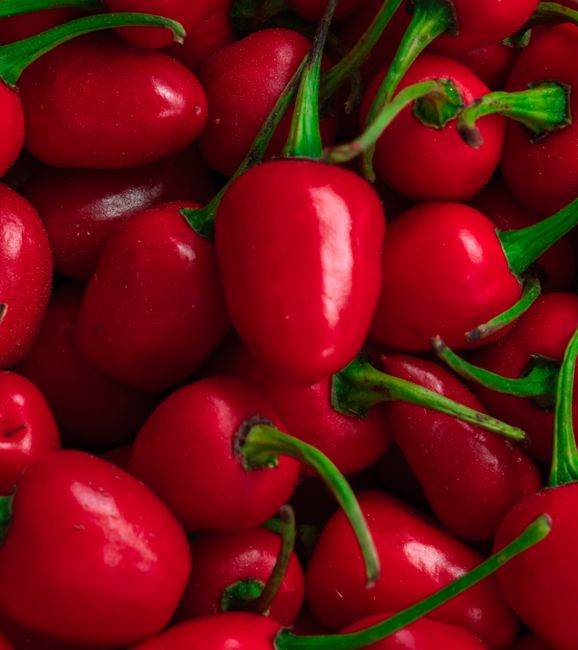
Cherry peppers are small, round peppers (Capsicum annuum) named for their resemblance to the fruit, typically 1 to 2 inches across with thick, crisp walls. They range from sweet to moderately hot (roughly 2,500 to 5,000 Scoville units for the hot type) and are most commonly encountered pickled in jars, though fresh versions show up at farmers markets in late summer.
Varieties
Sweet cherry peppers (sometimes called cherry bomb peppers when hot) have almost no heat and a thick, crunchy wall similar to a bell pepper. Hot cherry peppers, often labeled 'hot cherry peppers' on jars, carry real but moderate heat, closer to a jalapeno than a habanero. The two look nearly identical raw, so heat level is usually only distinguishable by label or by tasting a small piece.
Buying tips
Fresh cherry peppers should feel firm and heavy with tight, glossy skin and no soft spots near the stem. For jarred peppers, check the label for 'hot' or 'sweet,' since the two look nearly identical on the shelf; sweet cherry peppers are usually labeled as such and lack any listed heat level.
Substitutes
Pepperoncini — 1:1
Milder and more vinegary in flavor than hot cherry peppers, but works well in the same sandwich and antipasto applications.
Banana peppers, sliced into rounds — 1:1
Sweeter and less thick-walled; a good substitute for sweet cherry peppers in salads and sandwiches.
Fresno chile, sliced into rounds — 1:1
Close in heat and color to a hot cherry pepper but has thinner walls and a fruitier flavor.
Piquillo peppers — 1:1
Sweet, roasted, and jarred rather than pickled; use in place of sweet cherry peppers when a brighter, roasted flavor is acceptable.
Jarred jalapeno slices — 3:4
Hotter and more one-note than cherry peppers; use slightly less to avoid overpowering the dish.
Storage
Fresh cherry peppers keep in the refrigerator crisper drawer for up to 2 weeks. Once cut, store in an airtight container for up to 5 days. Pickled cherry peppers keep, unopened, in the pantry for up to a year, and once opened should stay refrigerated in their brine for several months.
How to use
Pickled cherry peppers are stuffed with mozzarella or prosciutto for antipasto platters, sliced onto sandwiches (especially Italian subs), and chopped into pasta salads. Fresh sweet cherry peppers can be roasted whole or stuffed with cheese or seasoned rice, while fresh hot cherry peppers work well pickled at home or sliced into salsas.
What it pairs with
Pairs well with mozzarella, provolone, and other mild cheeses, cured meats like salami and prosciutto, and briny ingredients like olives and capers. The vinegar tang also cuts through rich dishes like meatball subs or braised short ribs.
Nutrition
Fresh cherry peppers are low in calories and a solid source of vitamin C. Pickled versions carry significantly more sodium from the brine, so rinse briefly before eating if watching salt intake.
FAQ
Are cherry peppers the same as cherry bomb peppers?
They're the same species and shape; 'cherry bomb' typically refers to the hotter variety, while plain 'cherry pepper' can mean either the sweet or hot type depending on the grower or brand.
How hot are cherry peppers compared to jalapenos?
Hot cherry peppers run about 2,500 to 5,000 Scoville units, milder than a jalapeno's 2,500 to 8,000 range, though there's overlap depending on the specific pepper.
Can I make pickled cherry peppers at home?
Yes. Slice or halve fresh cherry peppers, remove the seeds if you want less heat, and cover with a hot brine of equal parts vinegar and water plus salt and sugar; they're ready to eat after about 24 hours refrigerated and improve over a week.
What's a good substitute for stuffed cherry peppers in a recipe?
Mini sweet peppers or small roasted piquillo peppers work as a stand-in for stuffing, though they won't have the same vinegar tang as a jarred, brined cherry pepper.
Have cherry peppers on hand? Find recipes with our Recipe Generator →