
Chicken Feet
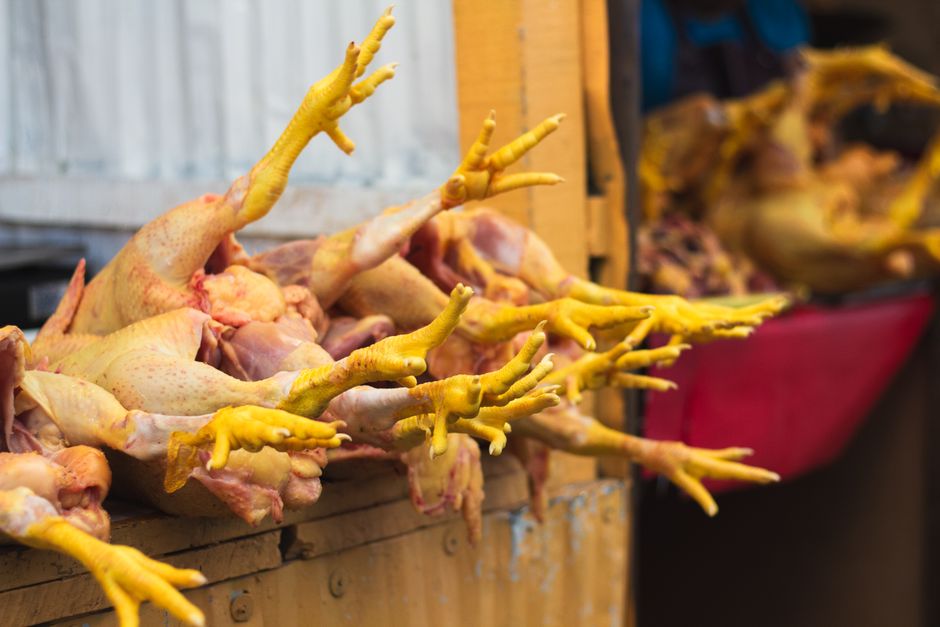
Chicken feet are the lower legs of the chicken, from the ankle joint down, consisting almost entirely of skin, tendon, cartilage, and small bones with very little muscle meat. What they lack in meat they make up for in collagen, which breaks down during long cooking into gelatin that thickens stock and gives braised dishes a distinctive sticky, wobbly texture. They're a staple in Chinese dim sum (often called phoenix claws), Filipino soups and adobo, Vietnamese and Korean broths, and Jamaican soup.
Varieties
Commercial frozen chicken feet sold in vacuum packs are usually already blanched and nail-trimmed, which saves prep time but can leave the skin slightly softer than fresh feet processed at home. Fresh feet from a live-poultry market or butcher require more cleanup but hold their texture better through frying.
Buying tips
Look for pale yellow to light pink skin with no gray or slimy patches, and feet that still feel firm rather than tacky. Asian and Latin American grocery stores usually sell them pre-trimmed of nails and cleaned; if buying whole from a butcher, ask for nails removed or plan to trim them yourself with kitchen shears before cooking.
Substitutes
Pig's feet (trotters) — 1:1 by weight
Similar collagen-to-bone ratio for stock building; the flavor is slightly richer and more porky, so this works best in soups rather than delicate broths.
Duck feet — 1:1
The closest match for dim sum-style braised and fried preparations; slightly larger and meatier with a similar gelatinous skin once cooked.
Chicken wing tips — 1.5:1 by weight
Good for enriching stock with gelatin when feet aren't available, though the yield is lower so use more by weight to match body.
Pork skin (rind) — 0.5:1 by weight
Very concentrated collagen source for stock; a small amount goes a long way, so cut the quantity roughly in half compared to feet.
Unflavored gelatin sheets or powder — 1 sheet per 240ml stock as a finishing step
Not a cooking substitute but a shortcut for texture only, added at the end to thicken a finished stock rather than simmered from raw.
Storage
Fresh chicken feet spoil quickly because of the high skin surface area; use within 1 to 2 days of purchase or freeze immediately. Frozen, they keep well for 9 to 12 months in an airtight bag with air pressed out. Thaw in the refrigerator, not on the counter, since the skin texture turns mushy if thawed too fast.
How to use
Blanch first to remove residual feathers, nails, and surface grime, then either simmer for hours to build gelatinous stock, or deep-fry until the skin blisters before braising in soy sauce, black bean sauce, ginger, and star anise for the classic dim sum texture. In Filipino cooking they go into adobo and sinigang; in Jamaican cooking into pepper pot and soup with dumplings. They add almost no flavor of their own beyond a mild savory note, so they're used mainly for body and mouthfeel.
What it pairs with
Pairs well with star anise, ginger, scallion, black bean garlic sauce, soy sauce, black vinegar, and dried chili in Chinese-style braises; with garlic, vinegar, and bay leaf in Filipino soups; and with allspice, scotch bonnet, and thyme in Jamaican soups.
Nutrition
Chicken feet are mostly collagen protein, skin, and cartilage rather than muscle meat, so they're relatively low in the complete amino acid profile of chicken breast but very high in collagen, which some cooks value for joint and skin health, along with modest calcium and phosphorus from the small bones leaching into stock during long simmering.
FAQ
Do chicken feet have any meat on them?
Almost none. What little tissue exists is mostly tendon and skin around the toe bones; they're used for texture and gelatin, not as a meat source.
Why do chicken feet turn wrinkled and puffy when fried before braising?
Deep-frying the blanched, dried feet causes the skin to blister and expand, creating pockets that then soak up the braising sauce, which is what gives dim sum-style phoenix claws their characteristic texture.
How do you clean chicken feet before cooking?
Rinse well, trim off the nails and any yellow calloused skin at the joints with kitchen shears, then blanch in boiling water for 2 to 3 minutes and scrub off any remaining loose skin before proceeding with the recipe.
Can chicken feet replace bones for making stock?
Yes, and they add more gelatin per pound than most bones because they're almost pure skin and cartilage; many cooks add a handful of feet to a regular stockpot specifically to thicken the body of the finished broth.
Have chicken feet on hand? Find recipes with our Recipe Generator →