
Chicken Fillet
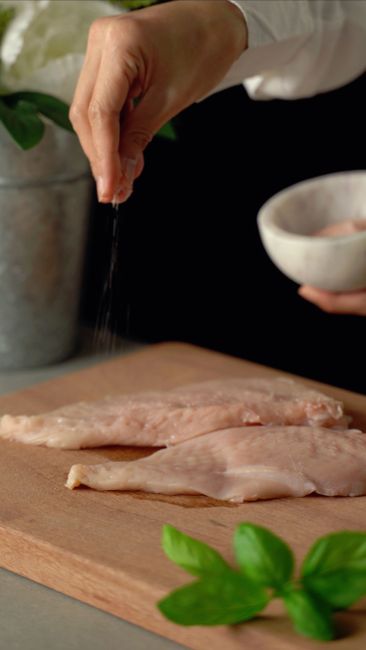
Chicken fillet usually refers to the boneless, skinless chicken breast, a lean, mild-flavored cut taken from the front of the bird. In the UK and much of Europe it's the standard term for what American recipes call "boneless skinless chicken breast." It cooks quickly, takes on marinades and sauces well, and is the default cut for stir-fries, cutlets, and grilled chicken because it has no bone or skin to work around.
Varieties
"Chicken fillet" and "chicken breast" are generally the same cut; "chicken tenderloin" (or tender) is the smaller, narrower strip attached to the underside of the breast and cooks faster due to its size. Thigh fillet, sometimes labeled separately, is darker meat with more fat and a stronger flavor than breast fillet.
Buying tips
Look for fillets that are pale pink and firm, not gray or slippery. Avoid packages with excess pooled liquid, which often signals the chicken has been frozen and thawed or is nearing its sell-by date. Uniform thickness across a pack makes portioning and even cooking easier.
Substitutes
Boneless skinless chicken thigh — 1:1 by weight
More forgiving and juicier since thighs have more fat; needs a couple extra minutes of cook time and works better in braises or slow cooking.
Turkey breast cutlet — 1:1 by weight
Leaner and slightly denser texture; pound thinner than chicken to avoid a dry, chewy result.
Firm tofu (for a non-meat swap) — 1:1 by weight, pressed
Press well and marinate longer since tofu doesn't absorb flavor as fast as raw chicken; best in stir-fries or breaded cutlets, not roasts.
Pork tenderloin — 1:1 by weight
Similar lean texture and quick cook time; slice into medallions for even cooking since it's a longer, narrower cut than chicken breast.
Storage
Keep raw chicken fillet in its original packaging or a sealed container on the bottom shelf of the fridge (coldest spot, away from drips) and use within 1-2 days, or freeze for up to 9 months. Thaw in the fridge overnight rather than on the counter; a fillet left out too long can sit in the food-safety danger zone before it's fully thawed.
How to use
Pound to an even thickness before cooking so thin and thick ends don't finish at different times. Works well pan-seared, grilled, poached for shredding, breaded for cutlets, or cubed for stir-fries and curries. Brining or marinating for 30 minutes to a few hours helps since the cut has almost no fat to keep it moist on its own.
What it pairs with
Pairs well with acidic marinades like lemon and vinegar, garlic and herbs, or soy-ginger sauces; its mild flavor also carries heavier sauces like cream, mushroom, or curry without competing.
Nutrition
A 4-ounce cooked skinless chicken fillet has around 165 calories and 31 grams of protein, with less than 4 grams of fat, making it one of the leanest common protein sources.
FAQ
Is chicken fillet the same as chicken breast?
Yes, in most UK and European recipes "chicken fillet" means the same boneless, skinless breast that American recipes call chicken breast.
Why does chicken fillet turn out dry so often?
Its low fat content means it overcooks fast; pulling it off the heat at 165°F (74°C) internal temperature and letting it rest a few minutes prevents most dryness.
How long does raw chicken fillet last in the fridge?
About 1 to 2 days. If it won't be cooked within that window, freeze it the day of purchase rather than waiting.
Can chicken fillet be cooked from frozen?
Yes, in an oven or on a stovetop, but it takes roughly 50% longer than thawed chicken and should still be checked with a thermometer rather than by time alone.
Have chicken fillet on hand? Find recipes with our Recipe Generator →