
Chilacayote
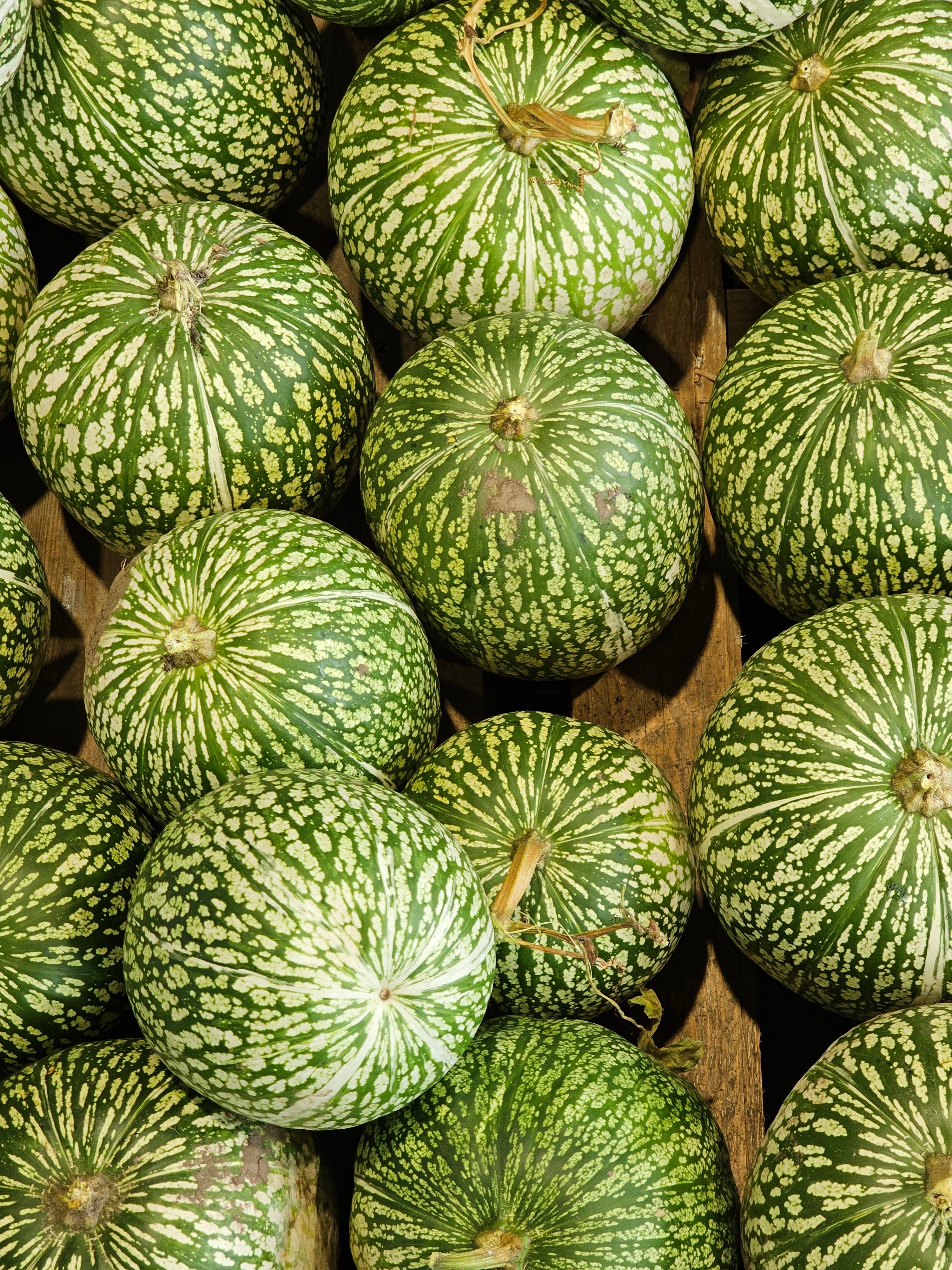
Chilacayote (Cucurbita ficifolia) is a large winter squash, also called fig-leaf gourd, chilacayota, Malabar gourd, or cidra, common throughout Mexico and Central America. It has thick, dark green skin mottled with white or pale streaks and firm white flesh threaded with black seeds. Mature flesh cooks up stringy and fibrous, similar to spaghetti squash, which is what makes it prized for candying into cabello de ángel (angel hair), a filling used in pan dulce and other sweets. Younger chilacayote is used in savory soups and stews the way squash or chayote would be.
Varieties
Chilacayote is frequently confused with chayote, but they're unrelated: chayote (Sechium edule) is smooth-skinned, pear-shaped, and has a single flat seed, while chilacayote is a large, round to oblong gourd with black seeds scattered through fibrous flesh. It's also sometimes mistaken for cushaw squash, another Cucurbita species with a similar pale, mottled rind.
Buying tips
Choose a chilacayote that feels heavy for its size with firm, unblemished skin; soft spots or a dull, shriveled patch near the stem signal age. The mottled green-and-white pattern varies a lot between gourds and isn't a sign of quality either way. Whole, uncut gourds keep far longer than pre-cut pieces, so buy whole if storage time matters.
Substitutes
Chayote — 1:1 by volume
A much milder, less fibrous substitute for savory soups, stews, and stir-fries; it won't shred into strands the way chilacayote does.
Spaghetti squash — 1:1 by volume
The closest texture match for candying or any recipe relying on the stringy, spaghetti-like strands of cooked flesh.
Zucchini — 1:1 by volume
Works only for young, tender chilacayote in savory dishes; cooks much faster and lacks the fibrous strands, so reduce simmer time.
Butternut squash — not interchangeable by volume
Denser and sweeter with no stringy texture; only reasonable in pureed soups where texture doesn't matter, not for candying or strand-based dishes.
Storage
A whole, uncut chilacayote keeps for several weeks to a couple of months in a cool, dark, dry spot, much like other winter squash. Once cut, wrap the exposed flesh tightly in plastic and refrigerate, using it within 4 to 5 days. Cooked, shredded flesh freezes well for up to 6 months, which is common practice for stockpiling cabello de ángel filling.
How to use
Mature chilacayote flesh is simmered until tender, then the strands are separated and cooked down with piloncillo, cinnamon, and sometimes orange peel to make cabello de ángel, a classic filling for empanadas and conchas. Younger, less fibrous chilacayote is diced and added to caldo de res, pork stews, or sautéed with corn and epazote. The seeds can be rinsed, toasted, and salted like pumpkin seeds.
What it pairs with
For candying, pairs with piloncillo, canela (Mexican cinnamon), and orange or lime zest. In savory dishes, it takes well to pork, corn, epazote, and a squeeze of lime at the end of cooking.
Nutrition
Chilacayote is mostly water and low in calories, with a modest amount of vitamin C and potassium in the flesh. The seeds are more calorie-dense and contribute protein and unsaturated fat when toasted and eaten as a snack.
FAQ
Is chilacayote the same as chayote?
No. They're different plants entirely. Chayote is smooth, pear-shaped, and mild, while chilacayote is a round to oblong gourd with mottled skin, black seeds, and fibrous, stringy flesh once mature.
Can chilacayote be eaten raw?
It's almost never eaten raw. The flesh is tough and starchy uncooked; it's simmered until tender for both savory dishes and candy-making.
What is cabello de ángel and how is it made from chilacayote?
Cabello de ángel ("angel hair") is candied chilacayote strands cooked slowly with piloncillo or sugar, cinnamon, and citrus peel until the fibrous flesh turns translucent and syrupy. It's used as a filling in Mexican pan dulce and pastries.
Do you need to peel chilacayote before cooking?
Yes, the skin is thick and inedible even after long cooking. Peel it with a sturdy knife or vegetable peeler before cubing or before simmering it whole for shredding.
Have chilacayote on hand? Find recipes with our Recipe Generator →