
Chiles
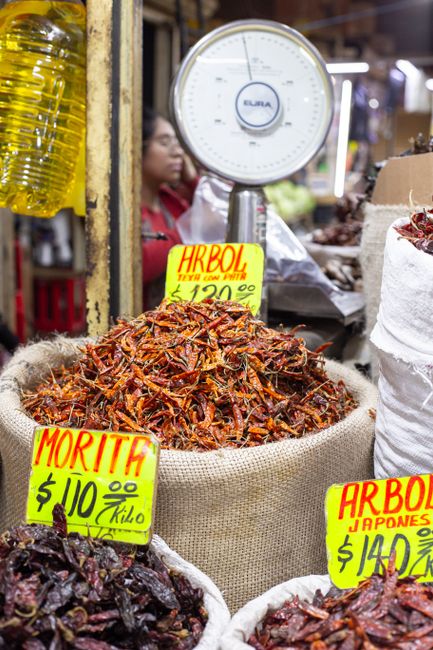
Chiles are the fruit of Capsicum plants, ranging from mild bell-pepper relatives to blistering habaneros and ghost peppers. They're used fresh, dried, smoked, pickled, or ground, and their heat comes from capsaicin, concentrated mainly in the white pith and seeds rather than the flesh itself. Different varieties bring distinct flavors beyond heat: fruity and smoky in chipotles, tangy and bright in serranos, earthy and raisin-like in anchos.
Varieties
Heat and flavor vary enormously by variety: jalapeños and serranos are common fresh green chiles with moderate heat, habaneros and Scotch bonnets are fruity and very hot, and poblanos are mild enough to stuff whole. Dried varieties like ancho, guajillo, and pasilla are prized for complex, non-fiery flavor rather than heat alone.
Buying tips
Choose fresh chiles that are firm, glossy, and free of soft spots or wrinkling near the stem, which signals age. For dried chiles, look for pliable, slightly flexible pods rather than brittle, cracking ones, a sign they're still fresh and haven't lost oils.
Substitutes
Fresh jalapeño for fresh serrano — 1.5:1
Jalapeños are milder, so use about 50% more to match a serrano's heat; both share a similar grassy, bright flavor.
Dried ancho chile for fresh poblano — 1 dried ancho per 1 fresh poblano
Anchos are dried poblanos, so flavor is close but deeper and sweeter; rehydrate in hot water for 15 minutes before using in sauces.
Crushed red pepper flakes for fresh chile, minced — 1/2 teaspoon flakes per 1 tablespoon minced fresh chile
Flakes bring pure heat without the vegetal freshness or moisture of fresh chile, so they work best in cooked dishes rather than salsas or garnishes.
Cayenne pepper (ground) for fresh chile — 1/4 teaspoon ground cayenne per 1 tablespoon minced fresh chile
Cayenne is much hotter by volume and has no fresh flavor, so it substitutes for heat only, not for the texture or brightness fresh chiles add.
Canned chipotles in adobo for fresh smoked chile flavor — 1 chipotle plus 1 teaspoon adobo sauce per 1 dried chipotle
Already rehydrated and seasoned, so they add smokiness and tang faster than dried chipotles, but bring extra acidity and salt.
Storage
Fresh chiles keep 1 to 2 weeks in the refrigerator crisper, unwashed and loose in a paper bag to reduce moisture buildup. Dried chiles keep up to a year in an airtight container in a cool, dark cabinet; refrigerate or freeze them for longer shelf life in humid climates. Chopped fresh chiles freeze well for up to 6 months in a sealed bag.
How to use
Fresh chiles go into salsas, stir-fries, and pickles, usually added toward the end of cooking to preserve crunch and brightness. Dried chiles are typically toasted briefly in a dry pan, then rehydrated in hot water or simmered directly into sauces, moles, and braises to build deep, layered flavor. Removing seeds and white pith before cooking lowers heat significantly without losing much flavor.
What it pairs with
Pairs well with lime, cilantro, garlic, and cumin in Latin American cooking, and with fish sauce, ginger, and Thai basil in Southeast Asian dishes. Fatty ingredients like avocado, cheese, and coconut milk help balance and mellow heat on the palate.
Nutrition
Chiles are very low in calories and virtually fat-free, but a single small chile can provide well over 100% of the daily vitamin C recommendation, plus notable vitamin A and capsaicin, which has been studied for mild metabolism-boosting effects.
FAQ
Does removing the seeds actually reduce heat?
Mostly indirectly. Capsaicin concentrates in the white pith the seeds are attached to, not the seeds themselves, so scraping out both the seeds and the pith noticeably lowers heat.
Why do some chiles get hotter as they ripen?
Capsaicin production generally increases as a chile matures and changes color, which is why a red jalapeño is typically slightly hotter than a green one from the same plant.
Can dried chiles be used without rehydrating?
Yes, if ground into powder or toasted and crumbled directly into a dish with enough liquid to soften them during cooking, such as a long-simmered stew or braise.
What's the best way to cool down a dish that's too spicy?
Add dairy, sugar, or acid rather than more liquid; casein in dairy binds to capsaicin, while a squeeze of lime or a pinch of sugar can round out excess heat.
Have chiles on hand? Find recipes with our Recipe Generator →