
Choclo
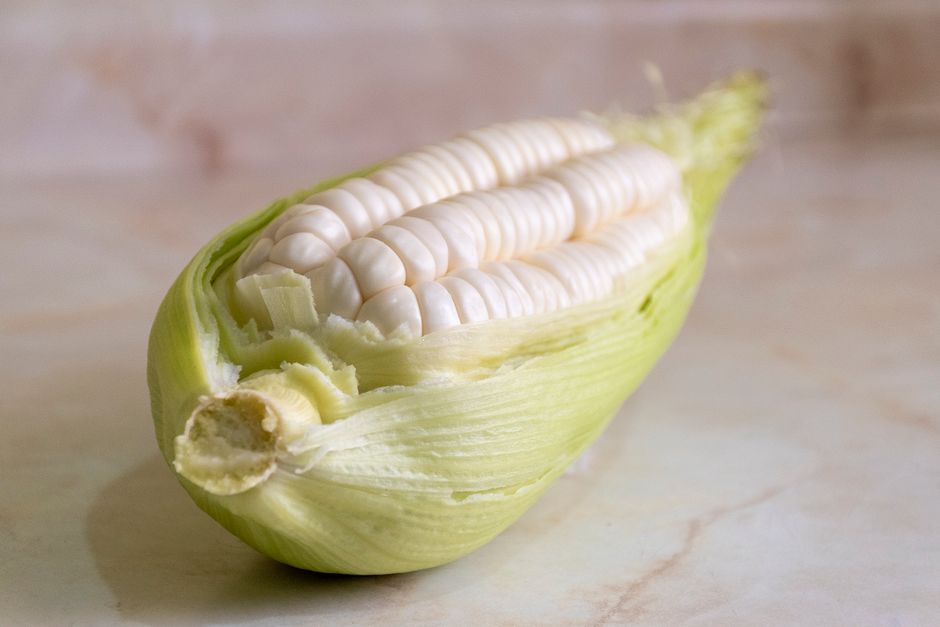
Choclo is the large, starchy, pale-kernel corn variety grown in the Andes and used constantly in Ecuadorian food, distinct from the small sweet yellow corn common in the US. Its kernels are two to three times the size of standard sweet corn, with a firm, chewy bite and a mild, starchy flavor rather than sugary sweetness. It shows up boiled on the cob as a side dish, ground into dough for humitas, and dried into mote (hominy) used in soups and stews.
Varieties
Choclo, mote, and regular sweet corn are three different products from related corn varieties: choclo is the fresh large-kernel corn, mote is that same corn dried and treated to become hominy, and standard sweet corn is a smaller, sugar-heavy variety bred for eating fresh rather than for starch.
Buying tips
Fresh ears should have pale, plump, tightly packed kernels and green, moist husks. Frozen choclo, sold vacuum-packed in Latin American grocery stores, is the most reliable year-round source outside South America and cooks up closer to the fresh version than canned sweet corn.
Substitutes
Frozen or fresh super sweet corn kernels — 1:1 by volume
Sweeter and smaller than choclo, so texture and flavor shift noticeably, but it works fine in soups and stews where the corn is one ingredient among many.
Canned or dried white hominy (mote) — 3/4 cup hominy per 1 cup choclo called for
Hominy is dried, alkali-processed choclo, so the flavor is close but the texture is softer and less starchy; good in soups like mote pillo or locro.
Peruvian giant corn (choclo peruano), canned or frozen — 1:1
The closest match in kernel size and starchiness, sold in most Latin American grocery stores under this name.
Regular corn on the cob — 1:1 by ear
Smaller, sweeter kernels and a softer bite; best when choclo is being served plain on the cob rather than cooked into a dish.
Storage
Fresh choclo on the cob keeps in the refrigerator, husk on, for about 3-4 days before the kernels start to shrivel. Boiled or steamed kernels freeze well in a sealed bag for up to 6 months, which is how most Latin markets sell it outside the Andes.
How to use
Boiled or steamed and served whole on the cob with fresh cheese (queso fresco) and avocado as a side dish, ground fresh into masa for humitas (corn tamales), added kernel-by-kernel to soups like locro de papa and caldo de gallina, and dried into mote for stews and the fried mote pillo breakfast dish.
What it pairs with
Pairs naturally with queso fresco or quesillo, ripe avocado, aji (Ecuadorian hot sauce made with tomato, onion, and chili), and fried pork dishes like fritada or hornado.
Nutrition
Choclo is higher in starch and calories than standard sweet corn, closer nutritionally to a starchy vegetable like potato, and provides fiber, some protein, and B vitamins.
FAQ
Is choclo the same as hominy?
Not quite. Mote (Ecuadorian hominy) is made by drying and alkali-treating choclo kernels, which changes the texture to something softer and chewier than fresh choclo.
Can regular sweet corn work in humitas?
It can in a pinch, but humitas depend on choclo's starchiness to bind the ground corn dough; sweet corn's higher sugar and water content makes the mixture wetter and less firm after steaming.
Where can you buy choclo outside Ecuador?
Latin American grocery stores typically stock it frozen or canned under the name choclo peruano or Peruvian corn, since Peru and Ecuador share the same Andean corn varieties.
Have choclo on hand? Find recipes with our Recipe Generator →