
Coffee Liqueur
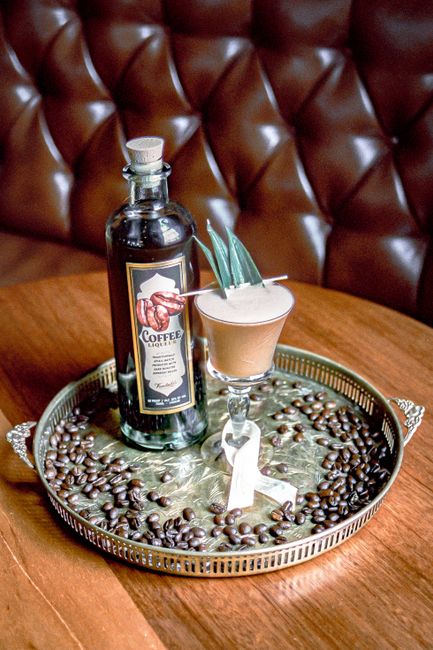
Coffee liqueur is a sweetened, alcohol-based spirit flavored with brewed coffee, typically built on a rum or neutral spirit base and thickened slightly with sugar syrup. Kahlua and Tia Maria are the best-known commercial brands, though styles vary from syrupy-sweet to sharply bitter depending on the coffee-to-sugar ratio. It's used both as a sipping liqueur and as a flavoring agent in desserts, sauces, and coffee cocktails.
Varieties
Kahlua (Mexican, rum-based, sweeter and thicker) and Tia Maria (Jamaican, lighter body, more pronounced coffee bitterness) are the two most common styles found in recipes; some newer craft brands use cold brew concentrate for a less syrupy, more roasted flavor.
Buying tips
Check the label for actual coffee content versus artificial flavoring; brands using real brewed coffee or cold brew concentrate tend to taste less syrupy-sweet. A lower price point often correlates with a thinner, more one-note coffee flavor.
Substitutes
Strong brewed espresso plus dark rum and sugar — 2 tbsp espresso + 1 tbsp dark rum + 1 tsp sugar per 1 tbsp coffee liqueur
Closest homemade approximation; simmer briefly with sugar to dissolve before combining with the rum and cooled espresso.
Instant espresso powder dissolved in water or rum — 1 tbsp coffee liqueur = 1 tsp espresso powder dissolved in 1 tbsp warm water or rum, plus 1/2 tsp sugar
Fast substitute for baking when the alcohol content isn't important to the recipe's structure.
Coffee syrup (non-alcoholic, e.g. Torani or homemade coffee simple syrup) — 1:1
Best non-alcoholic swap for desserts like tiramisu or coffee cake; adds sweetness and flavor without the boozy edge.
Chocolate liqueur or creme de cacao mixed with espresso powder — 1 tbsp chocolate liqueur + 1/2 tsp espresso powder per 1 tbsp coffee liqueur
Useful when coffee liqueur isn't on hand but a chocolate liqueur already is; shifts the flavor toward mocha.
Marsala or dark rum with a few drops of vanilla extract — 1:1
Loses the coffee flavor entirely, so best only in recipes where coffee liqueur is mainly adding boozy depth rather than coffee taste, like a tiramisu soak stretched with actual espresso.
Storage
Coffee liqueur doesn't need refrigeration; store the bottle tightly capped in a cool, dark cupboard away from direct heat or sunlight. Once opened, it keeps its flavor for 1 to 2 years, though the coffee notes gradually flatten over time. Refrigerating after opening isn't required but can slightly extend freshness.
How to use
Common in tiramisu, coffee-flavored buttercream and ganache, affogato, and glazes for cakes like tres leches. In drinks, it's the base of a White Russian, Espresso Martini, and mudslides, and it's often added to hot coffee or drizzled over vanilla ice cream.
What it pairs with
Pairs well with vanilla, chocolate, hazelnut, cinnamon, and dark rum. Works especially well in desserts alongside mascarpone or cream cheese, which mellow its sweetness.
Nutrition
Coffee liqueur is high in sugar and roughly 20 to 26.5% alcohol by volume (varies by brand), so it contributes meaningful calories even in small pours; a standard 1.5 oz serving runs around 140 to 190 calories.
FAQ
Is coffee liqueur the same as coffee-flavored vodka?
No. Coffee liqueur is sweetened and lower proof, generally 20 to 26.5% ABV, while coffee vodka is typically unsweetened and closer to standard vodka proof around 35 to 40% ABV.
Can I make tiramisu without any coffee liqueur or substitute?
Yes, simply increase the amount of brewed espresso used to soak the ladyfingers; the dessert will taste slightly less complex but still distinctly coffee-flavored.
Does the alcohol cook off when coffee liqueur is used in baking?
Not entirely. Baking at typical oven temperatures for 20 to 40 minutes burns off some alcohol, but studies show 10 to 25% can remain, so recipes intended for children or nondrinkers should use a non-alcoholic substitute.
Why does my homemade coffee liqueur substitute taste thin compared to store-bought?
Commercial coffee liqueur is thickened with sugar syrup cooked to a light syrup consistency; simmering your espresso-sugar mixture for a few extra minutes to reduce and thicken it closes most of that gap.
Have coffee liqueur on hand? Find recipes with our Recipe Generator →