
Conch
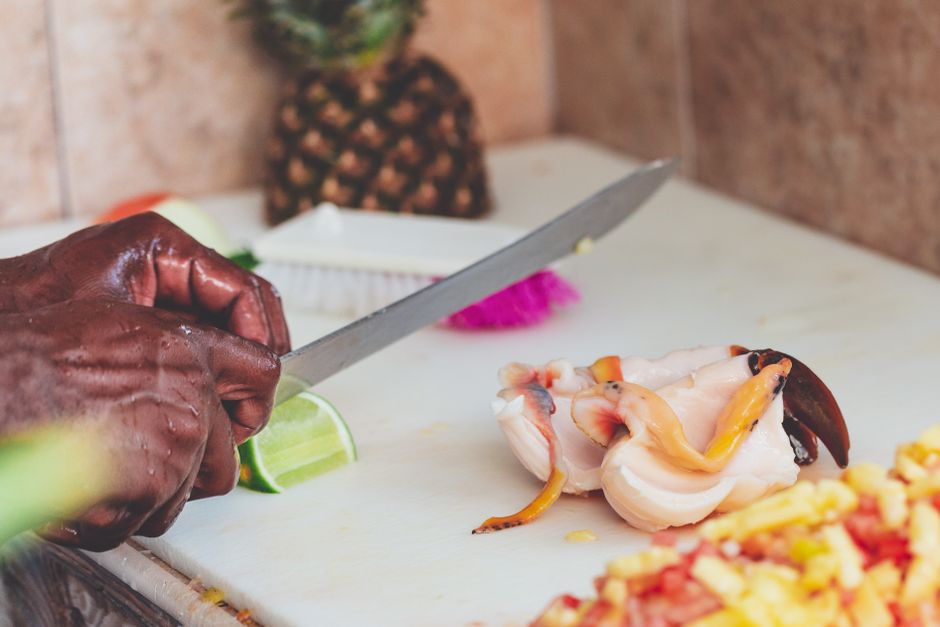
Conch is the meat of large sea snails in the Strombidae family, most commonly queen conch, harvested throughout the Caribbean, the Bahamas, and Florida Keys. The meat is dense, chewy, and mildly sweet, similar in texture to abalone or squid, and needs tenderizing (pounding or long simmering) before it's pleasant to eat. It's most famous in the U.S. as the base of conch fritters, deep-fried batter studded with diced conch and vegetables, but it also shows up raw in conch salad and simmered in chowders.
Varieties
Queen conch is the species most associated with fritters and Caribbean cooking and has the largest, most prized meat. Other conch species like the milk conch or fighting conch are sometimes sold but tend to be smaller and tougher, requiring longer tenderizing.
Buying tips
Fresh conch meat should look pale ivory to light orange with no strong ammonia or fishy odor; a clean, mild ocean smell is normal. Most conch sold in the continental U.S. is previously frozen and imported, since queen conch harvesting is banned in Florida waters; look for it at Caribbean or Latin markets, often labeled by weight in vacuum-sealed bags.
Substitutes
Whelk meat — 1:1
Another large sea snail with a nearly identical chewy texture; the closest real substitute where legal to buy.
Bay or sea scallops, chopped — 1:1
Much more tender than conch and sweeter, but works well diced small into fritter batter for a similar bite-sized seafood chunk.
Squid or calamari, tenderized — 1:1
Closest chewy texture available in most regular grocery stores; pound briefly before dicing to soften it further.
Cooked shrimp, chopped — 1:1
Widely available and cooks fast, but noticeably more tender and less chewy than real conch; best for fritters rather than raw salads.
Storage
Fresh or thawed conch meat should be used within 1-2 days, kept cold in a sealed container over ice or on the coldest shelf of the refrigerator. Frozen conch (the most common form outside coastal areas) keeps well for up to 6 months in a tightly sealed freezer bag; thaw overnight in the refrigerator before use, never at room temperature.
How to use
Conch needs mechanical or heat tenderizing before eating. For fritters, dice the meat small, pound it briefly with a mallet, then fold it into a seasoned batter with bell pepper, onion, and celery before deep-frying in 350°F oil until golden, about 3-4 minutes. For chowder or stew, simmer diced conch low and slow for 45-60 minutes until tender. For raw preparations like conch salad, it's typically 'cooked' briefly in lime juice (ceviche-style) rather than heated.
What it pairs with
Pairs well with lime juice, scotch bonnet or habanero peppers, bell pepper, and cilantro, and is traditionally served with a tangy mustard-mayo or hot sauce-based dipping sauce alongside fried fritters.
Nutrition
Conch is a lean, high-protein shellfish, roughly 25 grams of protein per 100 grams with very little fat, and provides selenium, magnesium, and vitamin B12.
FAQ
Why is conch so chewy if it's not tenderized first?
Conch is a foot muscle used constantly by the snail to move and grip surfaces, so the muscle fibers are dense and tight; pounding physically breaks down those fibers before cooking.
Is queen conch endangered or restricted?
Queen conch populations have been overfished in parts of the Caribbean, and harvesting is banned or tightly quotaed in U.S. waters including Florida; most conch sold in the U.S. is legally imported from the Bahamas or Turks and Caicos.
Can frozen conch be used straight from frozen for fritters?
It's better to thaw it fully first so excess water can drain off; frozen-straight-into-batter conch releases moisture during frying and can make the fritters greasy or soggy inside.
What's the difference between conch fritters and conch salad?
Fritters use diced, tenderized conch folded into a fried batter, while conch salad is raw conch 'cooked' briefly in citrus juice and tossed with diced raw vegetables, similar to ceviche.
Have conch on hand? Find recipes with our Recipe Generator →