
Crawfish Etouffee
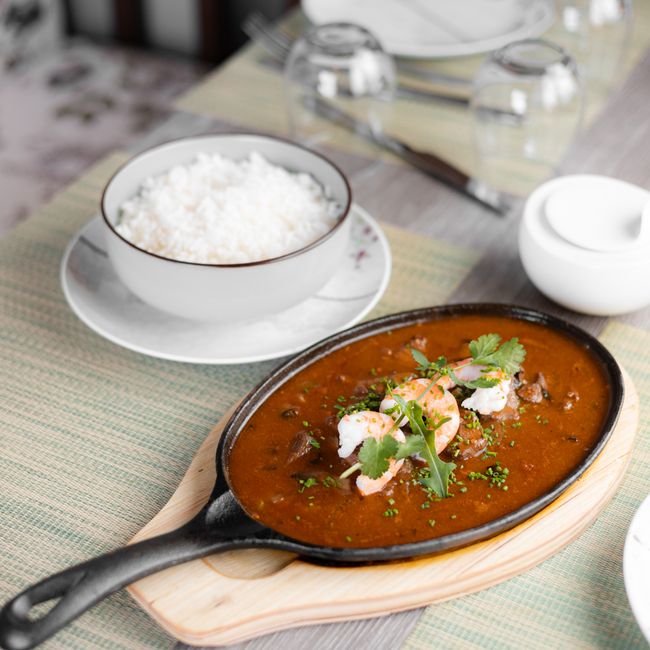
Crawfish etouffee is a Louisiana dish built from crawfish tail meat smothered (etouffee means "smothered" in French) in a roux-based sauce with onion, celery, and bell pepper, seasoned with Cajun spices and served over white rice. The roux ranges from a light blond color in Creole versions to a deeper brown in Cajun ones, which changes both the color and the depth of flavor of the finished sauce.
Varieties
Creole etouffee typically uses a lighter, blond roux and often includes tomatoes for a brighter red color, reflecting the New Orleans Creole tradition. Cajun etouffee, more common in the Atchafalaya Basin region, uses a darker roux and skips tomatoes entirely, giving a deeper brown sauce and a nuttier, more toasted flavor.
Buying tips
Fresh Louisiana crawfish tail meat, sold pre-peeled at seafood markets during crawfish season (roughly February through June), has the best flavor and a slightly firmer texture. Outside that window, frozen tail meat is standard; check the bag for added water or salt, which dilutes flavor, and thaw it in the refrigerator overnight rather than under running water.
Substitutes
Shrimp (peeled and deveined, 41/50 count) — 1:1 by weight
The most common swap and closest in texture; add shrimp later in cooking since they cook faster than crawfish tails and turn rubbery if simmered too long.
Cooked chicken thigh meat, cubed — 1:1 by weight
Turns the dish into chicken etouffee; simmer raw thighs directly in the sauce for 20-25 minutes instead of adding pre-cooked meat.
Frozen imported crawfish tail meat (Chinese) — 1:1 by weight
A real substitute for Louisiana crawfish tails, not a different ingredient. Milder flavor and softer texture; rinse and pat dry before adding since it holds extra liquid.
Firm white fish, cut into chunks (catfish or cod) — 1:1 by weight
Add during the last 5-8 minutes of cooking and stir gently to keep pieces intact.
Storage
Refrigerate leftover etouffee in an airtight container for up to 4 days. It also freezes well for up to 3 months, though the roux can separate slightly on thawing; whisking it over low heat while reheating brings it back together. Store the rice separately from the etouffee so it doesn't turn mushy.
How to use
Serve ladled over steamed long-grain white rice, which soaks up the sauce. It's also spooned over grits, stuffed into a baked potato, or served with crusty French bread on the side for sopping up extra sauce. A few dashes of hot sauce and sliced green onion or parsley go on at the table, not during cooking.
What it pairs with
Pairs with cold lager or a crisp white wine like Sauvignon Blanc to cut the richness of the roux. On the side, dirty rice, cornbread, or a simple green salad balance the heaviness of the dish without competing with it.
Nutrition
Crawfish tail meat is a lean, low-fat protein source, similar to shrimp, and a good source of protein and vitamin B12. Most of the calories and fat in a serving of etouffee come from the roux (flour cooked in butter or oil) rather than from the crawfish itself.
FAQ
Why is my etouffee sauce too thin?
The roux likely wasn't cooked long enough to build thickening power, or too much liquid was added at once. Simmer uncovered for a few extra minutes, or whisk in a small amount of additional flour-and-butter roux made separately.
Can I make crawfish etouffee without a roux?
Some cooks thicken it with a cornstarch slurry instead, but this changes the flavor significantly since the roux itself contributes a toasted, nutty taste that a slurry can't replicate.
Is imitation crab or surimi a good substitute for crawfish in etouffee?
Not recommended. Surimi is pre-cooked and made mostly of fish paste, so it turns mushy and lacks the sweetness crawfish tails bring to the sauce.
How do I know when the roux is the right color?
placeholder
Have crawfish etouffee on hand? Find recipes with our Recipe Generator →