
Crudité Platter
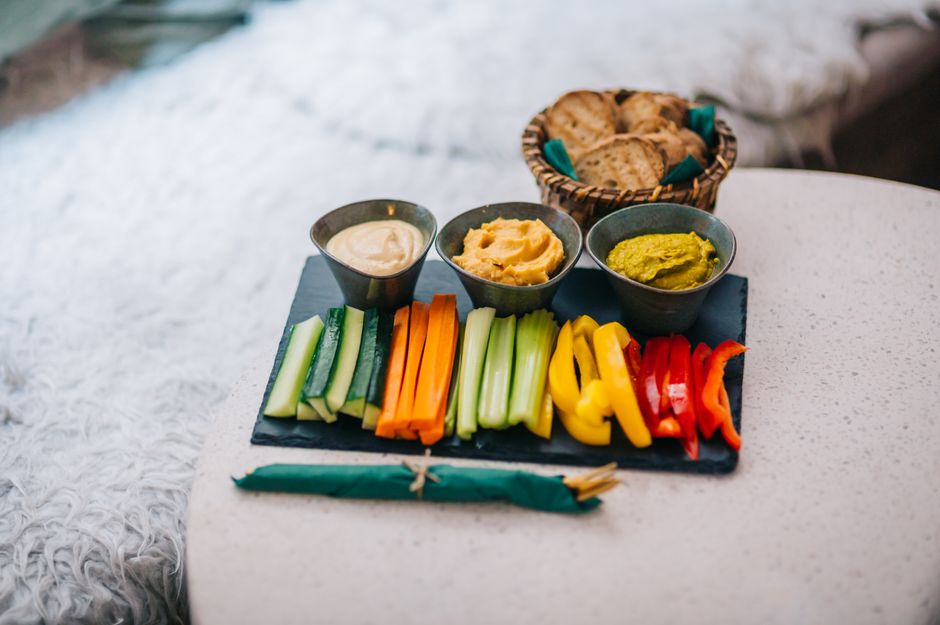
A crudité platter is an arrangement of raw or briefly blanched vegetables, cut into sticks, spears, or bite-sized pieces, served cold alongside one or more dips. The word comes from the French cru, meaning raw. Unlike a generic veggie tray, a good crudité platter groups vegetables by color and shape, includes at least one blanched item for textural contrast, and pairs each vegetable with a dip sturdy enough to cling to it rather than run off.
Varieties
Crudités technically refers only to raw vegetables, but most platters now include lightly blanched vegetables like green beans, asparagus, or sugar snap peas alongside fully raw ones like carrots and radishes for variety in texture.
Buying tips
Choose vegetables that are firm with no soft spots, since anything already slightly wilted will only get worse after cutting and sitting out. Buy carrots and celery with the tops still attached if possible, as they tend to be fresher than pre-trimmed bags. Cherry or grape tomatoes hold up far better on a platter than sliced larger tomatoes, which weep liquid and soften quickly.
Substitutes
Hummus — 1:1
Lower in fat than a mayo-based dip and holds up well with sturdy vegetables like carrots and bell pepper strips.
Tzatziki — 1:1
Thinner than ranch, so it works better as a dip for softer vegetables like cucumber than as a scoop-and-hold dip for celery.
Buttermilk herb dip — 1:1
A lighter homemade alternative to bottled ranch, made with buttermilk and sour cream instead of mostly mayonnaise.
Green goddess dressing — 1:1
Herb-heavy and slightly thinner than ranch; best served in a deeper bowl so vegetables can be dunked rather than dragged.
Ranch dressing — 1:1
The default pairing for a reason: thick enough to coat vegetables and mild enough not to compete with them.
Storage
Cut vegetables can be prepped up to two days ahead if stored properly. Keep sturdy items like carrots, celery, and radishes submerged in a bowl of cold water in the refrigerator, which keeps them crisp and prevents drying out at the cut edges. Items that oxidize or go watery when soaked, like cherry tomatoes, bell peppers, and cucumber, should instead be stored dry in a sealed container lined with a paper towel. Assemble the platter and add the dip no more than 2 to 3 hours before serving.
How to use
Serve as a pre-dinner appetizer, a party spread alongside cured meats and cheese, or a lighter alternative to fried appetizers at a gathering. Blanching sturdier vegetables like green beans, broccoli, and asparagus for 60 to 90 seconds in boiling water followed by an ice bath softens their raw bite while keeping them bright and crisp, and makes them easier to eat than fully raw.
What it pairs with
Pairs well with a cheese board, olives, and crackers as part of a larger spread, and with a dry white wine like sauvignon blanc, which cuts through creamy dips. Also works alongside grilled or roasted meats as a lighter counterpoint at a barbecue.
Nutrition
The vegetables themselves are naturally low in calories and contribute fiber, vitamin C, and vitamin A, particularly from carrots, bell peppers, and cherry tomatoes. Nearly all of the calories, fat, and sodium in a crudité platter come from the dip, so portioning dip separately rather than pre-tossing vegetables in it keeps the nutrition profile closer to the vegetables alone.
FAQ
Can a crudité platter be made a day ahead?
Yes, the vegetables can be cut and stored up to two days ahead using the water-soak method for sturdy vegetables and dry storage for the rest. Wait to assemble the full platter and add dip until a few hours before serving.
Why do some vegetables need to be blanched first?
Vegetables like green beans, broccoli, and asparagus are fibrous and bitter when fully raw. A brief 60 to 90 second blanch followed by an ice water bath softens the texture and mellows the flavor while keeping the color bright.
What's the best way to keep cut vegetables from drying out on the platter?
Arrange the platter close to serving time and mist lightly with cold water if it needs to sit out longer than an hour, or keep it loosely covered with a damp paper towel and plastic wrap in the refrigerator until guests arrive.
Is a crudité platter the same as a vegetable tray?
They're similar, but a crudité platter is generally more deliberately arranged, includes at least one blanched vegetable, and pairs specific vegetables with specific dips rather than one dip for everything.
Have crudité platter on hand? Find recipes with our Recipe Generator →