
Crudités
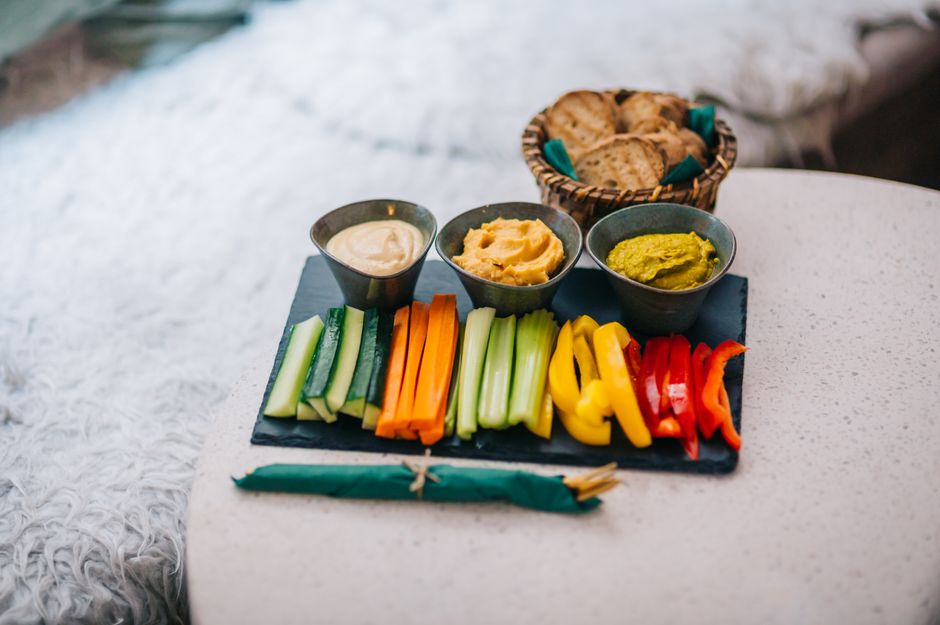
Crudités is the French term for raw, cut vegetables served as an appetizer, almost always alongside a dip. The word itself just means 'raw things,' so there's no fixed recipe, only a principle: pick vegetables that are crisp and sturdy enough to hold up on a platter and to be dragged through a thick dip without snapping or going limp.
Varieties
There's no single fixed crudité; the term covers any raw vegetable arrangement. Classic French versions lean on carrot, celery, radish, and fennel, while American party platters often add bell peppers, cucumber, cherry tomatoes, and broccoli or cauliflower florets.
Buying tips
Choose vegetables that are firm with no soft spots: carrots and celery should snap cleanly when bent, bell peppers should feel heavy for their size, and radishes should be rock-hard. Buy vegetables no more than 2-3 days before serving since crispness declines the longer they sit.
Substitutes
Blanched vegetables (green beans, asparagus, broccoli florets) — 1:1 by volume
Useful when a vegetable is too tough or bitter raw, such as green beans or broccoli stems. Blanch 1-2 minutes, then shock in ice water so they stay crisp and bright.
Vegetable chips (baked kale, beet, or sweet potato chips) — swap for one vegetable component
Not a true substitute for the fresh crunch of crudités, but works in a pinch to round out a platter or serve alongside it.
Pickled vegetables (cornichons, pickled carrots, pepperoncini) — swap for one vegetable component
Adds acidity and a different texture; good for filling gaps in a platter when fresh produce is limited.
Fruit sticks (apple, pear, or jicama) — 1:1 by volume
Jicama in particular behaves almost identically to raw vegetables: crisp, neutral, and sturdy for dipping.
Storage
Cut vegetables lose crispness and flavor fast. Store cut pieces in an airtight container lined with a paper towel, refrigerated, for up to 2 days. Keep watery vegetables like cucumber and tomato separate from sturdier ones, and hold off on plating with dip until just before serving so nothing gets soggy.
How to use
Serve as a pre-dinner appetizer with a dip such as ranch, hummus, or a yogurt-based sauce, or as a lighter alternative to bread on a cheese board. Cut vegetables into uniform sticks, spears, or coins so they're easy to grab and dip one-handed.
What it pairs with
Pairs with thick, cold dips like ranch, French onion dip, hummus, baba ganoush, or a garlicky yogurt sauce. A squeeze of lemon or a small bowl of flaky salt alongside works if you want something lighter than a dip.
Nutrition
A crudité platter is naturally low in calories and high in fiber, vitamin A, and vitamin C, especially with carrots, bell peppers, and cherry tomatoes. The calorie count usually comes from the dip, not the vegetables.
FAQ
What vegetables work best for crudités?
Carrots, celery, bell peppers, cucumber, radishes, cherry tomatoes, and fennel hold their crunch well. Softer vegetables like zucchini or mushrooms wilt or turn watery within an hour and are best avoided.
Can crudités be made ahead of time?
Yes, cut vegetables up to a day ahead and store them dry in an airtight container in the fridge; wet vegetables like cucumber or tomato are better cut no more than a few hours before serving.
How do you keep a crudité platter crisp for a party?
Nest the vegetable container in a larger bowl of ice, or refrigerate the arranged platter covered in a damp paper towel and plastic wrap until right before guests arrive.
Is crudité the same as a vegetable tray?
Essentially yes, crudité is just the French name for the same idea: raw cut vegetables meant for dipping, though the term implies a bit more intentional arrangement and variety than a standard grocery-store veggie tray.
Have crudités on hand? Find recipes with our Recipe Generator →