
Delmonico Steak
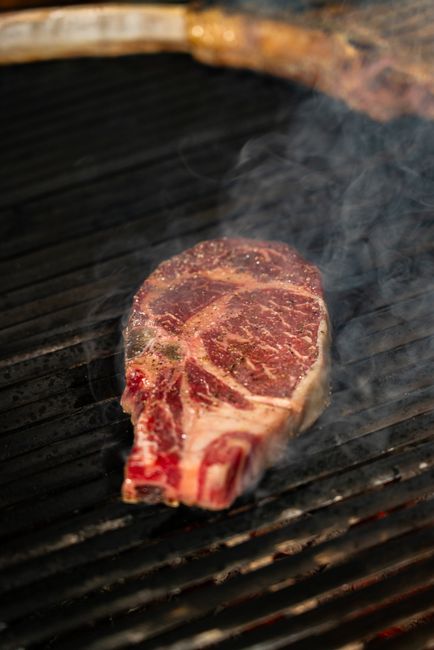
Delmonico steak isn't a single, standardized cut the way a ribeye or a filet mignon is. The name comes from Delmonico's, the 19th-century New York steakhouse credited with popularizing thick, bone-in cuts of beef, but the restaurant never trademarked which part of the animal it referred to. Today, butchers and steakhouses use "Delmonico" loosely for a thick-cut, well-marbled steak, most often a boneless ribeye, but sometimes a top loin (strip) steak or a chuck eye steak cut from near the rib section. What all versions share is thickness (usually 1 to 1.5 inches), good marbling, and enough fat to stay tender and juicy on a hot grill or in a cast iron pan.
Varieties
There is no USDA or industry-standard definition of a Delmonico steak, which is why the same label at different butchers or restaurants can mean a boneless ribeye, a strip steak, a chuck eye, or a bone-in rib steak. Some steakhouses use it specifically for a thick, boneless rib cut, while others apply it to any well-marbled steak roughly 1.5 inches thick. When a recipe calls for a Delmonico steak, boneless ribeye is the safest default.
Buying tips
Since the name isn't standardized, ask the butcher exactly which primal the Delmonico steak is cut from before buying, especially if you're expecting ribeye-level marbling. Look for a steak at least 1 inch thick with visible white fat flecked evenly through the meat rather than concentrated only around the edges.
Substitutes
Boneless ribeye — 1:1 by weight
The most common actual match. Same marbling and buttery texture most people expect from a Delmonico.
New York strip (top loin) steak — 1:1 by weight
Leaner and firmer with a tighter grain, still tender but less fatty than a ribeye-style Delmonico.
Chuck eye steak — 1:1 by weight
Cut from right next to the rib section, so it has similar marbling and flavor to ribeye at a lower price, though slightly less tender.
Bone-in rib steak — 1:1 by weight, adjust cook time up slightly
Closest to the original 19th-century Delmonico's presentation. The bone slows cooking a few minutes but adds flavor.
Storage
Keep fresh, uncooked steak in its original packaging in the coldest part of the refrigerator and use within 3 to 5 days. For longer storage, wrap tightly in plastic then foil or vacuum seal and freeze up to 6 to 12 months; thaw in the refrigerator overnight rather than at room temperature. Cooked leftovers keep in a sealed container in the fridge for 3 to 4 days.
How to use
Best suited to high-heat, dry cooking methods that build a crust without overcooking the interior: grilling, broiling, or searing in a cast iron pan and finishing in a hot oven. Because the cut is thick, let it sit at room temperature for 20 to 30 minutes before cooking so the center cooks evenly, and rest it 5 to 10 minutes after cooking before slicing.
What it pairs with
Pairs well with a compound herb butter, sautéed mushrooms, or a blue cheese crumble, plus classic steakhouse sides like roasted potatoes, creamed spinach, or a simple wedge salad. A full-bodied red like cabernet sauvignon or malbec stands up to the richness.
Nutrition
A 6-ounce Delmonico steak (as a boneless ribeye) provides roughly 40 to 45 grams of protein along with a substantial amount of saturated fat, typically 15 to 20 grams, since marbling is part of what defines the cut. Leaner substitutes like strip steak cut that fat total by close to a third.
FAQ
Is a Delmonico steak the same as a ribeye?
Often, but not always. Many butchers sell boneless ribeye labeled as Delmonico because it matches the thick, marbled profile associated with the name, but some use the term for strip loin or chuck eye cuts instead.
How thick should a Delmonico steak be?
Traditionally at least 1 inch, often closer to 1.5 inches, since the cut is meant to be seared hard on the outside while staying medium-rare to medium in the center.
What's the best way to cook a Delmonico steak at home?
Sear it in a very hot cast iron pan for 2 to 3 minutes per side, then finish in a 400°F oven for about 5 to 8 minutes depending on thickness, until it reaches 130 to 135°F internally for medium-rare.
Why do different steakhouses serve completely different cuts under the same name?
The term originated from Delmonico's restaurant in the 1800s but was never tied to a specific primal cut, so its use spread informally and inconsistently across the beef industry.
Have delmonico steak on hand? Find recipes with our Recipe Generator →