
Egusi
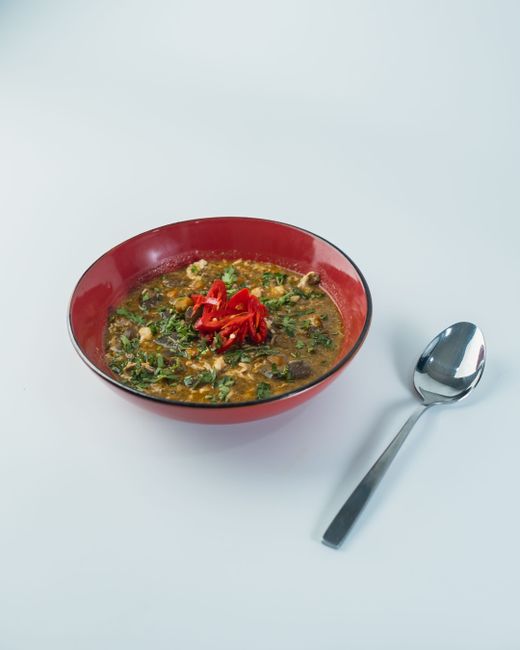
Egusi refers to the dried, hulled seeds of certain squash and melon varieties (commonly Citrullus colocynthis or Cucumeropsis mannii), ground into a coarse meal and used as both a thickener and a primary flavor base in West African cooking, most famously egusi soup. The flavor is nutty and slightly earthy, closer to pumpkin seed or sesame than to any fruit, and the ground seeds release fat as they cook, giving dishes a thick, almost custardy texture.
Varieties
Different regions use seeds from different squash and melon species under the same name; Nigerian egusi typically comes from Citrullus colocynthis (a bitter melon relative), while some West African markets sell a similar product from Cucumeropsis mannii. Ghanaian akatoa or agushi refers to the same category of ground melon seed and is used in comparable ways.
Buying tips
Look for pale, cream-colored ground egusi with a fine, even texture and no dark specks or musty smell, sold in bags at African and international grocers. Whole flattened seeds, sold shelled, can be ground at home in a spice grinder for fresher flavor than pre-ground packets.
Substitutes
Ground pumpkin seeds (pepitas) — 1:1
Closest widely available substitute in both fat content and nutty flavor; toast lightly before grinding for a deeper taste.
Ground sunflower seeds — 1:1
Milder and slightly less oily than egusi; works fine for thickening but the finished dish will taste less rich.
Ground raw peanuts (groundnuts) — 3/4:1
Adds more sweetness and a heavier peanut flavor; use a little less since peanuts thicken more aggressively than egusi.
Ground sesame seeds (tahini or raw, ground) — 1:1
Different flavor profile, more bitter and less fatty, but usable in a pinch for the thickening effect alone.
Storage
Store whole or ground egusi in an airtight container in a cool, dark pantry for up to 3 months, or in the freezer for up to a year since its high fat content can turn rancid at room temperature over time. Buy in smaller quantities if kept only in the pantry.
How to use
Most often ground and stirred into hot oil (traditionally palm oil) with onions, peppers, and stock to make egusi soup, where it clumps into soft, thickened lumps as it cooks. Also used to thicken other stews, mixed into balls and steamed as a side, or toasted and sprinkled over vegetables for texture and flavor.
What it pairs with
Pairs naturally with palm oil, crayfish, smoked or dried fish, leafy greens like spinach, bitterleaf, or ugu, and hot peppers such as scotch bonnet, all common in egusi soup.
Nutrition
Egusi seeds are calorie-dense and high in fat, mostly unsaturated, along with a meaningful amount of plant protein and magnesium, which is part of why the ground seeds give soups their rich, filling quality.
FAQ
What does egusi taste like on its own?
Raw or lightly toasted, egusi tastes mild and nutty, similar to raw pumpkin seeds, with a slightly bitter edge that mellows once cooked in oil.
Is egusi the same as pumpkin seeds?
No. Egusi comes from specific squash and melon varieties grown for their seeds rather than their flesh, though the seeds share a similar shape, fat content, and flavor to pumpkin seeds, which is why pumpkin seeds substitute well.
Why does egusi soup turn out lumpy?
The lumps are intentional and traditional; egusi clumps into soft curds as its fat and protein cook in hot oil, unlike a smooth flour-based thickener.
Can I make egusi soup without palm oil?
Yes, a neutral oil like vegetable or canola oil works, though the soup will lack the characteristic reddish-orange color and slightly sweet, earthy flavor palm oil provides.
Have egusi on hand? Find recipes with our Recipe Generator →