
Empanada Dough
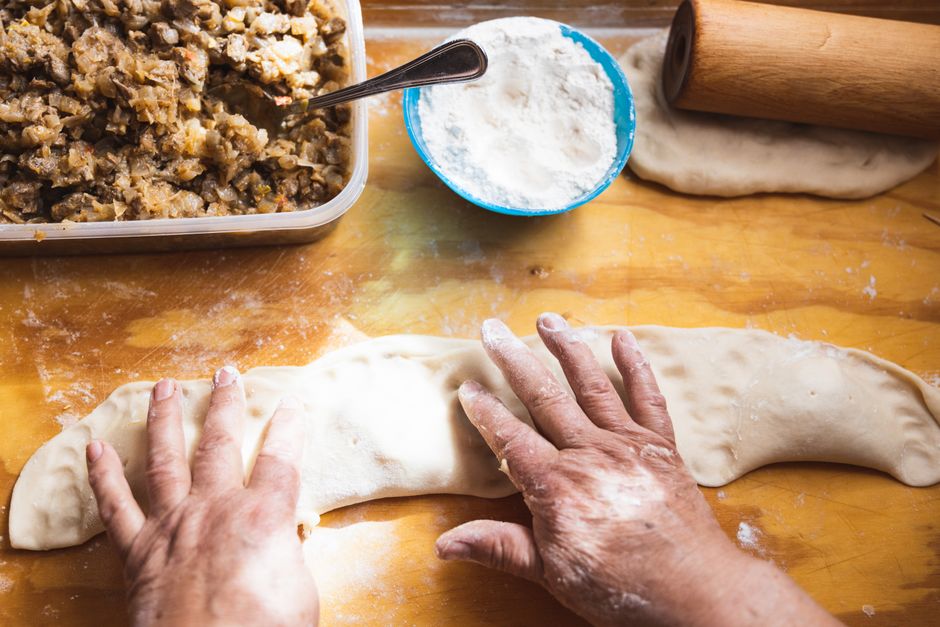
Empanada dough is a sturdy, slightly fatty wheat-flour dough made to wrap around a filling and either fry or bake into a sealed pocket. Unlike pie crust, it's built to hold up to filling weight and sealing pressure without tearing, so it typically has less butter or lard relative to flour and sometimes an egg for structure. Baked versions (common in Argentine tapas de empanadas) tend to be flakier and butter- or lard-based; fried versions are often a bit stiffer and sturdier so they don't blow out in hot oil.
Varieties
Baked empanada dough (for horno) is flakier and made with butter or lard worked into the flour like pie dough. Fried empanada dough (for freír) is denser and sturdier, often made with a small amount of vinegar or vegetable shortening to prevent excess oil absorption. Corn-based dough, made with precooked masa instead of wheat flour, is common in Colombian and Venezuelan empanadas and produces a completely different, gluten-free wrapper.
Buying tips
Pre-made discs (often labeled 'tapas para empanadas' or 'discos') are sold frozen in most Latin grocery stores; check that the stack is fully frozen with no freezer burn and that discs separate cleanly without tearing. Yellow-tinted discs contain added color (achiote or egg) rather than butter content, which doesn't indicate quality.
Substitutes
Refrigerated pie crust — 1:1 by weight
Closest texture match for baked empanadas; it's more delicate than true empanada dough, so seal edges firmly with a fork and avoid overfilling.
Puff pastry, cut into rounds — 1:1 by area
Works only for baked empanadas; it puffs and flakes much more than traditional dough, giving a lighter, less bread-like result.
Frozen biscuit dough, rolled thin — 1:1 by piece
Roll each biscuit out to about 5-6 inches before filling; the result is thicker and bready rather than flaky.
Wonton or egg roll wrappers, doubled — 2 wrappers per empanada
Stack two wrappers per empanada for enough structure to hold filling; best suited to fried, smaller, crisp-style empanadas rather than large baked ones.
Pizza dough — 1:1 by weight
Produces a chewier, more bread-like empanada; roll thinner than you would for pizza and dock the dough lightly to prevent large air bubbles.
Storage
Raw empanada dough discs keep in the refrigerator for 2-3 days stacked with parchment between layers and wrapped tightly in plastic. For longer storage, freeze the stacked, wrapped discs for up to 2 months and thaw in the refrigerator overnight before filling.
How to use
Roll or use pre-cut discs to wrap savory fillings like seasoned ground beef, chicken, or cheese and vegetables, then crimp the edges shut by hand or with a fork before baking at 375-400°F for 20-25 minutes or frying at 350°F for 3-4 minutes per side until golden. Brush baked versions with egg wash for shine and color.
What it pairs with
Pairs with fillings built around ground beef and olives, shredded chicken with cumin, or caramelized onion and cheese, and is traditionally served with chimichurri or a simple hot sauce on the side.
Nutrition
Empanada dough is calorie-dense from the fat content, roughly 90-120 calories per uncooked disc depending on thickness, with fried versions absorbing additional oil during cooking.
FAQ
What's the difference between empanada dough and pie crust?
Empanada dough uses less fat relative to flour and is worked less delicately, since it needs to be sturdy enough to seal, hold filling, and survive frying or handling without cracking, while pie crust is optimized purely for flakiness.
Can I use puff pastry for empanadas?
Yes for baked empanadas, but not for frying since the many butter layers can cause it to separate and leak in hot oil. Cut it into rounds slightly larger than a typical empanada disc to account for shrinkage.
Why did my empanada dough crack when I folded it?
Cracking usually means the dough is too cold or was rolled too thin. Let refrigerated discs sit at room temperature for 5-10 minutes before filling and keep thickness around 1/8 inch.
Can empanada dough be made gluten-free?
Yes, using precooked white corn masa (masarepa) mixed with warm water, salt, and a little oil produces a traditional gluten-free dough used for Colombian and Venezuelan empanadas, though the texture is denser and less flaky than wheat versions.
Have empanada dough on hand? Find recipes with our Recipe Generator →