
Ermine Frosting
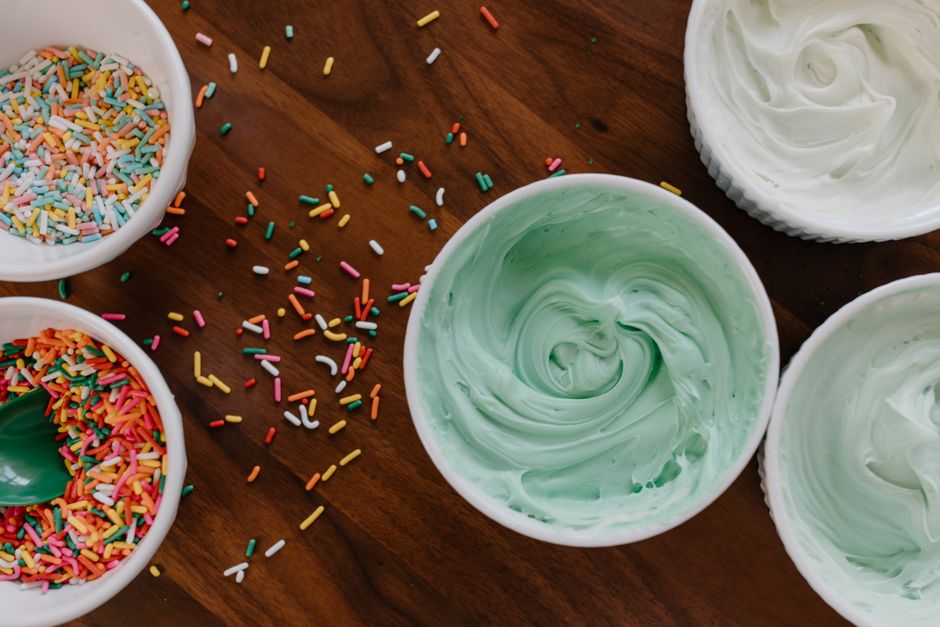
Ermine frosting, also called boiled milk frosting or flour buttercream, starts with flour cooked into milk until it thickens into a smooth paste, similar to making a roux. Once that paste cools completely, it's whipped with softened butter and sugar until it turns pale, fluffy, and light, closer in texture to whipped cream than to standard American buttercream. It's the classic frosting for red velvet cake and is noticeably less sweet and less greasy than powdered-sugar buttercream, since the cooked flour base does the thickening instead of a large volume of sugar.
Varieties
Ermine frosting is sometimes called "flour buttercream" or "boiled milk frosting," all referring to the same method. It's distinct from French or Italian buttercream, which use egg yolks or hot sugar syrup rather than a cooked flour-and-milk base.
Buying tips
Ermine frosting is almost always homemade rather than store-bought, so quality depends on ingredients: use whole milk (not low-fat) for a fuller-bodied paste, and let butter come fully to room temperature so it doesn't clump or curdle when beaten into the cooled paste.
Substitutes
Swiss meringue buttercream — 1:1 by volume
Similarly silky and less sweet than American buttercream, but relies on whipped egg whites and hot sugar syrup instead of a flour paste. More stable in warm rooms than ermine.
American buttercream (powdered sugar and butter) — 1:1 by volume
Much sweeter and denser, but far faster to make since there's no cooking or cooling step. Good backup when short on time.
Cream cheese frosting — 1:1 by volume
Tangier and softer-set than ermine; works well on red velvet or carrot cake but won't hold sharp piped edges as well.
Storage
Ermine frosting can sit at cool room temperature for a few hours on a finished cake, but because it contains cooked milk, refrigerate it for longer storage, covered, for up to 4 days. Bring to room temperature and re-whip for a couple of minutes before using, since it firms up and can look slightly grainy straight from the fridge.
How to use
Traditionally used on red velvet cake, but works on any layer cake, cupcakes, or as a filling since it pipes cleanly and holds detailed shapes without weeping. Because it's less sweet, it also pairs well under fondant or as a crumb coat where you don't want extra sugar competing with the cake flavor.
What it pairs with
Classic with red velvet cake, but also complements vanilla, spice, and chocolate layer cakes where a less-sweet, silky frosting is wanted instead of a heavy sugar-forward buttercream.
Nutrition
Made mostly of butter, milk, and sugar with a small amount of flour, ermine frosting generally has less sugar per cup than American buttercream, though it's still high in fat and calories from the butter.
FAQ
Why did my ermine frosting turn out soupy or curdled?
This usually happens when the flour paste is still warm when the butter is added, causing the butter to melt instead of cream. Cool the paste to room temperature, ideally in the fridge for 20 to 30 minutes, before whipping it into the butter.
Can I make ermine frosting gluten-free?
Yes, a 1:1 gluten-free flour blend or cornstarch works in place of wheat flour in the cooked paste, though cornstarch sets slightly firmer, so use about 25% less than the flour amount called for.
How is ermine frosting different from Swiss meringue buttercream?
Both are light and less sweet than American buttercream, but ermine uses a cooked flour-milk paste as its base while Swiss meringue buttercream uses whipped egg whites and hot sugar syrup. Ermine is generally easier for home bakers since it doesn't require a candy thermometer or careful egg-white whipping.
Why is it called ermine frosting?
The name likely comes from the frosting's pale, soft-white finish, resembling the winter coat of the ermine, a small weasel prized historically for its white fur.
Have ermine frosting on hand? Find recipes with our Recipe Generator →