
Espagnole Sauce
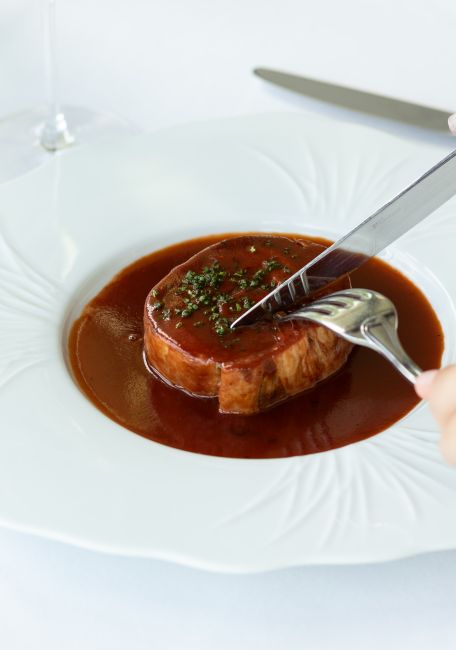
Espagnole sauce is one of the five French mother sauces, a rich brown sauce built from a dark roux, brown stock (traditionally veal), mirepoix, and tomato paste, simmered for hours until deeply savory and glossy. On its own it's rarely served straight; it's mostly used as the foundation for demi-glace and dozens of derivative sauces like bordelaise, chasseur, and Robert.
Varieties
Classical French technique uses veal stock for a neutral, gelatin-rich base, but many modern kitchens substitute beef or even chicken stock for a lighter version. Demi-glace is not a separate sauce but espagnole reduced further with additional stock until it's thick enough to nap a spoon.
Buying tips
True espagnole is almost never sold ready-made; what's sold as "brown sauce" or "demi-glace" in jars is the closer commercial equivalent. Check the ingredient list for real stock or bones near the top rather than caramel color and starch, which signal a thin imitation.
Substitutes
Demi-glace, thinned with stock — 1:2 (half demi-glace, half stock or water)
Demi-glace is espagnole already reduced with more stock, so it's more concentrated and gelatinous. Cut it with warm stock or water until it coats a spoon the way espagnole does.
Quick pan gravy (roux plus brown stock and tomato paste) — 1:1
Whisk a tablespoon of flour into a tablespoon of melted butter, cook until light brown, then whisk in a cup of beef or veal stock and a teaspoon of tomato paste; simmer 15 minutes.
Store-bought beef gravy, doctored — 1:1
Whisk in a teaspoon of tomato paste and a splash of Worcestershire or red wine per cup to push a plain gravy closer to espagnole's depth.
Jarred or boxed brown sauce concentrate — as labeled, typically 1 part concentrate to 3-4 parts water
Convenient but usually saltier and less rounded in flavor than homemade; taste before adding extra salt to a recipe.
Mushroom-based brown sauce (vegetarian) — 1:1
Simmer dried porcini or mushroom stock with a roux and a splash of soy sauce or miso for umami depth; won't have the same gelatinous body but works in vegetarian dishes.
Storage
Cool completely before refrigerating in an airtight container for up to 5 days. Espagnole freezes very well; portion it into ice cube trays or small containers and freeze for up to 3 months, since most uses only call for a few tablespoons at a time.
How to use
Rarely eaten as a finished sauce on its own. It's simmered down further with more stock to make demi-glace, or used as the base that other sauces are built from: add red wine and shallots for bordelaise, mushrooms for chasseur, or tomato and ham for Robert. Also useful stirred into pan drippings to thicken and enrich a quick jus.
What it pairs with
Pairs with roasted beef, duck, and game meats, and forms the backbone of steakhouse-style sauces served over tenderloin or strip steak. Also good stirred into braised short ribs or mixed with pan juices from a roast.
Nutrition
Calorie and sodium content vary widely depending on the stock and amount of butter used in the roux. Traditional versions contain gluten from the flour-based roux and are not suitable for gluten-free diets unless made with a gluten-free starch.
FAQ
What's the difference between espagnole sauce and demi-glace?
Demi-glace is espagnole simmered down with more brown stock until it's reduced by half and much more concentrated and glossy. Espagnole is the starting point; demi-glace is the finished, more refined product.
Can espagnole sauce be made without veal stock?
Yes. Beef stock is a common substitute and gives a similar depth, though it lacks some of the natural gelatin veal bones provide, so the sauce will be slightly thinner unless reduced longer.
Why does espagnole sauce take so long to make?
The long simmer, often 3 to 4 hours, is what breaks down the mirepoix and develops the deep, rounded flavor; rushing it leaves the sauce tasting raw and starchy from the roux.
Is espagnole sauce the same as brown gravy?
They're related but not identical. Brown gravy is usually simpler and thinner, made quickly from pan drippings, while espagnole is a slow-built mother sauce meant to serve as a base for other sauces.
Have espagnole sauce on hand? Find recipes with our Recipe Generator →