
Farfalle
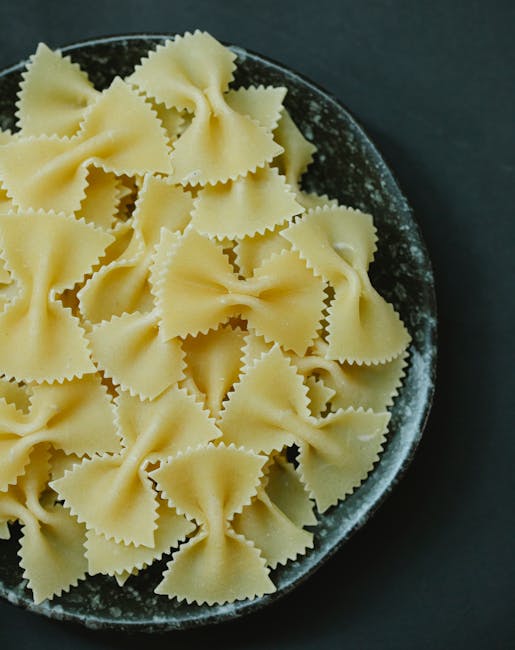
Farfalle is an Italian pasta shape made by pinching a rectangle of pasta dough at the center, creating a bow-tie or butterfly form (the name comes from the Italian word for butterflies). The pinch creates a dense, chewy core while the ruffled wing edges cook up slightly softer, giving each piece two textures in one bite. It's made from durum wheat semolina and comes both dried and fresh, though the dried version is far more common.
Varieties
Farfalline is a smaller version often used in soups rather than as a main pasta course. Whole wheat and gluten-free (corn or rice-based) farfalle are widely available but cook faster and hold their shape less firmly than semolina versions, so check them a minute or two before the package time.
Buying tips
Check that pieces are uniform in size so they cook evenly; farfalle with a rough, matte surface (bronze-die cut) grips sauce better than a shiny, smooth surface (teflon-die cut). Boxes with a lot of broken or crumbled pieces at the bottom indicate rough handling and uneven cooking.
Substitutes
Fusilli — 1:1 by weight
Corkscrew shape holds sauce similarly well and cooks in about the same time; loses the two-texture bite but works fine in salads and baked dishes.
Orecchiette — 1:1 by weight
Cup shape traps chunky sauces and diced vegetables well, though it lacks the crunchy pinched center farfalle has.
Rotini — 1:1 by weight
Tighter spirals grip sauce even more than farfalle; a good stand-in for cold pasta salads.
Penne — 1:1 by weight
Tubular shape changes the mouthfeel noticeably but works in the same sauce-to-pasta ratios and cook times.
Storage
Dried farfalle keeps in a sealed container in the pantry for up to two years past the printed date, away from moisture and heat. Fresh farfalle should stay refrigerated and used within two to three days, or frozen for up to two months on a tray before transferring to a bag.
How to use
Best in dishes where sauce needs to cling to nooks and folds rather than coat smoothly, like creamy sauces, pesto, and chunky vegetable ragùs. Its shape also makes it a common choice for cold pasta salads since the ruffles hold dressing and the pinch keeps pieces from clumping into a solid mass.
What it pairs with
Pairs well with cream-based sauces, peas and pancetta, smoked salmon, pesto, and roasted vegetables like zucchini or cherry tomatoes. Also common in cold salads with feta, olives, and a lemon vinaigrette.
Nutrition
A 2-ounce dry serving of standard durum wheat farfalle has around 200 calories and 7 grams of protein; whole wheat versions add roughly 5 grams of fiber per serving compared to about 2 grams in regular semolina farfalle.
FAQ
How long does farfalle take to cook?
Standard dried semolina farfalle takes about 11 to 13 minutes in salted boiling water for al dente; check at the 10-minute mark since the pinched center takes slightly longer to soften than the wings.
Why does my farfalle come apart at the pinch during cooking?
This usually happens with lower-quality or older dried pasta where the dough wasn't pressed firmly enough at the center; boiling at a gentler simmer rather than a rolling boil reduces the agitation that pulls pieces apart.
Is farfalle good for baked pasta dishes?
Yes, its folds hold cheese sauce well, but slightly undercook it by a minute or two before baking since it will continue absorbing liquid and softening in the oven.
Can farfalle be used in soup?
Regular-size farfalle is a bit large for soup and can overwhelm the broth; farfalline, the miniature version, is the better choice for soups.
Have farfalle on hand? Find recipes with our Recipe Generator →