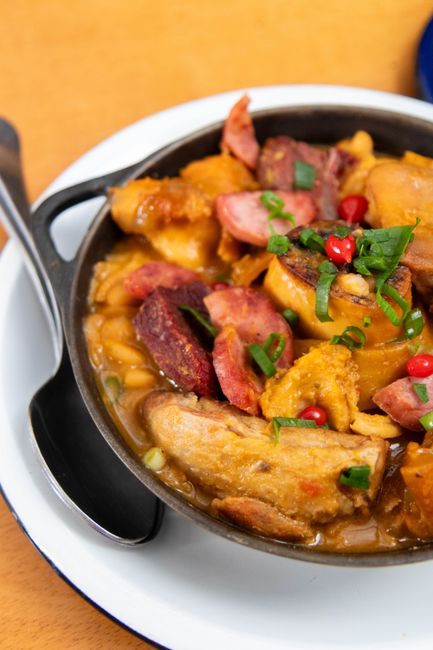
Filé Powder

Filé powder is ground, dried sassafras leaves, a Gulf Coast seasoning developed by Choctaw and other Indigenous cooks and adopted into Louisiana Creole and Cajun cooking. It does two jobs at once: it thickens liquid the way okra does, through natural mucilage in the leaf, and it adds an earthy, faintly root beer-like, slightly minty flavor that's distinct from anything else in the pantry. It's most associated with gumbo, where it's stirred in off the heat or offered at the table so diners can season their own bowl.
Varieties
Pure filé powder is 100% ground sassafras leaves. 'Gumbo filé' sold in some stores is a blended seasoning that mixes filé with dried thyme or other herbs, which changes both the flavor and the amount needed, so check labels before substituting one for the other in a recipe.
Buying tips
Look for a green-tinged, finely ground powder rather than one that's gone flat brown, which signals age and faded flavor. Cajun and Creole grocers and spice shops tend to have fresher stock than a jar that's sat on a general supermarket shelf for years. Some blends labeled 'gumbo filé' include dried thyme or other herbs mixed in, so check the ingredient list if pure sassafras is what's wanted.
Substitutes
Cornstarch slurry (thickening only, no flavor match) — 1 teaspoon cornstarch mixed with 1 tablespoon cold water per 1 teaspoon filé powder
Replicates the thickening effect but contributes none of filé's sassafras flavor; whisk in during the last few minutes of simmering, unlike filé which goes in off the heat.
Sliced fresh or frozen okra — Not a direct teaspoon swap; add about 1 to 1.5 cups sliced okra during the last 30-40 minutes of simmering in place of finishing with filé powder
Traditional Creole gumbos actually choose between okra or filé as the primary thickener rather than substituting one for the other mid-recipe; okra brings its own vegetal flavor and needs real cook time, not a stir-in at the end.
All-purpose flour roux, cooked dark — Not a per-teaspoon swap; a dark roux made at the start of cooking replaces filé's thickening role entirely
A well-cooked dark roux thickens gumbo on its own and adds toasted, nutty depth, but it must be built into the base from the start rather than stirred in at the end like filé.
Storage
Keep filé powder in an airtight container away from light and heat, ideally in a cool cabinet rather than near the stove. It stays reasonably potent for about a year but slowly loses aroma and turns a duller brown; buy in small quantities from a source with turnover.
How to use
Stir filé powder into gumbo after it's removed from the heat, or set it on the table so each person can season their own bowl to taste, usually a half teaspoon to a full teaspoon per serving. Never boil a pot after adding filé; the mucilage seizes up and turns the liquid stringy and gluey rather than silky.
What it pairs with
Built for gumbo, especially seafood and chicken-and-sausage versions, but also works stirred into other Creole stews, dirty rice, or sprinkled lightly over roasted root vegetables for an unexpected earthy note.
Nutrition
Used in small pinches, filé powder contributes negligible calories or nutrients to a dish; its role is textural and aromatic rather than nutritional.
FAQ
What is filé powder actually made from?
It's made from the young leaves of the sassafras tree, dried and ground to a fine powder. The technique originated with Choctaw and other Indigenous peoples of the Gulf Coast before being adopted into Creole cooking.
Why can't filé powder be added while gumbo is still boiling?
Sassafras leaves contain mucilage, the same type of thickening compound found in okra. Boiling it after it's stirred in causes the mucilage to overreact and turn the liquid stringy and gummy instead of smoothly thickened.
Can filé powder and okra be used together in the same pot of gumbo?
Some cooks use a small amount of both for layered flavor, but most traditional recipes pick one as the primary thickener, either an okra-based gumbo or a filé-finished one, rather than combining full quantities of each.
Does filé powder really taste like root beer?
It carries a similar earthy, slightly sweet, faintly medicinal note because sassafras root was historically used to flavor root beer; the leaf powder shares some of the same aromatic compounds, though it's milder and more herbal than the soda.
Have filé powder on hand? Find recipes with our Recipe Generator →