
Fresh Sage
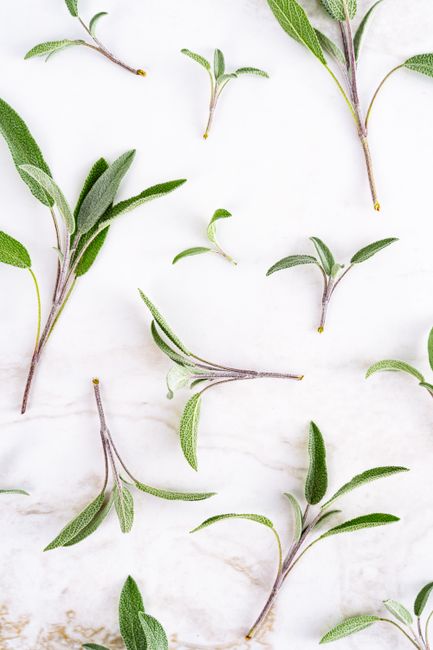
Fresh sage (Salvia officinalis) has soft, velvety, gray-green leaves and a strong, savory flavor that's earthy, slightly peppery, and faintly pine-like. It's more assertive than most soft herbs, so it's usually used in smaller amounts or cooked briefly in butter to mellow it.
Varieties
Common garden sage is the type sold fresh in most grocery stores. Pineapple sage and other ornamental sage varieties have a fruitier, milder flavor and are grown more for garnish and tea than for savory cooking.
Buying tips
Choose bunches with firm, unblemished leaves that are dry to the touch, not wilted or spotted with dark patches. Smaller, younger leaves tend to be more tender and less bitter than large, mature ones.
Substitutes
Dried rubbed sage — 1 tsp dried per 1 tbsp fresh
Dried sage is more concentrated and slightly musty compared to the brighter flavor of fresh; add it earlier in cooking so it has time to rehydrate.
Fresh rosemary, finely chopped — 1:1
Rosemary is more piney and less earthy, but works in the same savory, buttery, or roasted applications as sage.
Fresh thyme — 1:1
Milder and more floral than sage; best in stuffings, soups, or roasted vegetables where sage's stronger flavor isn't essential.
Poultry seasoning — 1/2 tsp per 1 tbsp fresh sage
A blend that already contains dried sage along with thyme and marjoram; use less than you'd think since it's concentrated and pre-seasoned.
Fresh savory (summer or winter) — 1:1
Peppery and slightly minty, savory is a reasonable stand-in in stuffings and bean dishes but lacks sage's distinctive pine note.
Storage
Wrap unwashed sage sprigs loosely in a paper towel and keep in a partially sealed plastic bag in the refrigerator crisper drawer, where it keeps for about 1 to 2 weeks. Leaves darken and turn slimy once they've turned, so check and remove any blackened leaves as they appear. For longer storage, freeze whole leaves in a single layer on a tray, then transfer to a freezer bag.
How to use
Fry whole leaves in butter until crisp for a garnish on pasta or squash dishes, add chopped leaves to stuffing and sausage, or tuck whole sprigs under the skin of roast chicken or turkey. Sage holds up well to longer cooking times, unlike more delicate herbs like basil or cilantro.
What it pairs with
Pairs naturally with butter, brown butter, pork, poultry, winter squash, white beans, and Parmesan. It's a classic partner for the fats in stuffing and gravy because its flavor cuts through richness.
Nutrition
Sage contains modest amounts of vitamin K and antioxidant compounds, but it's used in small enough quantities that its nutritional contribution to a dish is minor.
FAQ
Can I substitute ground sage for fresh sage leaves?
Yes, but use about a third of the volume, since ground sage is more concentrated and loses the leafy texture whole or chopped fresh leaves provide.
Why did my fresh sage leaves turn black in the fridge?
Sage leaves bruise and blacken from moisture trapped against the leaf surface or from being packed too tightly; store loosely wrapped and check every few days, removing any leaves that have started to darken.
Does frying sage leaves in butter remove their bitterness?
Frying whole leaves briefly in hot butter until they crisp reduces the slightly bitter, tannic edge sage can have raw and concentrates its aroma instead.
Have fresh sage on hand? Find recipes with our Recipe Generator →