Gin
Gin is a clear, neutral-grain spirit redistilled with juniper berries and a mix of other botanicals like coriander, citrus peel, angelica root, and orris. Juniper is the legal requirement that defines the category; everything else is what separates one gin's flavor from another. That botanical backbone is why gin works so well in cocktails: it brings its own seasoning to a drink the way vodka never can.
Varieties
London Dry gin is the most common style, juniper-forward with no post-distillation sweetening or coloring, and works in nearly any classic cocktail. Plymouth gin is a protected style from a single distillery, slightly earthier and less citrusy. Old Tom gin is lightly sweetened and closer to how 18th-century gin tasted, better suited to a Tom Collins or Martinez. Navy Strength gin is bottled around 57% ABV, which stands up better when diluted with ice or mixers without losing flavor.
Buying tips
For an all-purpose bottle, choose a London Dry style around 40-47% ABV; it's assertive enough to hold up in a Negroni but clean enough for a Gin and Tonic. Contemporary or 'New Western' gins downplay juniper in favor of floral or fruity botanicals and are better suited to drinks with few other strong flavors, like a simple gin and soda.
Substitutes
London Dry style gin from a different brand — 1:1
The most reliable swap if a recipe calls for a specific gin you don't have; London Dry styles are juniper-forward and built for mixing.
Vodka plus a dash of aromatic bitters — 1:1, with 2 dashes of bitters per 2 oz
Loses the juniper backbone entirely, but keeps the drink's structure and alcohol level for someone who dislikes gin's flavor.
Genever (jenever) — 1:1
Maltier and less citrusy than modern gin; works in stirred, spirit-forward cocktails like a Martinez but throws off the balance of a Gin and Tonic.
White rum — 1:1
No juniper, but the botanical complexity of a good gin cocktail is replaced with a cleaner, slightly sweet base; best in citrus-heavy drinks like a Tom Collins.
Non-alcoholic gin alternative (e.g. Seedlip Garden or similar) — 1:1
For a zero-proof version; these are distilled with similar botanicals and mix well with tonic, but lack the body alcohol gives a shaken or stirred cocktail.
Storage
Gin doesn't need refrigeration and doesn't spoil once opened; store the bottle upright at room temperature, away from direct sunlight, and it will hold its flavor for years. Keeping an opened bottle in the freezer is fine for serving ice-cold in a Martini, but isn't necessary for storage.
How to use
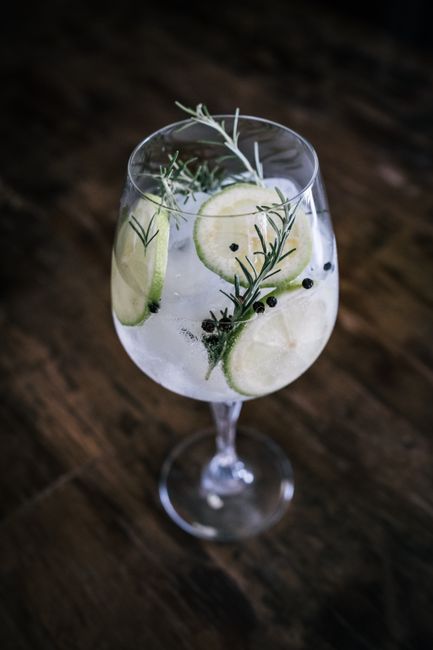
Gin is the backbone of classic cocktails built around its botanicals: a Gin and Tonic lets juniper and citrus peel shine against quinine bitterness, a Martini showcases it nearly unadulterated with dry vermouth, a Negroni balances it against Campari and sweet vermouth, and a Tom Collins stretches it with lemon, sugar, and soda. Cheaper London Dry gins work fine in mixed, citrus-forward drinks; save a more complex or barrel-aged gin for stirred cocktails served with minimal dilution.
What it pairs with
Juniper and citrus peel in gin pair naturally with tonic water, fresh lemon or lime, dry vermouth, and Campari. Herbal gins with rosemary or thyme notes work well muddled with cucumber or basil; citrus-forward gins do best with grapefruit or orange.
Nutrition
A standard 1.5 oz pour of gin has about 97 calories and no carbohydrates, fat, or sugar on its own; calories in a gin cocktail come almost entirely from mixers like tonic, simple syrup, or juice.
FAQ
What's the difference between a Gin and Tonic made with different gins?
A juniper-forward London Dry gin gives a sharper, piney drink, while a citrus- or floral-heavy contemporary gin produces a softer, more perfumed Gin and Tonic; the tonic brand's quinine level matters just as much as the gin.
Can I substitute gin for vodka in a cocktail, or the reverse?
Yes in most citrus- or juice-heavy cocktails, but the drink's character changes: gin adds herbal and juniper notes vodka lacks, so a Cosmopolitan made with gin tastes noticeably different from the vodka original.
Why do some gin cocktails call for a specific style like Old Tom?
Older cocktail recipes like the Tom Collins or Martinez were developed when gin was typically lightly sweetened; substituting a dry London gin makes the drink taste sharper and less balanced than intended.
Does the botanical blend in gin actually matter for mixed drinks?
Yes. Coriander and citrus peel brighten a Gin and Tonic, while heavier botanicals like angelica root or orris give body to stirred drinks like a Martini; a gin's specific botanical mix is listed on most bottles' labels or the distiller's website.
Have gin on hand? Find recipes with our Recipe Generator →