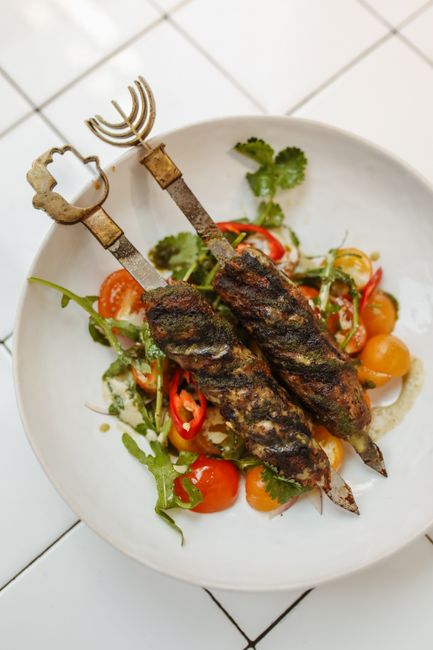
Ground Lamb

Ground lamb is lamb meat, typically trimmings from shoulder, leg, or a mix of cuts, run through a grinder. It's noticeably fattier than most ground beef sold in stores (often 20-25% fat) and has a distinct, slightly sweet, mineral-forward flavor that's stronger than beef but milder than mutton. It's the base for gyros, kofta, merguez, shepherd's pie, and countless Middle Eastern and Mediterranean dishes.
Varieties
Domestic (American) lamb tends to be milder and less gamey than imported Australian or New Zealand lamb, which is grass-fed and has a stronger flavor. If a recipe tastes too strong, domestic ground lamb is the easier substitute to source.
Buying tips
Look for meat that's rosy pink to red with visible white fat flecks, not brown or grayish, which signals oxidation from prolonged air exposure. Ground lamb from the shoulder tends to be fattier and more flavorful than leg, which is leaner; packaging doesn't always specify, so ask a butcher if it matters for the dish.
Substitutes
Ground beef (80/20) — 1:1
Milder and less distinctly flavored than lamb, but the closest match in fat content and texture for burgers, meatballs, and pies.
Ground pork — 1:1
Sweeter and less gamey than lamb; works well in kofta and kebabs when blended with extra garlic, cumin, and mint to mimic lamb's spice pairings.
Ground turkey (93% lean, dark meat) — 1:1
Much leaner, so dishes will taste less rich and can dry out; add 1-2 tablespoons of olive oil per pound to compensate.
Ground veal — 1:1
Very mild and lean, best for lighter dishes like stuffed vegetables where lamb's strong flavor isn't essential.
Beef and pork blend (50/50) — 1:1
A middle-ground substitute for merguez or kofta, richer than plain beef but without lamb's distinctive flavor; lean on spices like cumin, coriander, and cinnamon to carry the dish.
Storage
Refrigerate raw ground lamb in its original packaging for up to 2 days, or repackage tightly and use within 1-2 days for best quality since higher fat content spoils faster than lean beef. Freeze for up to 4 months in an airtight bag with air pressed out; thaw overnight in the refrigerator, not on the counter.
How to use
Best in dishes with warm spices that complement its richness: kofta, kebabs, gyros, moussaka, shepherd's pie, stuffed grape leaves, and merguez sausage. Because it's fatty, drain excess grease after browning if using it in a pie filling or sauce to avoid a greasy final dish. Season assertively with cumin, cinnamon, allspice, garlic, or mint, all of which balance lamb's stronger flavor.
What it pairs with
Pairs well with yogurt-based sauces, feta, mint, cumin, cinnamon, pomegranate molasses, and roasted eggplant. A squeeze of lemon or a vinegar-forward sauce cuts through its richness.
Nutrition
Ground lamb is higher in fat and calories than most ground beef and significantly higher than ground turkey or chicken, but it's also a good source of iron, zinc, and vitamin B12. Draining rendered fat after cooking meaningfully lowers the calorie count of the finished dish.
FAQ
Why does ground lamb smell stronger than ground beef?
Lamb contains higher levels of branched-chain fatty acids that carry a distinct, slightly musky aroma, especially pronounced in older or grass-fed animals. This smell largely cooks off once the fat renders.
Should I drain the fat when cooking ground lamb?
Yes, for most dishes. Ground lamb often renders significant fat when browned; draining it prevents dishes like shepherd's pie or bolognese from turning greasy.
Can ground lamb be pink in the middle when cooked?
Ground meat should always be cooked to an internal temperature of 160°F (71°C), regardless of color, since grinding introduces more surface area for bacteria than a whole cut.
Is ground lamb the same as ground mutton?
No. Mutton comes from sheep over a year old and has a much stronger, gamier flavor; ground lamb comes from younger sheep and is milder. They aren't interchangeable in recipes calling for a delicate lamb flavor.
Have ground lamb on hand? Find recipes with our Recipe Generator →