
Gruyère
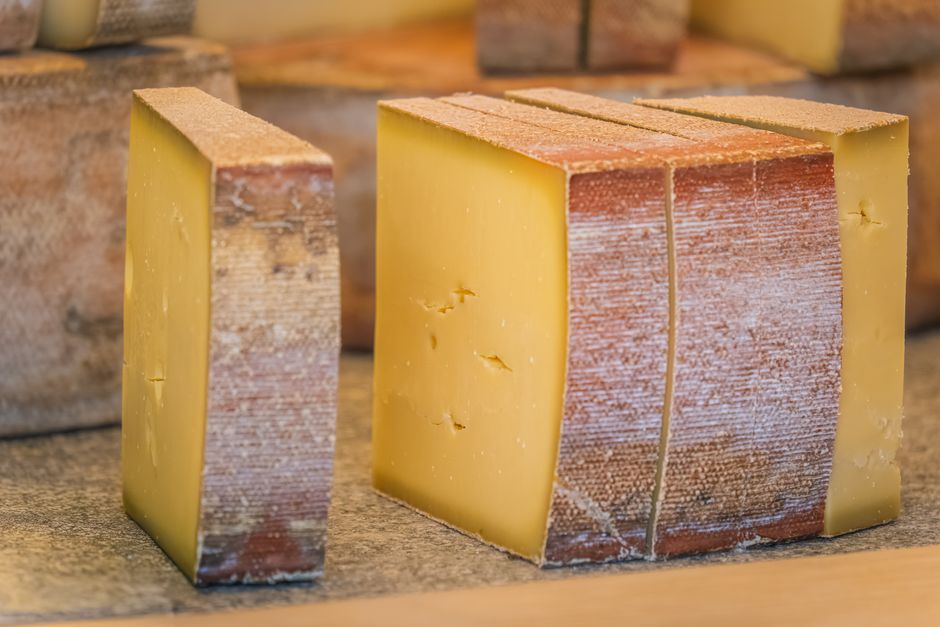
Gruyère is a hard, cooked, pressed cow's milk cheese from Switzerland, traditionally made in the canton of Fribourg and surrounding regions. It's aged anywhere from 5 months (mild, called 'doux') to over 12 months (firmer and more crystalline, called 'reserve' or 'vieux'), developing a nutty, slightly sweet flavor with earthy, savory depth as it matures. Unlike Emmental, its holes are small and sparse rather than large and dramatic, and it melts exceptionally smoothly, which is why it anchors classic fondue and gratins.
Varieties
Younger 'doux' Gruyère (aged 5 to 9 months) is mild and creamy, ideal for melting in sandwiches. 'Reserve' or 'vieux' Gruyère (aged over 12 months) develops small flavor crystals, a firmer texture, and a sharper, more concentrated taste, better suited to shaving over dishes or eating on its own than to fondue, where it can turn grainy.
Buying tips
Look for a natural, slightly damp brown rind and a pale ivory interior; avoid pieces with a dry, cracked, or overly yellow surface, which suggests age past its prime or poor storage. Genuine Swiss Gruyère AOP carries a red label with the word 'Gruyère' and a production number stamped into the rind. For fondue, ask for a blend of younger and aged Gruyère to balance meltability with flavor.
Substitutes
Comté — 1:1
Also a French Alpine cooked-pressed cheese; very close in nutty flavor and melts just as well.
Emmental (Swiss cheese) — 1:1
Milder and slightly more elastic when melted, with larger holes; a good everyday substitute for sandwiches and gratins.
Beaufort — 1:1
Firmer and more concentrated in flavor; excellent in fondue but can be harder to find outside specialty shops.
Jarlsberg — 1:1
Milder and softer with a buttery sweetness; works in melts but lacks Gruyère's depth in fondue.
Fontina — 1:1
Melts beautifully and has a similar nutty-savory quality, though it's slightly funkier and softer in texture.
Storage
Wrap tightly in wax or parchment paper rather than plastic wrap, which traps moisture and encourages mold, then place in a loose plastic bag or container in the warmest part of the refrigerator (usually the door). Properly wrapped, a cut piece keeps for 3 to 4 weeks. Freezing is possible for cooked applications like gratins, but it turns crumbly and loses meltability, so avoid freezing if serving it fresh.
How to use
Grate it for classic Swiss fondue with white wine and a touch of kirsch, melt it over French onion soup, layer it into croque monsieur or a grilled ham and cheese, fold it into quiche or gratin dauphinois, or shave thin slices onto a cheese board with fruit and charcuterie. Because it melts without becoming stringy or oily, it's a reliable choice for baked pasta dishes and savory bread puddings.
What it pairs with
Pairs well with crisp dry white wines like Sauvignon Blanc or a Swiss Chasselas, tart apples and pears, walnuts, and cured meats like prosciutto or dry-cured ham. In cooking, it complements caramelized onions, potatoes, mustard, and ham.
Nutrition
Gruyère is calorie-dense and high in saturated fat and sodium, but it's also a strong source of calcium, protein, and vitamin B12. It's naturally low in lactose due to its long aging, so many people with mild lactose sensitivity tolerate it well.
FAQ
Is Gruyère the same as Swiss cheese?
No. 'Swiss cheese' in the US usually refers to Emmental-style cheese with large holes and a milder flavor. Gruyère has small, sparse holes, a firmer texture, and a deeper, nuttier taste.
Why does Gruyère melt so well?
Its low moisture content and the way its proteins break down during the cooked-curd process let it melt into a smooth, elastic texture rather than separating into oil and solids, which is why it's the backbone of traditional fondue.
Can I use pre-shredded Gruyère instead of grating it myself?
Pre-shredded cheese is coated with anti-caking starch that can make sauces and fondue slightly grainy. For fondue or a smooth gratin sauce, grate a block yourself just before using.
What's the difference between Gruyère and Comté?
They're closely related Alpine cheeses made with similar methods. Comté tends to taste slightly fruitier and more varied depending on the dairy, while Gruyère is generally more consistently nutty and firm; the two substitute for each other almost seamlessly in cooking.
Have gruyère on hand? Find recipes with our Recipe Generator →