
Ikura
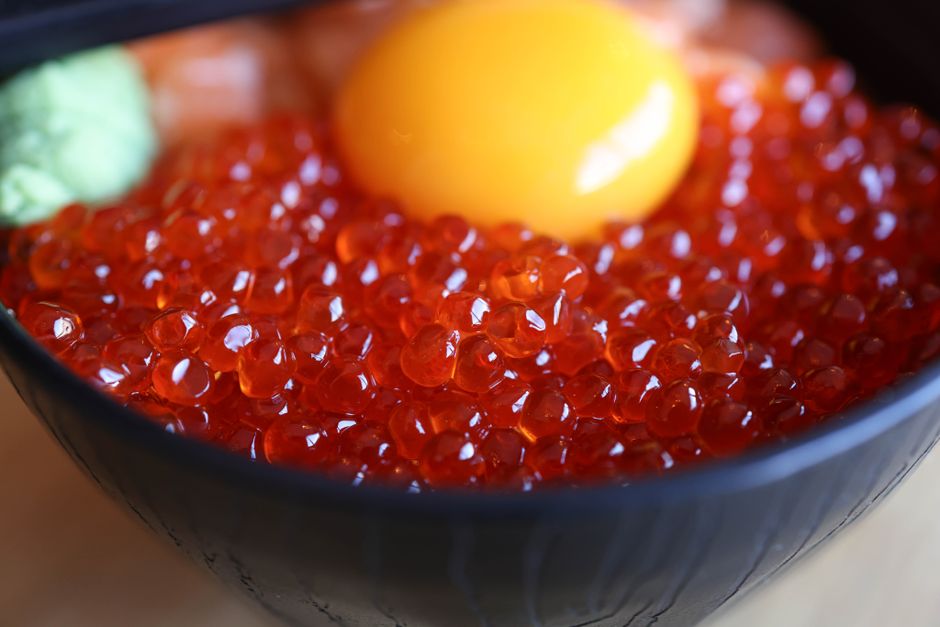
Ikura is salted salmon roe, the individual eggs cured in a light brine (or occasionally soy sauce) rather than pressed into a solid mass like caviar. Each egg is large, roughly the size of a small pea, translucent orange to deep red-orange, and bursts with a briny, mildly sweet, oceanic flavor when bitten. It's a staple topping in Japanese cuisine, most commonly served over sushi rice as gunkan-maki (battleship rolls wrapped in nori) or spooned over rice bowls (ikura donburi).
Varieties
Ikura specifically refers to salmon roe; the same word is sometimes loosely used for other fish roe outside Japan, but authentic ikura is always salmon. Sujiko is a related product, salmon roe still bound together in the ovarian membrane rather than separated into loose eggs, and is typically saltier and firmer than ikura.
Buying tips
Look for eggs that are uniform in size, plump, and separate easily rather than clumped or leaking excess liquid, which signals broken membranes. Color should be a consistent bright orange to deep red-orange; a dull or brownish tint suggests age. Buy from a fishmonger or Japanese grocery with high turnover, and check the packing date if it's sold frozen.
Substitutes
Tobiko (flying fish roe) — 1:1
Much smaller, crunchier eggs with a similar salty-sweet flavor; often dyed bright orange, green, or black. Visually smaller and less glossy than ikura.
Masago (capelin roe) — 1:1
Smaller and firmer than tobiko, milder in flavor, and the least expensive roe substitute. A common budget stand-in on sushi rolls.
Trout roe (steelhead or rainbow trout) — 1:1
Nearly identical size and pop to salmon ikura, slightly smaller eggs and a touch milder in salinity. The closest true substitute.
Salmon roe caviar substitutes (lumpfish or capelin caviar, dyed) — 1:1
Much smaller, denser eggs with an artificial-tasting brine; use only when texture and appearance matter less than getting an orange roe garnish.
Storage
Keep ikura tightly sealed in its original container in the coldest part of the refrigerator (not the door) and use within 2-3 days of opening. Unopened, properly salted ikura keeps for 1-2 weeks refrigerated or several months frozen. Freezing in an airtight container preserves it well; thaw slowly in the fridge overnight rather than at room temperature, since rapid thawing breaks the delicate egg membranes and turns the roe mushy.
How to use
Spoon ikura over sushi rice, into gunkan-maki, or onto chirashi bowls as a finishing garnish rather than a cooked ingredient, since heat ruptures the eggs and turns the texture pasty. It also works spooned over cold soba, folded into a simple rice bowl with butter and soy sauce (ikura don), or as a garnish on deviled eggs, blinis, and cold seafood dishes. Add it last, right before serving, to keep the eggs intact and glossy.
What it pairs with
Pairs naturally with sushi rice, nori, soy sauce, and wasabi, as well as with butter, cream, and eggs in Western-style preparations like blinis or deviled eggs. A squeeze of lemon or a few drops of yuzu juice brightens its brininess.
Nutrition
Ikura is rich in omega-3 fatty acids, vitamin D, and vitamin B12, but it's also high in sodium from the curing brine, so a little goes a long way as a garnish rather than a main component of a dish.
FAQ
Is ikura the same as caviar?
No. Caviar traditionally refers to sturgeon roe. Ikura is salmon roe, and while both are cured fish eggs, ikura eggs are larger, softer-skinned, and pop more distinctly than the firmer, smaller sturgeon eggs used for true caviar.
Why does ikura sometimes taste fishy or bitter?
That usually means the roe is past its peak freshness or wasn't stored cold enough. Fresh, well-cured ikura tastes clean, briny, and slightly sweet, never sharp or fishy.
Can you make ikura at home from fresh salmon roe sacs?
Yes. Fresh roe sacs are massaged in warm saltwater to separate the eggs from the membrane, rinsed, then cured in a soy sauce or salt brine for a few hours to overnight before refrigerating.
Is ikura eaten raw or cooked?
Ikura is cured, not cooked, and eaten as-is. It's never heated in cooking since heat causes the eggs to burst and lose their signature pop.
Have ikura on hand? Find recipes with our Recipe Generator →