
Inari Sushi
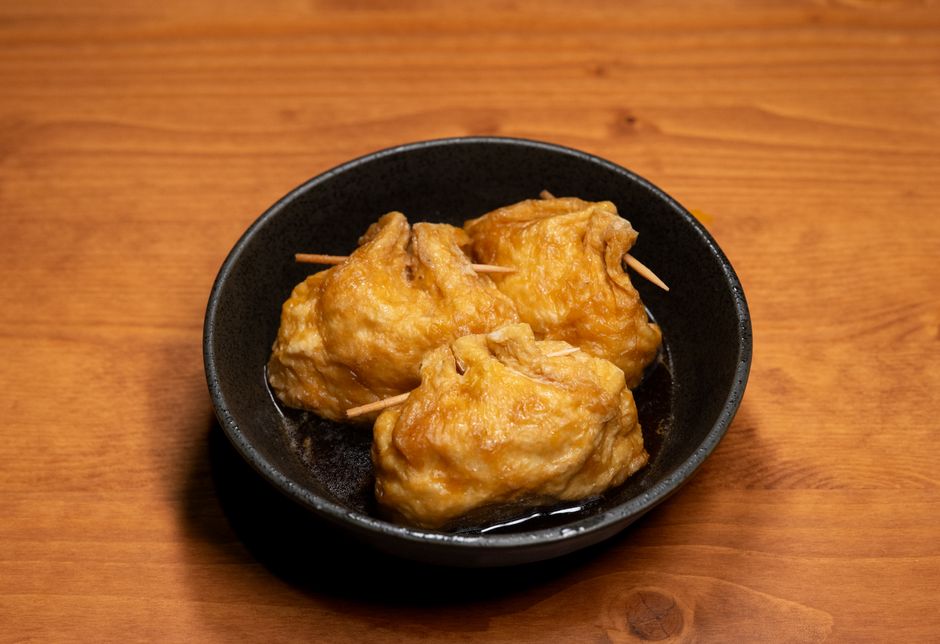
Inari sushi (inarizushi) is sushi rice packed into seasoned, deep-fried tofu pouches called aburaage. The pouches are simmered in a sweet-savory mix of dashi, soy sauce, mirin, and sugar until they turn deep amber and soft enough to open like a pocket, then stuffed with lightly seasoned sushi rice. It's one of the few sushi styles with no raw fish, which makes it a common bento box and picnic item in Japan.
Varieties
Kansai-style inari pouches are cut and shaped into triangles, echoing the shape of a fox's ears (inari is named after the fox-associated Shinto deity), while Kanto-style pouches are cut rectangular and stuffed like open pockets. Some versions mix the rice with sesame seeds, chopped vegetables, or shiitake instead of leaving it plain.
Buying tips
Look for aburaage in the refrigerated or frozen tofu section of Japanese and Korean grocery stores, sold as thin flat squares before frying, or already seasoned and ready-to-stuff in vacuum-sealed pouches near the sushi supplies. Pre-seasoned pouches save the most time and are reliably consistent in sweetness.
Substitutes
Store-bought seasoned inari pouches (canned or frozen) — 1:1
Pre-seasoned aburaage sold in Asian grocery stores, already simmered in the sweet soy-dashi liquid; just drain and stuff. Closest possible substitute since it's the same product.
Fresh aburaage simmered at home — 1:1
Buy plain fried tofu pouches and simmer them yourself in dashi, soy sauce, mirin, and sugar for about 15-20 minutes until they darken and absorb the liquid.
Seasoned soybean sheets (yuba) folded into pockets — 1:1 by rice volume
Yuba lacks the spongy, absorbent texture of aburaage and won't hold its shape as a pouch, so it works better folded flat around rice than stuffed inside a pocket.
Thin omelet sheets (usuyaki tamago) wrapped around rice — 1:1 by rice volume
A common substitute when tofu pouches aren't available; the egg sheet is seasoned lightly with sugar and salt and wrapped around a rice ball instead of stuffed into a pocket.
Storage
Unfilled seasoned pouches keep in their simmering liquid in the refrigerator for up to 4 days in a sealed container. Once filled with rice, inari sushi is best eaten within a few hours at room temperature since refrigeration hardens the rice; if you must store filled pieces, refrigerate up to 1 day and let them come back to room temperature before eating.
How to use
Stuff cooled, lightly seasoned sushi rice into opened pouches and press gently closed; mix in sesame seeds, chopped shiso, or finely diced carrot and gobo (burdock root) for texture. The pouches can also be sliced into strips and added to noodle soups like kitsune udon.
What it pairs with
Serve alongside pickled ginger, a light miso soup, or other no-cook sushi like cucumber or tamago rolls for a bento box. Works well with a splash of soy sauce but is often eaten plain since the pouch itself is already seasoned.
Nutrition
Aburaage is fried tofu, so it carries more fat and calories than plain tofu, offset somewhat by the sugar and soy in the simmering liquid. Combined with sushi rice, a single piece runs roughly 60-80 calories and provides a modest amount of plant protein.
FAQ
Is inari sushi vegetarian?
Yes, standard inari sushi contains only tofu, rice, and seasonings, making it naturally vegetarian and, if the dashi is kombu-based rather than bonito-based, vegan as well.
Why is it called inari sushi?
It's named after Inari, the Shinto deity associated with rice and prosperity, whose messenger is a fox. Fried tofu is traditionally considered a favorite food of foxes, hence the pouches carrying the name.
Can I make inari pouches from regular tofu instead of aburaage?
Not directly. Aburaage is made by pressing tofu very thin, deep-frying it twice, and letting it puff into a hollow pocket, a process that doesn't work with standard firm or silken tofu blocks.
Why does my inari sushi taste bland?
The pouches need enough simmering time to absorb the soy-dashi-sugar liquid all the way through; 10 minutes is usually not enough. Simmer closer to 15-20 minutes and let the pouches cool in the liquid rather than pulling them out hot.
Have inari sushi on hand? Find recipes with our Recipe Generator →