
Italian Appetizers
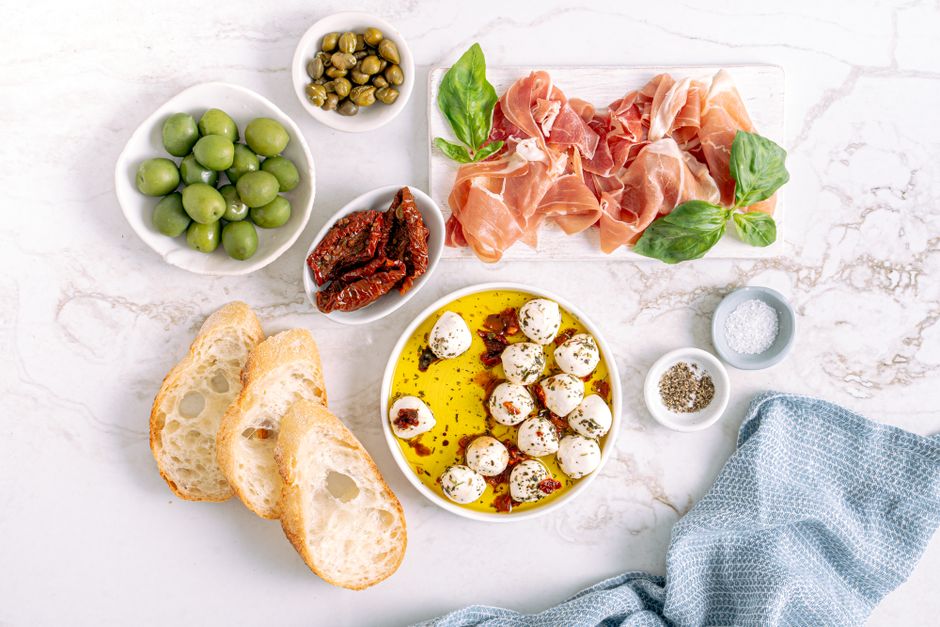
Italian appetizers, known collectively as antipasti (literally "before the meal"), are a course built around small, intensely flavored bites meant to open the appetite rather than fill the stomach. The category spans cured meats and cheeses served cold, warm items like arancini and fried zucchini flowers, and simple bread-based dishes like bruschetta and crostini. Unlike a single dish, antipasti is a format: a handful of contrasting textures and flavors, usually served with wine, before pasta or a main course arrives.
Varieties
Northern Italian antipasti lean toward cured meats, cheeses, and preserved vegetables (salumi, mortadella, giardiniera), reflecting cooler-climate curing and preserving traditions. Southern Italian antipasti lean more toward seafood, fried dishes, and tomato-and-bread preparations like bruschetta and arancini, reflecting warmer growing conditions and coastal access.
Buying tips
For cured meats, ask for prosciutto and salami sliced fresh and thin at the counter rather than buying pre-packaged, since it stays more pliable and less rubbery. For cheese, buy a whole small wheel or wedge rather than pre-shredded, and choose olives and artichokes packed in oil or brine over vinegar-heavy jarred versions for a rounder flavor.
Substitutes
Burrata instead of fresh mozzarella — 1:1
Richer and creamier due to the liquid center; works especially well on bruschetta or with tomatoes where the extra creaminess replaces the need for added olive oil.
Store-bought pesto instead of homemade — 1:1
A jarred pesto works fine for crostini or as a dip, but stir in a little extra fresh basil and olive oil to freshen the flavor before serving.
Speck instead of prosciutto — 1:1
Smokier and slightly saltier; a good stand-in on a cured meat board when prosciutto isn't available.
Marinated white beans instead of arancini — not applicable
Not a direct swap, but a useful lighter, gluten-free alternative when you need a starchy, satisfying item on the table without frying.
Roasted red peppers instead of sun-dried tomatoes — 1:1 by volume
Milder and sweeter, with more moisture; pat dry before using in dishes where sun-dried tomatoes' concentrated, chewy texture matters.
Storage
Most antipasti components keep separately in the refrigerator for 3-4 days in sealed containers: cured meats stay wrapped tightly in their original paper or plastic, cheeses in wax paper or a loosely closed container, and marinated vegetables submerged in their oil or brine. Assemble the platter itself no more than an hour or two before serving, since cured meats dry out and bread-based items like bruschetta turn soggy if they sit too long.
How to use
Serve antipasti as the first course of a multi-course Italian meal, or build an entire casual dinner or party spread around several antipasti dishes together. Warm items like arancini, fried calamari, and stuffed mushrooms should come out just before guests arrive so they're still hot; cold items like a cured meat and cheese board can sit out at room temperature for up to two hours.
What it pairs with
Light, high-acid wines work best across a mixed antipasti spread: Prosecco or a dry Italian white like Vermentino cuts through cured meat and cheese fat, while a light-bodied red like Chianti or Barbera pairs well if the spread leans toward tomato-based or fried dishes.
Nutrition
Nutrition varies widely by dish: cured meats and cheeses are calorie-dense and high in sodium, while vegetable-based antipasti like caponata, marinated artichokes, and bruschetta are lighter and contribute fiber and vitamins. A varied antipasti spread in modest portions is generally easier on both calories and sodium than a single large plate of one item.
FAQ
What's the difference between antipasti and appetizers?
Antipasti specifically refers to the first course of a traditional Italian meal, served before pasta or the main course, while "appetizer" is the broader English term for any small dish served before a meal, regardless of cuisine.
Can Italian appetizers be made ahead of time?
Cold items like marinated vegetables, cheese, and cured meats can be prepped up to a day ahead and refrigerated separately; fried and baked items like arancini or stuffed mushrooms are best assembled ahead but cooked just before serving.
What's a good simple antipasti spread for a small group?
A board with sliced prosciutto, a fresh or semi-soft cheese like mozzarella or burrata, marinated olives, roasted peppers, and bruschetta covers salty, creamy, tangy, and bread-based bites without requiring any cooking.
Do all Italian appetizers include meat?
No. Many classic antipasti are entirely vegetable- or seafood-based, including caponata, marinated artichokes, bruschetta, and fried calamari, making it easy to build a full spread without meat.
Have italian appetizers on hand? Find recipes with our Recipe Generator →