
Italian Pasta
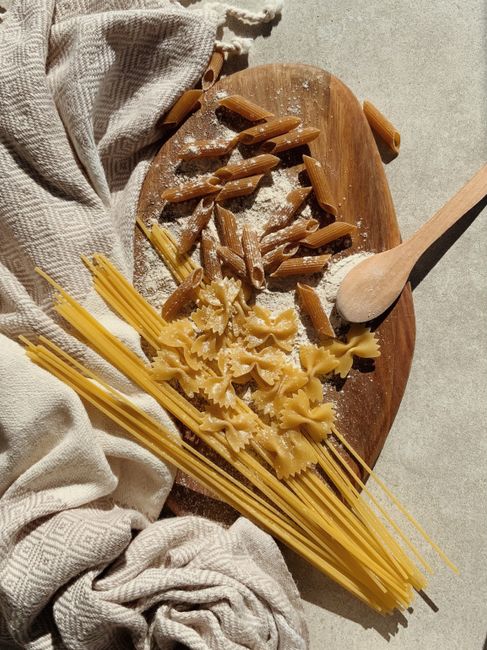
Italian pasta is made from durum wheat, either as semola (coarse durum flour mixed with water for dried, shelf-stable shapes) or as fresh egg pasta made with softer 00 flour. The defining trait of good Italian pasta is a rough, porous surface, from bronze-die extrusion or hand-rolling, that grips sauce instead of letting it slide off. Shape is tied to region and sauce: long strands like spaghetti and tagliatelle for oil- and cream-based sauces, tubes like rigatoni and penne for chunky ragùs, and small shapes like orecchiette or farfalle for lighter vegetable dishes.
Varieties
Dried durum pasta and fresh egg pasta are genuinely different products, not just different formats of the same food. Dried pasta is firmer, holds its shape longer, and is typical of southern Italy; fresh egg pasta is softer, richer from the egg yolks, and typical of Emilia-Romagna and other northern regions, where it's traditionally cut into ribbons rather than extruded into tubes.
Buying tips
Check the ingredient list for '100% durum wheat semolina' and look for pasta labeled 'trafilata al bronzo' (bronze-die extruded), which has a rougher, more porous surface than pasta pushed through Teflon dies. The rougher surface holds sauce noticeably better, especially with thinner tomato or oil-based sauces.
Substitutes
Durum wheat pasta from a different shape — 1:1 by weight
The most authentic swap when a recipe calls for a shape you don't have; match tube-for-tube or strand-for-strand (e.g., penne for rigatoni) to keep sauce cling similar.
Fresh egg pasta (tagliatelle, fettuccine) — 1:1 by weight, cooks in 2-4 minutes instead of 8-12
Richer and more delicate than dried semolina pasta; best with butter, cream, or light meat sauces rather than heavy tomato sauces.
Whole wheat durum pasta — 1:1 by weight
Nuttier flavor and firmer bite; holds up well to robust ragùs and roasted vegetable sauces but can taste bitter with delicate seafood sauces.
Chickpea or lentil pasta — 1:1 by weight
Gluten-free with a noticeably different, slightly gritty texture and legume flavor; rinse briefly after draining to remove surface starch that can make it gummy.
Rice pasta — 1:1 by weight
Gluten-free and neutral in flavor, but lacks the surface texture that holds sauce, so works best in brothy or oil-based dishes rather than thick ragùs.
Zucchini or squash noodles — Use about 1.5 times the volume of dried pasta called for
Not a true substitute in texture, watery and soft rather than al dente, but useful for a low-carb version of the same sauce.
Storage
Dried pasta keeps for one to two years in a sealed container in a cool, dry pantry away from light. Fresh pasta should be refrigerated and used within two days, or frozen on a tray and transferred to a bag for up to a month; cook fresh pasta straight from frozen without thawing.
How to use
Cook in abundantly salted, rapidly boiling water (Italians cook it in water salty as the sea) until al dente, then finish the pasta in the sauce itself for a minute or two with a splash of starchy pasta water to bind everything together. Reserve at least a cup of pasta water before draining since it's the key to a glossy, clinging sauce.
What it pairs with
Long thin strands (spaghetti, linguine) pair with oil, garlic, seafood, and light tomato sauces. Ridged tubes (rigatoni, penne rigate) pair with thick meat ragùs and baked dishes. Small shapes (orzo, ditalini) work in soups and cold salads. Wide ribbons (pappardelle, tagliatelle) suit rich braises like wild boar or duck ragù.
Nutrition
A typical 100g dry serving provides around 350-370 calories and 12-13g of protein, mostly from durum wheat gluten; whole wheat versions add roughly 6-8g of fiber per serving compared to about 3g in regular semolina pasta.
FAQ
What actually makes pasta 'Italian' versus other wheat noodles?
The wheat variety and process: Italian pasta uses durum wheat (a hard, high-protein wheat) milled into semolina, which holds its structure during boiling far better than the softer common wheat used in many other noodle traditions.
Why does my pasta taste bland even when the sauce is good?
The water usually isn't salty enough. Pasta only absorbs seasoning while it's cooking, so under-salted boiling water can't be fixed later no matter how well the sauce is seasoned.
Is it true you shouldn't rinse pasta after draining?
Correct, for hot dishes. Rinsing washes away the surface starch that helps sauce cling to the pasta; only rinse if you're making a cold pasta salad and want to stop the cooking and prevent sticking.
Can dried pasta go bad?
It doesn't spoil in the traditional sense but can pick up pantry odors or develop a stale, cardboard-like taste after a year or two; check for small holes or webbing, signs of pantry moth infestation, before cooking.
Have italian pasta on hand? Find recipes with our Recipe Generator →