
Jam
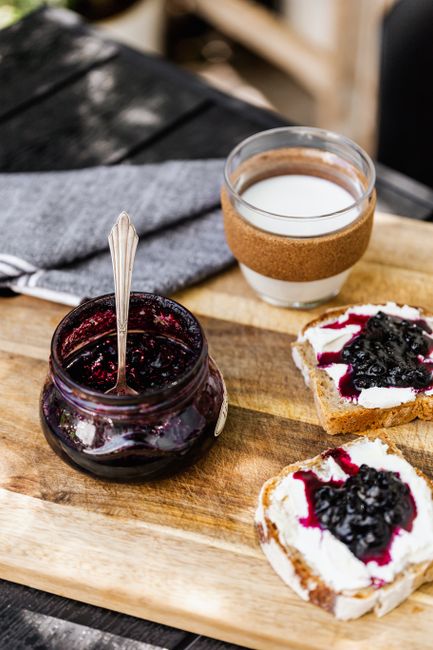
Jam is fruit cooked down with sugar (and usually pectin, either added or naturally present in the fruit) until it thickens into a spreadable consistency. Unlike jelly, jam is made from crushed or chopped fruit rather than strained juice, so it retains soft pieces of fruit and a slightly rougher texture. It sits between jelly (smooth, juice-based) and preserves (chunkier, with larger fruit pieces) on the spectrum of fruit spreads.
Varieties
Fruit butter (like apple butter) is cooked longer and without added pectin, giving a darker, smoother, less sweet spread. Marmalade specifically refers to citrus jam that includes the peel, giving it a bitter edge jam made from other fruits doesn't have.
Buying tips
Check the ingredient list rather than the front label: "fruit spread" and "preserves" often contain less added sugar than jam labeled with fruit names alone. A short ingredient list (fruit, sugar, pectin, lemon juice) usually signals better quality than one padded with corn syrup or artificial color.
Substitutes
Fruit preserves — 1:1
Chunkier texture with bigger fruit pieces; fine for spreading but mash slightly if you need a smoother consistency for baking or glazing.
Jelly — 1:1
Smoother and holds less fruit texture, but works fine in recipes where jam gets melted down anyway, like glazes or thumbprint cookies.
Fruit compote — 3:4
Looser and less sweet, so use a bit more by volume to match the intensity, and expect a wetter result in baked goods.
Marmalade — 1:1
Adds bitterness from citrus peel; best swap when the recipe already leans toward orange or lemon flavors.
Storage
Unopened commercial jam keeps in the pantry for up to a year past its production date. Once opened, refrigerate and use within 3 to 4 weeks; always use a clean spoon to avoid introducing bacteria that cause mold. Homemade jam that hasn't been properly canned should be treated as fresh and refrigerated immediately, used within about a month.
How to use
Beyond toast and biscuits, jam works as a glaze for roasted meats like ham or pork tenderloin (thinned with a little vinegar or water), a filling for thumbprint cookies and layer cakes, a swirl-in for cheesecake batter or oatmeal, and a base for quick vinaigrettes or barbecue sauce when mixed with mustard and vinegar.
What it pairs with
Pairs well with sharp or creamy cheeses (fig or berry jam with brie or cheddar), with peanut butter and nut butters generally, and with roasted or grilled meats that benefit from a sweet-tart contrast, like duck, pork, or lamb.
Nutrition
Jam is mostly sugar by volume, typically 55 to 65% sugar in commercial versions, so a tablespoon runs about 50-60 calories with minimal fiber or vitamins left after cooking. Reduced-sugar and no-sugar-added versions cut calories roughly in half but rely more heavily on added pectin to set.
FAQ
What's the actual difference between jam and jelly?
Jam is made from crushed or chopped whole fruit, so it has texture and small fruit pieces. Jelly is made from strained fruit juice only, so it sets clear and smooth with no fruit solids.
Why didn't my homemade jam set properly?
Usually one of three things: not enough natural or added pectin, insufficient acid (lemon juice helps pectin activate), or the mixture wasn't boiled long enough to reach the gel point, generally around 220°F (104°C) at sea level.
Can jam go bad even if it looks fine?
Yes. Mold isn't always visible on the surface first, especially if a dirty spoon introduced bacteria below the top layer. If you see any fuzzy spots, off smell, or fermented bubbling, discard the whole jar rather than scooping around it.
Is jam the same thing as fruit spread?
Not exactly. Fruit spread is a marketing term usually meaning lower sugar content, sweetened with fruit juice concentrate instead of straight sugar, while jam specifically implies a set consistency achieved with sugar and pectin.