
Jjampong
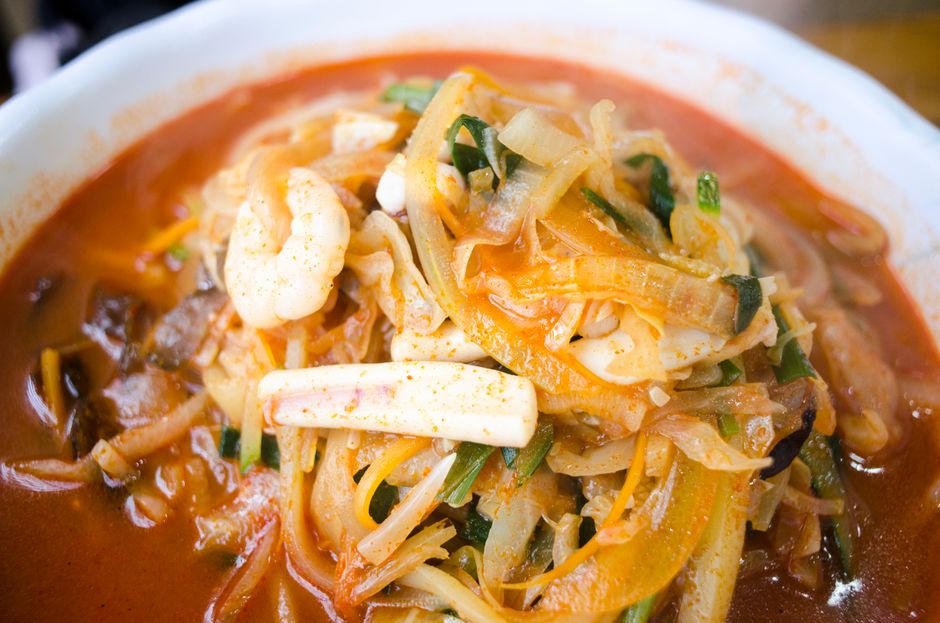
Jjampong is a Korean-Chinese noodle soup built on a fiery red broth made by frying gochugaru (Korean chili flakes) and gochujang or chili oil with garlic, onion, and cabbage before adding pork or seafood stock. Wheat noodles sit in the broth along with a mix of mussels, shrimp, squid, and sometimes clams, plus cabbage, zucchini, and onion. It developed in Korea's Chinatown restaurants in the early 20th century, adapted from the Fujianese noodle soup chao mamian by Chinese immigrant cooks, and is now a staple order alongside jjajangmyeon at Korean-Chinese restaurants.
Varieties
Guksu jjampong swaps the usual thick wheat noodles for thinner somen-style noodles. Samseon jjampong is a deluxe version loaded with a larger, higher-grade seafood mix. Baekjjampong is the white, non-spicy version made without chili oil or gochugaru, built on a milder pork or chicken stock instead.
Buying tips
At a restaurant, a good jjampong should look glossy red from oil-fried chili rather than dull or watery, and the seafood should smell clean and briny, not fishy. For home cooking, look for Korean or Chinese fresh wheat noodles (jjolmyeon or udon-style) in the refrigerated section, and buy frozen seafood mix specifically labeled for soup, which is pre-cleaned and cut to size.
Substitutes
Jjamppong ramyeon (instant cup or packet) — 1 bowl : 1 bowl
Fastest substitute for a weeknight craving. The broth is close in color and heat but lighter on real seafood, so add a few frozen shrimp or mussels while it simmers.
Tom yum noodle soup (Thai) — 1 bowl : 1 bowl
Shares the hot-and-savory seafood profile but leans on lemongrass, lime, and fish sauce instead of gochugaru, so the flavor is sourer and less garlicky.
Haemul-tang (spicy seafood stew) over rice — 1 bowl stew with rice on the side replaces 1 bowl jjampong
Nearly the same broth and seafood, but served as a stew with steamed rice rather than a noodle soup, so it doesn't drop into a clean per-bowl swap.
Bibim guksu (cold spicy noodles) with a side of broth — not a direct bowl swap
Uses the same chewy wheat noodles and gochujang heat but is served cold and dry rather than in hot broth, so texture and eating experience differ too much to substitute by volume.
Storage
Store leftover jjampong with the noodles and broth in separate containers if possible; noodles left sitting in broth swell and turn mushy within a few hours. Refrigerate broth and any seafood for up to 2 days. Reheat the broth to a full boil before adding fresh or briefly reheated noodles.
How to use
Jjampong is served as a complete one-bowl meal rather than used as a component in other dishes. It's common to order it as a combination plate split with jjajangmyeon (called jjamjjamyeon or bansabanjja) so two people can share both flavors. Restaurants also serve a milder white-broth version, baekjjampong, made without the red chili base for diners who want the seafood and noodles without the heat.
What it pairs with
Danmuji (yellow pickled radish) cuts through the broth's heat and oil between bites. A side of Korean fried dumplings (mandu) or sweet-and-sour pork (tangsuyuk) rounds it out as a full Korean-Chinese meal, and cold barley tea or a light lager helps balance the spice.
Nutrition
A standard restaurant bowl runs roughly 550 to 650 calories, with the broth contributing significant sodium, often over 2,000 mg per serving. Seafood adds lean protein, while the noodles supply most of the carbohydrate load; fat content stays moderate since the broth isn't cream or oil based.
FAQ
What's the difference between jjampong and jjajangmyeon?
Jjampong is a spicy red seafood broth soup, while jjajangmyeon is dry noodles tossed in a thick, sweet-savory black bean sauce with little to no broth. They're the two most common orders at Korean-Chinese restaurants and are often ordered together to split.
Is jjampong very spicy?
Most restaurant versions register as moderately to distinctly spicy from gochugaru and chili oil, noticeably hotter than typical Korean soups like sundubu-jjigae. Baekjjampong is the non-spicy alternative if the heat is a concern.
Can jjampong be made without seafood?
Yes. Pork-based versions using thinly sliced pork belly or shoulder instead of seafood are common home-cooking substitutes, and the chili broth and vegetables stay the same.
What noodles are traditionally used in jjampong?
Fresh, thick wheat noodles similar to udon are standard, hand-pulled or machine-cut at Korean-Chinese restaurants. Dried wheat noodles or fresh udon from a grocery store work as a home substitute.
Have jjampong on hand? Find recipes with our Recipe Generator →