
Kaiser Roll
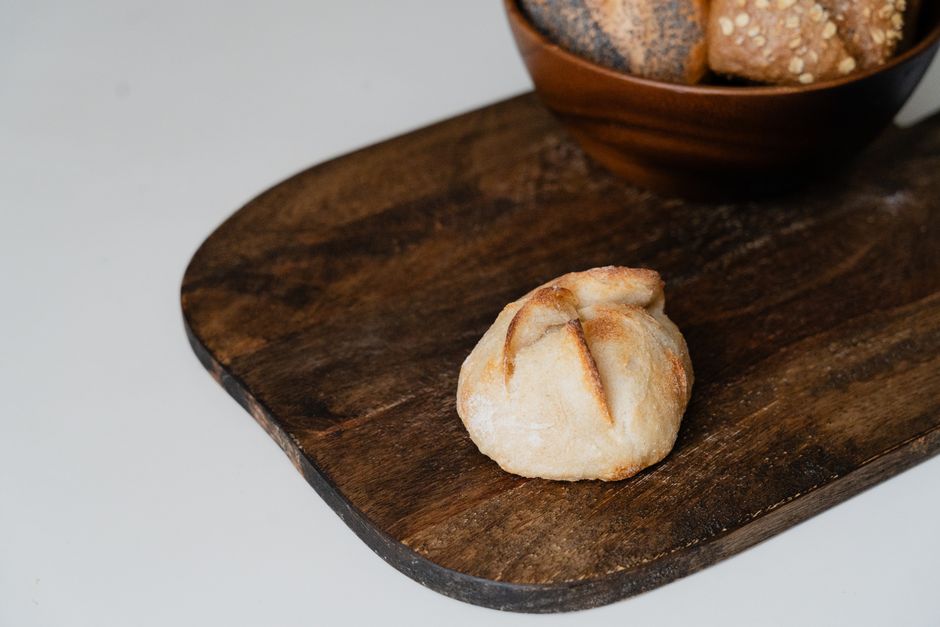
A kaiser roll (also called a Vienna roll) is a round, crusty bread roll with a distinctive pinwheel pattern pressed or folded into the top before baking. The crust is crisp and slightly chewy, the crumb is sturdy but not dense, and the flavor is neutral with a faint malt sweetness. It's built to hold hearty sandwich fillings without falling apart or going soggy.
Varieties
A true Vienna-style kaiser roll has a crisp, matte crust from a low-fat dough; many supermarket 'kaiser rolls' are softer and shinier from an egg wash or added fat, closer to a hamburger bun with a stamped pattern than the original Austrian roll.
Buying tips
Look for a shiny, deeply browned crust with a defined pinwheel pattern on top, a sign it was properly proofed and scored before baking. Rolls that feel light for their size or have a pale, soft crust were likely baked underdone or are already a day old.
Substitutes
Kaiser-style hamburger bun — 1:1
Softer crust and crumb than a true kaiser roll, but the same size and shape works fine for burgers and deli sandwiches.
Ciabatta roll — 1:1
Similar chewy crumb and sturdy crust; slightly more irregular shape and a more open, holey interior.
Portuguese roll (papo seco) — 1:1
Very close in crust texture and crumb density; common substitute at delis and Italian sandwich shops.
French roll or small baguette section — 1:1
Crustier and more elongated, so it works better for sub-style sandwiches than for burgers.
Onion roll — 1:1
Softer texture with a sweet onion flavor baked into the dough; good for deli-style sandwiches like corned beef.
Storage
Kaiser rolls stale quickly because of their crisp crust. Keep them at room temperature in a paper bag for a day, or in a loosely closed plastic bag for up to two days if you're willing to trade some crispness for shelf life. For longer storage, freeze in a sealed bag for up to two months and re-crisp in a 350°F oven for about 5 minutes after thawing.
How to use
Best known as the roll for deli sandwiches (ham, roast beef, corned beef) and hearty burgers, since the crust structure keeps it from getting soggy under sauces, juices, and condiments. Also good split and toasted for egg sandwiches, or torn into chunks for bread salad and stuffing where a sturdy crumb holds up better than soft sandwich bread.
What it pairs with
Pairs naturally with cured and roasted meats, sharp mustard, Swiss or provolone cheese, and pickles. Also works well brushed with butter and toasted alongside soup.
Nutrition
A standard kaiser roll runs around 160-190 calories, mostly from refined wheat flour, with 5-7 grams of protein and modest fiber unless made with a whole wheat blend.
FAQ
What makes the pinwheel pattern on a kaiser roll?
The dough is folded into five overlapping flaps by hand or with a stamping tool before baking, creating layered ridges that crisp up separately as they bake, giving the roll its signature shape and extra crust surface.
Can I make kaiser rolls without the special stamp?
Yes. Hand-folding the dough into the traditional five-point pattern works, or you can skip the pattern entirely and shape plain round rolls; the flavor and crumb will be the same, only the surface pattern differs.
Why did my kaiser roll turn out soft instead of crusty?
A soft result usually means the dough had added fat or egg wash, was baked at too low a temperature, or was steamed insufficiently. A crisp crust needs a hot oven (around 425-450°F) and steam in the first few minutes of baking.
Are kaiser rolls the same as hamburger buns?
Not traditionally. Hamburger buns are typically softer and enriched with milk or butter, while a classic kaiser roll has a leaner dough and crisper crust, though many stores now sell a hybrid 'kaiser bun' that splits the difference.
Have kaiser roll on hand? Find recipes with our Recipe Generator →