
Kaju Katli
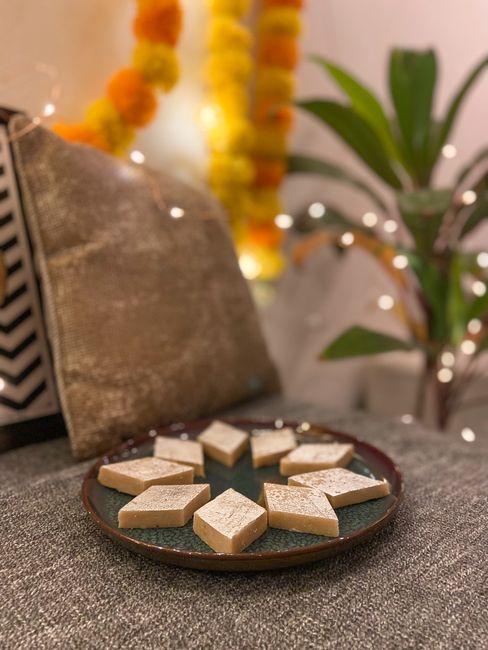
Kaju katli (also called kaju barfi) is an Indian sweet made from a smooth dough of ground cashews, sugar syrup, and a touch of ghee, rolled thin and cut into diamond shapes. It's usually finished with a layer of edible silver foil (vark) and has a dense, slightly fudgy texture rather than a crumbly one, since cashews are ground into a paste rather than left in pieces.
Varieties
Kaju katli should not be confused with kaju roll or kaju pista roll, which is the same base dough rolled around a pistachio paste center rather than cut flat into diamonds. Some regional versions add a few drops of rose water or a pinch of cardamom to the syrup, though the classic Mumbai and Delhi styles keep it plain to let the cashew flavor lead.
Buying tips
Choose pieces that look slightly matte rather than glossy and greasy, which can signal excess ghee or oil used to mask stale cashews. Fresh kaju katli should feel firm but yield easily when pressed, not crumble or feel gummy. Vark-topped pieces should show a smooth, unbroken silver layer with no visible flaking.
Substitutes
Badam katli (almond barfi) — 1:1
Same technique with blanched almond paste instead of cashew paste; slightly grainier texture and a more pronounced nutty flavor.
Store-bought cashew barfi — 1:1
Direct swap for recipes using kaju katli as a garnish or mix-in, though texture varies by brand and can be softer or drier than homemade.
Coconut barfi (kopra pak) — 1:1
Different flavor entirely, but works as a like-for-like substitute when kaju katli is used as a plated sweet or gifting item rather than an ingredient.
Cashew flour plus sugar and ghee, cooked fresh — 1 cup cashew flour + 1/2 cup sugar + 1 tsp ghee replaces about 200g store-bought katli
Makes a rougher, less glossy version at home; simmer cashew flour with sugar syrup until it pulls away from the pan before rolling.
Storage
Store in an airtight container at room temperature for up to a week, or refrigerate for up to three weeks. Layer pieces between parchment or wax paper since they can stick together, especially in humid weather. Bring refrigerated pieces to room temperature before serving; cold kaju katli turns firmer and less fudgy.
How to use
Served as a standalone sweet, especially during Diwali and weddings, but also crumbled over kulfi or ice cream, layered into trifle-style desserts, or chopped and folded into a quick barfi cheesecake or milk cake topping. It melts and softens when heated, so it works well stirred into warm milk-based sweets rather than baked at high heat.
What it pairs with
Pairs well with unsweetened chai or black coffee, which balance its sugar content, and is often served alongside other Diwali sweets like besan ladoo or gulab jamun without competing for attention since its flavor is mild and nutty rather than spiced.
Nutrition
Cashews contribute healthy fats, protein, magnesium, and zinc, but kaju katli is roughly half sugar by weight, so it's calorie-dense; a single small diamond piece runs about 50 to 60 calories.
FAQ
Why does kaju katli sometimes turn hard or dry out?
This usually happens when the sugar syrup is cooked past the one-string consistency before the cashew paste is added, or when the finished barfi is left uncovered and exposed to air, which draws out moisture.
Is the silver foil on kaju katli safe to eat?
Yes, genuine edible silver vark (999 purity) is safe and flavorless. Avoid vark that flakes off in large clumps or shows a dull grey tint, which can indicate it's mixed with aluminum rather than pure silver.
Can kaju katli be made without ghee?
Yes, some versions skip ghee entirely since cashews already release natural oils when ground, though a small amount of ghee helps the dough stay pliable and prevents cracking while rolling.
Why did the dough crack instead of rolling smooth?
Cracking usually means the dough cooled too much before rolling. Kaju katli dough needs to be rolled while still warm and slightly tacky; once fully cooled it stiffens and resists shaping.
Have kaju katli on hand? Find recipes with our Recipe Generator →