
Kamut
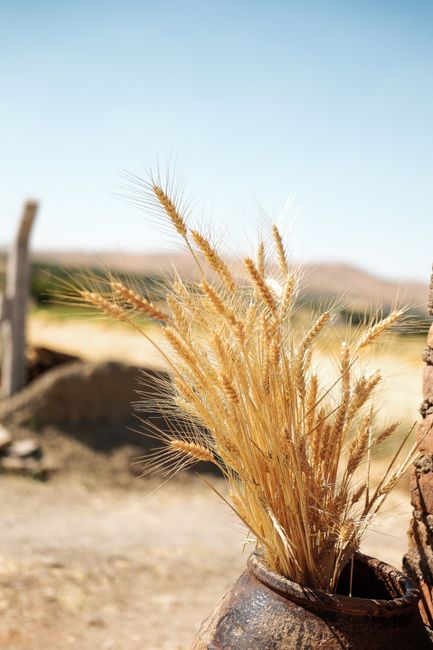
Kamut is the trademarked name for Khorasan wheat (Triticum turgidum ssp. turanicum), an ancient relative of durum wheat with large, amber-colored kernels roughly twice the size of common wheat berries. It has a buttery, slightly sweet flavor and a chewy, resilient bite even after cooking, and is sold both as whole berries and as flour.
Varieties
Kamut is a specific, trademarked strain of Khorasan wheat grown under organic, non-GMO standards; not all Khorasan wheat can legally be labeled Kamut. It is genetically distinct from both spelt and einkorn, which are separate ancient wheat species.
Buying tips
Buy from a bulk bin or bag with a visible harvest or packed date, since older berries take noticeably longer to cook. Kernels should look plump and uniformly amber, without a dusty or shriveled appearance.
Substitutes
Spelt berries — 1:1
Slightly softer texture and a milder, nuttier flavor; cooks in about the same time.
Farro (whole grain, not pearled) — 1:1
Chewier and slightly earthier; whole farro needs a similar soak and cook time as kamut.
Hard red wheat berries — 1:1
Smaller kernels with a firmer, denser chew and a more neutral wheat flavor.
Einkorn berries — 1:1
More delicate and quicker-cooking than kamut, with a golden color and mild, slightly sweet taste.
Sorghum grain — 1:1
Gluten-free option with a similar chewy bite, though the flavor is more neutral and less buttery than kamut.
Storage
Store dry, uncooked kamut berries in an airtight container in a cool, dark pantry for up to a year. Cooked kamut keeps in a sealed container in the refrigerator for about 5 days, or in the freezer for up to 3 months.
How to use
Simmer whole berries in water or broth (a 1:3 grain-to-liquid ratio) for 40-50 minutes until tender but still chewy, then use in grain salads, pilafs, or as a side in place of rice. Kamut flour, milled from the same kernels, can replace whole wheat flour 1:1 in yeasted breads for a slightly sweeter, more golden loaf.
What it pairs with
Pairs well with roasted root vegetables, toasted nuts, dried fruit like apricots or cherries, and vinaigrettes built on lemon or sherry vinegar. Works nicely alongside braised lamb or grilled chicken in a grain bowl.
Nutrition
Kamut is higher in protein than most common wheat, roughly 25 grams per cooked cup, and contains more selenium, zinc, and magnesium than standard whole wheat. It still contains gluten, so it is not suitable for anyone avoiding gluten.
FAQ
Does kamut need to be soaked before cooking?
Soaking for a few hours or overnight isn't required but cuts cooking time by roughly 15 minutes and produces a slightly more tender kernel.
Is kamut the same as regular wheat?
No. Kamut is Khorasan wheat, a separate subspecies from the common bread wheat used in most flour, with larger kernels and a higher protein content.
Can people with wheat allergies eat kamut?
No. Kamut contains gluten and wheat proteins, so it is not safe for anyone with celiac disease, gluten sensitivity, or a wheat allergy.
Why does kamut stay chewy even after long cooking?
Its dense outer bran layer and lower starch damage compared to common wheat let it hold its shape and bite, which is why it works well in grain salads that sit for a while.
Have kamut on hand? Find recipes with our Recipe Generator →